Nepal-India Relations Strengthened Through Recent Diplomatic Engagements

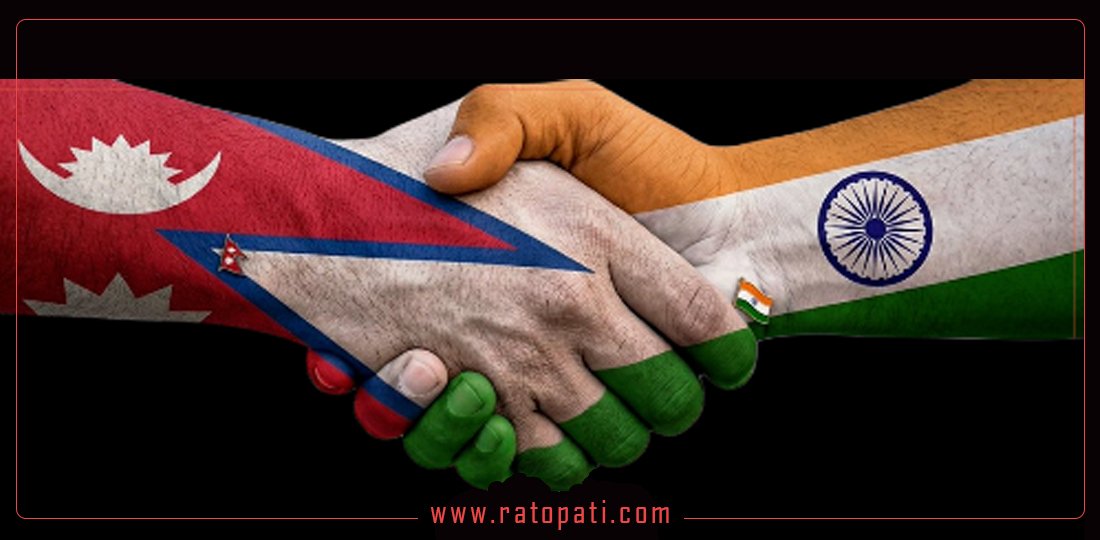
Kathmandu. The Rastriya Swatantra Party has taken Nepal-India relations forward in a new way. The relationship between the two countries, which was cold until recently, has improved through the last two visits.
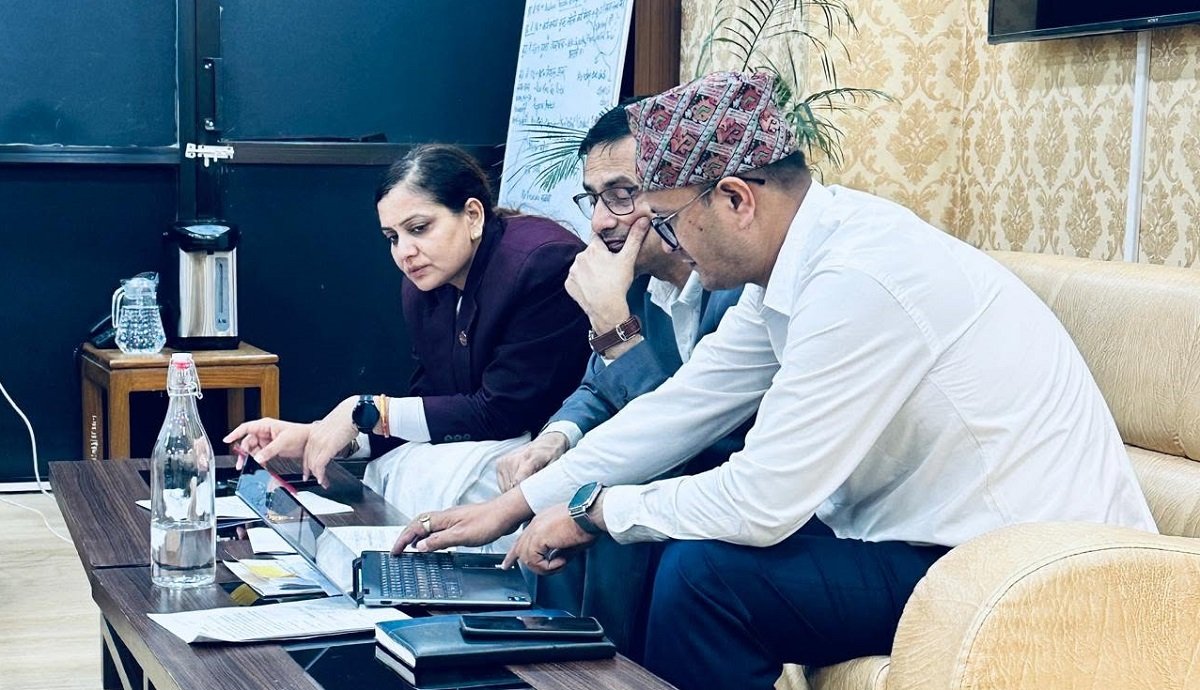
Discussions are ongoing in diplomatic circles that the visits of Rastriya Swatantra Party Chairman Rabi Lamichhane and Nepal Government's Foreign Minister Shishir Khanal have increased trust between the two countries.
These two visits have added a new dimension to Nepal-India relations, according to international affairs expert Binoj Basnyat. He said, 'These two visits have reset Nepal-India relations.'
The importance given by India to RSP Chairman Lamichhane has signaled a strengthening of relations between the two countries. Immediately after Rabi Lamichhane returned, Foreign Minister Shishir Khanal was also given similar importance by India.
India has responded that this visit has added new energy. India's statement read, 'This was the first visit at the Foreign Minister level between the two countries since the new government took office in Nepal in March 2006. India's 'Neighborhood First' policy prioritizes Nepal as a partner, and this visit has further strengthened the tradition of regular high-level exchanges between two close and friendly neighbors. It has provided an opportunity to exchange views on further enhancing bilateral partnerships to fulfill the aspirations of the people of both countries, and has added new energy to our efforts towards this goal.'
After returning from his India visit, Foreign Minister Khanal stated that the discussions and high-level meetings during the visit have taken Nepal and India's diplomatic and economic cooperation to new heights and have created a strong foundation for advancing result-oriented cooperation in areas of mutual interest in the future.
India's External Affairs Minister S. Jaishankar also said that India is working with Nepal as a priority and wants to work with Nepal in new ways in all sectors. Stating that the unique relationship between Nepal and India is based on mutual trust, mutual respect, and shared prosperity, he expressed India's commitment to further strengthen multifaceted partnerships such as connectivity, energy, trade, and economic transformation.
New Developments in Nepal's Diplomacy
International affairs expert Basnyat said, 'India has changed a lot in the changed circumstances, and Nepal's recent political developments have given Nepal a mandate to change as well. According to that mandate, a new kind of relationship has been expanded with India.'
He stated that new dimensions are emerging in Nepal's foreign affairs. He added that Prime Minister Balendra Shah has sent a message that he wants to maintain equal relations with everyone in the diplomatic field.
That is why Prime Minister Balen holds collective meetings with ambassadors from various countries on an equal footing, according to Basnyat. The open application for ambassadorial appointments is also a new experiment in the field of foreign affairs. Similarly, breaking the tradition of visiting India immediately after becoming Prime Minister, and sending the party chairman to advance relationship-building is also seen as a new kind of diplomacy of the current government.
The visit has confirmed that Nepal has prioritized India. After visiting India, Foreign Minister is going to visit China. This means Nepal wants to maintain equal relations with India and China, according to experts. Foreign Minister Khanal is going to visit China on May 31 and will return to Nepal on June 3.
After Foreign Minister Khanal returns from China, Finance Minister Dr. Swarnim Wagle is scheduled to visit India. However, the date for Wagle's visit has not yet been fixed. Sources indicate that a high-level visit from the Indian side will take place after Wagle's visit.
Dr. Pramod Jaiswal, Research Director at the Nepal Institute for International Cooperation and Engagement, who recently returned from India after participating in various programs, said that Nepal-India relations have started anew. He stated that if there were any bitter or sweet issues in India's mind, the visits of Chairman Lamichhane and Minister Khanal have resolved them all, and now both countries will cooperate in development work. He said, 'I think there are no doubts or suspicions left between the two countries now. Both countries appear enthusiastic.'
But No Controversy Arose
However, Dr. Nihar Nayak, an Indian international affairs expert who has studied Nepal-India relations extensively, has a slightly different view. He said that if the issues that are controversial are not discussed, the relationship will not be that good.
Nayak clarified that Nepal repeatedly raises border disputes, but that issue was not raised during the visit. Similarly, the issue of Gorkha soldier recruitment was also not discussed. The issue of airport operations, etc., was also not discussed. 'This means the relationship is good, and the BJP and RSP have signaled that they will advance the relationship between the two countries well for five years,' he said.
Nayak's argument is that if Nepal had raised the issue of border disputes, the relationship between Nepal and India would have deteriorated again. He said, 'That is why Nepal deliberately did not raise this issue during the India visit. There have been no agreements on any major investment plans from the development perspective either.'
While the visit can be called successful overall, he claims that nothing new has happened.
However, Professor and Nepal-India relations expert SD Muni from India said that the visits of Chairman Lamichhane and Minister Khanal have generated new hope in Nepal-India relations. He said, 'The visits of both individuals have generated a lot of hope for a new relationship between the two countries.'
He stated that the future relationship will depend on how Nepal responds to resolving contentious issues and how it addresses India's security concerns.
This specific news has been automatically translated by AI. As a result, there may be some inaccuracies or language errors.
_ylu0AjgUvp.jpg)
_J2a6d6VdyN.jpg)