Sudan Gurung Returns as Home Minister Amid Controversy
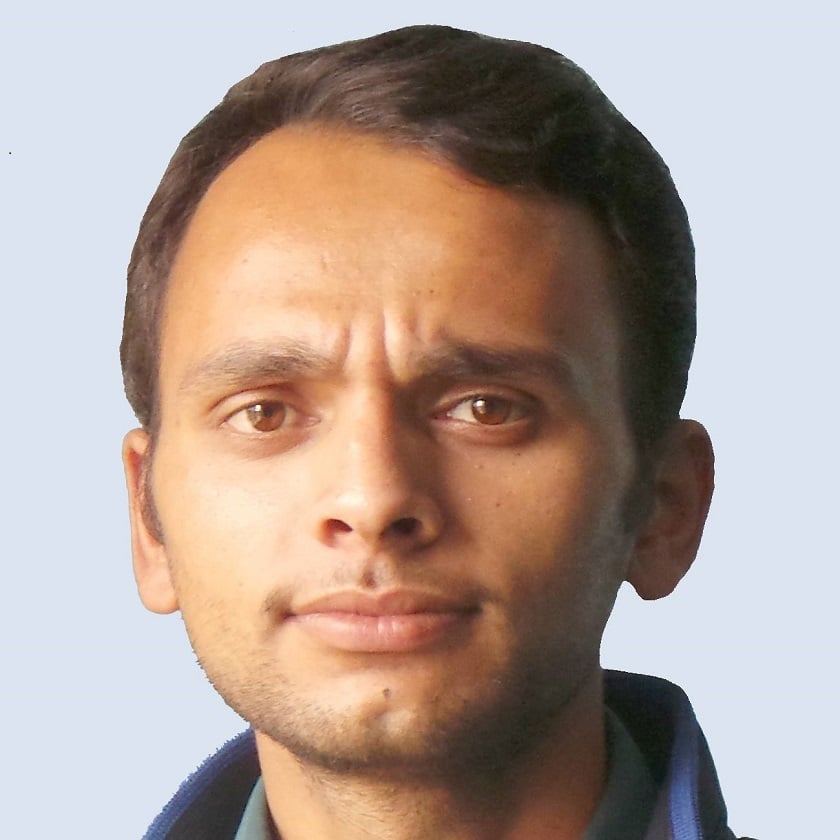
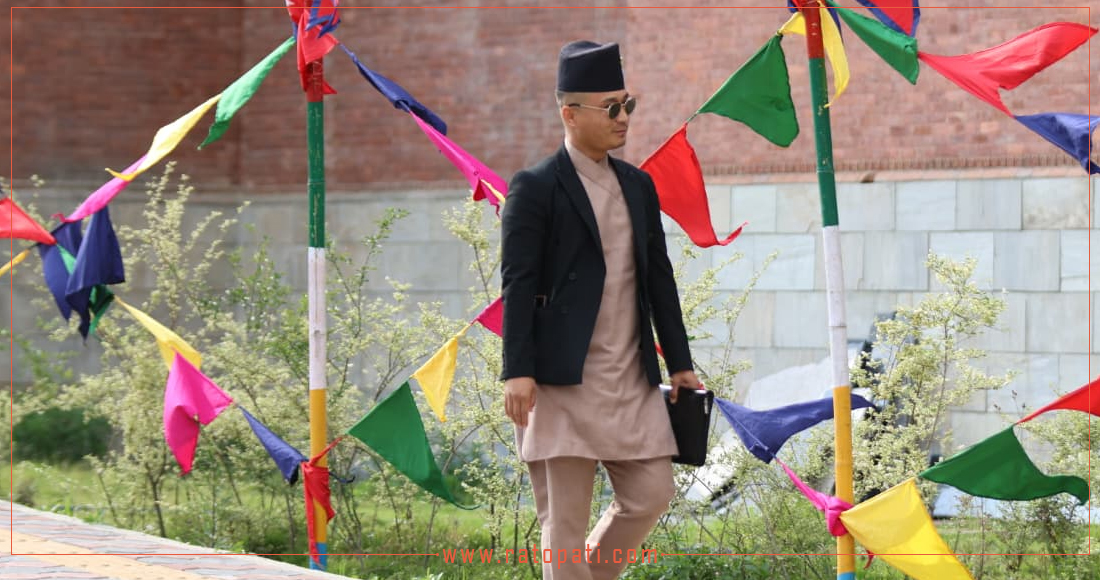
Kathmandu. Sudan Gurung has returned to the Ministry of Home Affairs. He had resigned following allegations of having a business relationship with middleman Deepak Bhatt, acquiring wealth from undisclosed sources, and submitting false details in his property statement.
Following his resignation, an investigation committee was formed under the convenership of former High Court Justice Achyut Prasad Bhandari to investigate the allegations against him. He has been reinstated after the committee submitted its report. However, there is no official information about the contents of the report. Similarly, the Human Rights Commission had also held Gurung guilty in the context of the Jenji movement and subsequent events.
Gurung himself had indicated on Sunday that he might become Home Minister again. During the Rastriya Swatantra Party (RSP) district convention in Gorkha, he had said that he might be reappointed, saying, 'If I become Home Minister again, don't come to see me for two months.' His comeback happened two days after that.
However, Sudan's comeback is not without controversy. This reappointment appears to set four wrong precedents, and this step could weigh heavily on a government built on the foundation of good governance.
Precedent 1: Continuation of the tendency to make investigation committees 'washing machines'
When serious allegations of corruption, irregularities, or abuse of authority are made against a powerful individual, there is a demand for an investigation. However, there are many examples of such committees being used as 'washing machines' to exonerate them.
Sometimes, such committees are parliamentary committees, and in some cases, the government itself forms judicial committees. However, since it would be inconvenient for the government if such a person is proven guilty, and the government itself forms the committee, the committee often does not find such a person guilty.
The same has happened in the current context. It is reported that Sudan has been found completely innocent in the report, which has not been made public so far. The first allegation against Sudan was about his partnership with Deepak Bhatt. However, the committee has given him a clean chit, stating that purchasing shares of a company is not a partnership.
Second, Sudan appears to have purchased land in Dhankuta and Chitwan at a high valuation. However, he claims to have purchased it at a price lower than the prescribed rate. The committee has concluded that this problem is not the individual's fault but a fault of the 'state system'.
On the other hand, he stated that he purchased shares of companies by taking loans, but his property statement does not show any loans. By this account, the allegation was that he submitted a false property statement. However, the committee has interpreted this as a simple human error. Based on this, the committee's conclusion is that no action should be taken.
Generally, the state does not condone the violation of any law. However, it appears that the committee, formed under the leadership of a former judge, has given a clean chit to Gurung for two of his actions by calling them systemic weaknesses. This not only reconfirms that government-formed committees become 'washing machines' again but also proves that the government, built on the foundation of good governance, has also embarked on the same path by reappointing Sudan based on this.
Precedent 2: Collusion with middlemen and the government's loss of moral ground
Another serious allegation against Sudan Gurung is the partnership with businessman and middleman Bhatt, who has a controversial background. However, looking at the committee's conclusion, it cannot be called a partnership.
With this conclusion of the committee and this step by the government, the government has lost the moral ground to take action against other individuals associated with Bhatt in the future. Dozens of individuals associated with Bhatt have now come to light. Some of them are civil servants, while others include businessmen and media professionals.
Previously, some employees were transferred and made non-functional on the same pretext. Officials such as Gajendra Thakur, the then Director General of the Department of Money Laundering Investigation, and some employees of the Ministry of Finance were also transferred on similar charges. However, by exonerating Gurung, the action taken against those employees also appears to be proven wrong.
Precedent 3: Legalizing illicit wealth and tax evasion: An attack on the rationale of asset investigation
The third and most frightening precedent established by this case is an attack on the principles of the tax system and money laundering. Details of Gurung's permanent account number have also been made public, stating that he has not paid a single rupee in tax so far.
Not only a public office holder, but every individual is responsible for showing the legality of the wealth they have earned. However, in this case, purchasing real estate at less than its valuation and acquiring wealth without paying taxes has been legalized. This case appears to have opened the door for anyone to get away with such actions in the future.
Precedent 4: The tendency to consider hiding property details as a 'minor error'
According to Nepali law, every person holding a public office must submit a true statement of assets and liabilities in their name and their family's name within the stipulated time. This is the first condition for controlling corruption and ensuring transparency.
However, in Gurung's case, it was revealed that he did not mention loans in his property statement and had hidden details of some assets. The surprising thing is that the state's investigation committee ignored this blatant violation of the law, considering it a 'minor technical error'.
This wrong precedent has fueled a situation of unaccountability in Nepal's civil administration and the entire public service.
This specific news has been automatically translated by AI. As a result, there may be some inaccuracies or language errors.
_kE6hmvuewe.jpg)