
Nepal's New Government Focuses on Good Governance and Economic Prosperity

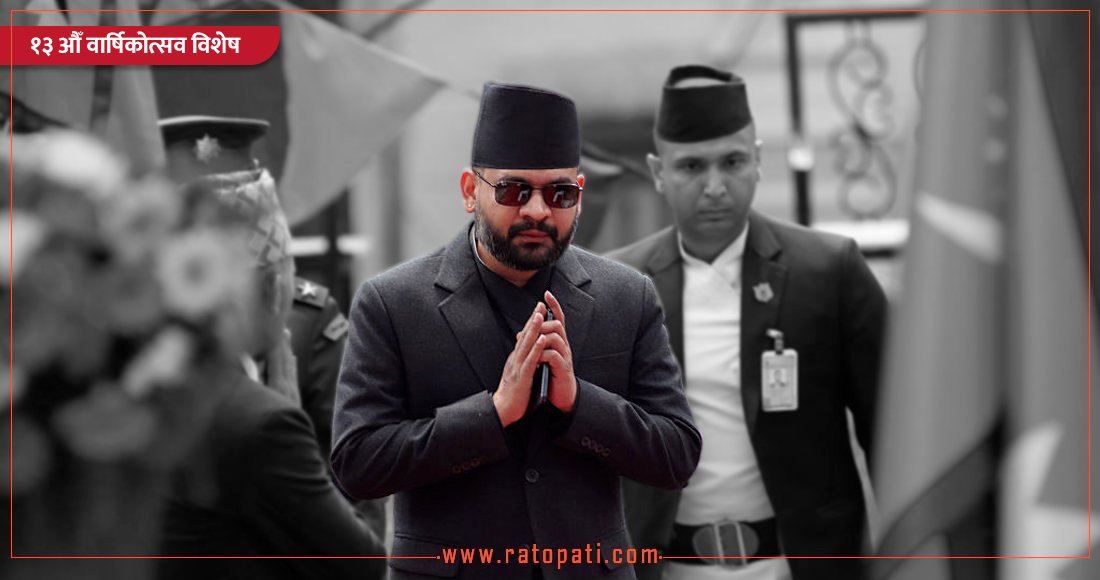
Kathmandu. The 2080s in Nepal's history witnessed political upheaval and transformation. The Rastriya Swatantra Party (RSP), which gained strength from the dissatisfaction of the 'Gen Z' generation and the rebellion against the 'syndicate' of traditional parties, has succeeded in taking the reins of power in a short period. The current government has been in power for over two and a half months. A close examination of the RSP's 'manifesto', the government's public '100-day governance reform agenda', 'policy and programs', and the budget for fiscal year 2083/84 reveals some new and promising signs for Nepal's journey towards good governance and prosperity. The RSP, which achieved unprecedented results in the House of Representatives elections held on Falgun 21, formed the most powerful government in history under the leadership of senior leader Balendra Shah on Chaitra 13. With opposition parties in a weak state, if the Balen government proceeds without mistakes, it is unlikely to face significant problems in achieving excellent results in good governance and prosperity over the next five years. The government's initial policy starting points, governance reform efforts, and prosperity plans appear to be moving forward. Good Governance and Delivery-Based Governance System Finance Minister Dr. Swarnim Wagle, in the budget for fiscal year 2083/84 presented in the Federal Parliament on Jestha 15, spoke of the excellent anticipation of transformation in all aspects of national life with the generational shift in Nepal's politics. Embracing this irreversible change, Wagle clarified that the government is committed to establishing standards of good governance through refinement in policy, law, institutions, systems, processes, leadership, and intent. 'Ending policy uncertainty, delays, institutional capture, and exploitation of state resources to build a results-oriented governance system is the need of the hour,' he said while presenting the budget. 'Although the current constitution has created an important basis for breaking the cycle of social and cultural exclusion, deeper structural reforms are still necessary for equal access to economic opportunities.' The RSP had made 'zero tolerance against corruption' and 'results-oriented administration' its main agenda in its manifesto. This is clearly reflected in the government's 100-day governance reform agenda and the upcoming year's budget. The budget presents a modern approach based on structural reform and technology, different from traditional methods, to achieve good governance and prosperity. The budget seeks to enhance transparency, accountability, and efficiency in the governance system. Good governance can be clarified in three points: Administrative Restructuring - Reducing the number of federal ministries from 22 to 18, abolishing 31 bodies, and announcing unnecessary expenditure cuts indicate progress towards a 'lean and effective government' (Points 8 and 9). Policy and Legal Reform - Commitment to end policy uncertainty and institutional capture. There is a plan to prevent policy corruption by drafting a law on conflict of interest (Points 3 and 61). Digitalization and Technology - The goal is to reduce corruption and facilitate service delivery through 'paperless, faceless, and contactless' revenue administration, digital timecards, and e-governance (Points 47 and 70). Transparency - The announcement that the audit of grants received by political parties will be conducted by the Auditor General signals the beginning of a new dimension of transparency in the political sphere (Point 38). The government will provide grants to parties based on public opinion. Reduction in the Number of Ministries and Lean Structure - The governance reform agenda (Point 9) announced the reduction of federal ministries to 17. The government has adjusted and restructured 22 ministries into 18. This can be considered a positive step towards reducing administrative costs and increasing efficiency. Breaking the tradition of splitting ministries for power-sharing for years is the first positive step towards good governance. The government intends to promote this year as 'Good Governance Year'. While responding to questions from members of parliament in the house on Jestha 17, Prime Minister Balen clarified that the first year of the government's formation is considered 'Good Governance Year' rather than infrastructure development. 'We have considered this first year as the 'Year of Good Governance'. By good governance, we do not mean halting development and infrastructure. The work of removing corruption and irregularities is being monitored by our ministers, MPs, and various local levels,' said Prime Minister Balen. 'Corruption is deeply rooted, and the Government of Nepal and the Rastriya Swatantra Party are very eager to eradicate it. Citizens are now feeling the change when they visit places like the Land Revenue Office, Company Registrar, and for Bluebook renewal. The government will continue this.' Administrative expert Kashi Raj Dahal says that it is a positive step that the current government, formed with overwhelming public mandate as a result of the Gen Z movement, has expressed commitment by creating clear frameworks for reforms in various sectors for results-oriented governance. 'Reforms in various sectors for results-oriented governance, good governance, frugality, administrative restructuring, tax system, and education sector are included in the commitments, action plans, and schedules. In this context, the government has expressed commitment to reduce the number of ministries to 17 and build a lean administration,' says Dahal. Former Chairman of the Administrative Court, Dahal's led Administration Reform Commission had recommended reducing the number of ministries to 15. The committee had submitted its report to the then Prime Minister KP Sharma Oli in 2076, but it was not implemented. At that time, there was a government with a strong majority of leftists. Economist Dr. Dilliraj Khanal claims that the current Finance Minister Wagle, who has repeatedly demanded the implementation of the Public Expenditure Review Commission's report from parliament, has not shown the same commitment. 'In the previous government, if the number of ministries is reduced now, departments must also be reduced. If there are various divisions, they must also be reduced. Offices that are not useful must also be reduced. The current Finance Minister has spoken in parliament many times - demanding the implementation of the Public Expenditure Review Commission's report. He has made statements in public forums many times. In that spirit, the issue of expenditure reduction has not come up,' he says. However, he estimates that reducing 22 ministries to 18 could save the state 8 to 10 billion rupees. Similarly, the government appears to have taken special initiative in performance with timelines. The provision that each ministry must submit its top 10 tasks and their monthly progress reports to the Prime Minister's Office within 7 days (Point 2) is expected to make the bureaucracy accountable. This seeks to change the 'procrastination' tendency into a 'results-oriented' culture. The current government appears to be acting decisively to end political interference in administration. The government has implemented a plan through an ordinance to prevent civil servants, teachers, and professors from joining any sister organizations of political parties and to abolish party-based trade unions (Point 12). The positions of 1,594 people who received political appointments based on access and power for the past 35 years have been automatically abolished. The government claims this step will make the administration impartial. However, various organizations have protested this decision. This action plan clearly includes the abolition of unnecessary committees, offices, boards, and institutions. The government understands that the administration has felt increased unwanted interference and informal pressure due to the political affiliation of employee unions and organizations active in public administration. The government's argument is that such organizations have been abolished because the impartiality and neutrality required in the bureaucracy have not been maintained. Former administrator Dahal, former coordinator of the Administration Reform Commission, argues that the abolition of trade union rights under the Labor Act and Article 34 of the Constitution has not occurred. He says, 'This is not the abolition of trade union rights under the Labor Act and Article 34 of the Constitution, but the abolition of unions and organizations formed on a political basis within the civil administration. This provision has been brought through an ordinance to make the administration neutral, free from political influence.' Former Secretary of the Government of Nepal, Sharda Prasad Trital, considers the government's initial steps towards good governance and prosperity to be positive. He believes that working from the Prime Minister's Office is a positive aspect. 'I have seen many governments in the past. But I haven't seen a government that has done so much in two months. A lot has been done. However, it remains to be seen whether the tasks they set for themselves within 100 days will be completed. Some difficulties seem likely,' says Trital. 'The positive aspect of this government is that working from the Prime Minister's Office leads to many improvements. I also have experience working extensively from the Prime Minister's Office. So far, nothing negative has been observed. Efforts are being made by everyone. There are no speeches, governance, inaugurations, or foundation-stone laying ceremonies happening. All ministers and the prime minister are discussing and working. Work is being done.' Trital believes that delays may occur in the government's work due to certain legal provisions, mechanisms, lack of proactivity, and non-cooperation from party-affiliated employees. He states that the government's current trajectory, aligning with the RSP's manifesto, 100-day agenda, policies, and programs, and budget, is positive. Trital suggests that since the government has only been in power for two months, it is too early to criticize and that one must wait a little longer for results. Digital Transformation: Hassle-Free Citizen Services The main attraction of the RSP's manifesto is 'Digital Nepal' and 'Faceless Government'. The government's agenda appears to be putting this into practice. Prioritizing this in the budget also indicates that the government is moving towards implementation. The plan is to provide basic services such as citizenship, passports, and driver's licenses online at home by integrating the 'Citizen App' with the objective of providing all services from one place (Agenda Point 21). The government believes this will help end the intermediary culture. The government appears to be strictly enforcing time-bound services and compensation provisions. The government expects that if any government service is not provided within the stipulated time, the concerned official will be held responsible and citizens will be compensated (Agenda Point 94), making the state accountable to the citizens. The goal of making government offices paperless within 100 days by strengthening the 'GIOMS' system for paperless administration indicates the government's pursuit of both transparency and speed, which is also prioritized in the budget. Starting Point for Prosperity The budget identifies new areas for economic growth and emphasizes the private sector and production-oriented economy. Ambitious goals have been set to make Nepal a 'tech hub' through technology and AI-based economy, establish a 'Sovereign AI Compute Center' in Kathmandu, and achieve prosperity through technology export (Points 17 and 18). Dr. Shankar Khatiwada, a teacher at Tri-Chandra Campus and a researcher in practical science and technology at Tribhuvan University, argues that it is not immediately possible to create an AI hub in Nepal. Khatiwada, also a researcher in nano-biotechnology, cites the example of neighboring India, which has not achieved significant results in the field of AI. 'India has not been successful in the field of AI. Currently, only the US and China are competing. In Nepal's case, AI education should start from the basics. The government seems to be aiming for immediate returns without focusing on the fundamentals,' he says. Doubling the income tax threshold, reducing the maximum personal income tax rate, and providing concessions to startups are intended to encourage private sector investment (Points 7 and 28). In terms of infrastructure development, the government has prioritized the construction of large hydropower projects, road networks (north-south corridors), and tunnels. The goal is to add an additional 1,000 megawatts of electricity to the transmission system in the next fiscal year (Points 40 and 43). The government's strategy to increase production through a 'farmer-centric service system', agro-pooling, and private sector participation in industrial areas focuses on modernizing agriculture and industry (Points 24 and 50). The goal of achieving 7% economic growth and keeping inflation at 6% in the next fiscal year aims to set a direction for prosperity (Point 77). Economist Dr. Dilliraj Khanal states that the promises made by the ruling party RSP and the government led by it are very important and timely. 'The manifesto they have presented is very compact. It comes with a synergy to advance Nepal. Furthermore, the mention of 'establishing order' is even more significant,' says Khanal. 'Without establishing order and effectively implementing good governance, it is not possible to move forward in development. Therefore, the commitment to establishing order is very appropriate and timely.' Khanal analyzes that the primary solution to the irregularities and vices of the past, such as extortion, corruption, misgovernance, lack of delivery, and lack of accountability, is to establish order or ensure good governance. From this perspective, the budget attempts to instill confidence in many areas, according to Khanal. Khanal, who worked as the coordinator of the Public Expenditure Review Commission, emphasized the need to restructure the budget fundamentally and in a new way. 'That means significantly reducing the current expenditure of the budget. We had recommended abolishing many institutions in the past, and they have said they will abolish some and merge others. They have said they will save 20 billion rupees from that. However, I see a risk of it being a 'zero-sum game' (where the net result is zero even after adding profits and losses of both sides) based on the budget allocation.' He expresses skepticism about the goal of making institutions efficient, reducing unproductive expenditure, and cutting wasteful spending in terms of good governance. 'I had suggested establishing a practice of controlling current expenditure with a clear criterion, making a departure. This is closely related to good governance. If we can move forward by creating a concrete action plan, identifying responsible individuals and holding them accountable, determining contract timelines, streamlining the supply system, and making the monitoring system efficient, then the weaknesses seen in the budget can be addressed to some extent. Otherwise, I must say that I see a risk of this being a 'zero-sum game'.' Economic Prosperity: Investment Environment and Startup Ventures The RSP's manifesto, the government's policy and programs, and the budget aim to make Nepal a 'respectable middle-income country'. The second phase of economic reform announces the start of a 'new phase of economic reform series' in the policy and programs. Through the 'Investment Express' policy (Policy and Program Point 12), the government has attempted to address foreign investors through the budget. Programs like 'Startup Fast Track' and 'Make in Nepal' through startups and entrepreneurship encourage youth to create employment opportunities within the country. The plan to document the skills of youth returning from foreign employment through digital means and connect them with capital (Manifesto Point 41) (Budget Points 28 and 57) is considered a strong basis for prosperity. The government believes that the plan to make 'e-billing' mandatory for revenue leak control and bring the informal economy into the formal sector will strengthen the state treasury. Priority on Social Justice The RSP's manifesto included 'formal apology' for the injustice done to Dalit and marginalized communities by the state as a governance reform agenda (Point 5), which can be considered a positive aspect of social transformation. However, the government has not yet apologized on this matter. Questions have been raised about the government's priority on social justice as the budget seems to favor the middle class. The government's plan to make secondary education completely free and quality, and to restructure the health insurance program to ensure 'no one dies due to lack of treatment' (Manifesto and Policy and Program) was mentioned. The government's policy of collecting a 3% tax from patients admitted to private hospitals and students studying in the private sector aims to encourage government hospitals and the private sector. Except for exceptions, concerns have been raised that service recipients may suffer as government schools and hospitals may not be able to compete with the private sector. The government has included modern security measures such as mandatory CCTV and 'SOS buttons' in public transport, connecting sports with the economy and health, and addressing the demands of the younger generation (Agenda Point 98). The budget statement (Points 41c, 49b, and 59e) prioritizes the strengthening and reconstruction of government buildings damaged during the Gen Z movement and ensures respectable financial assistance for the families of martyrs. The government, which has gained near two-thirds majority with the strength of the Gen Z movement, appears to be making efforts to institutionalize their movement. 'We will provide free health treatment for the injured in the movement, monthly allowances based on the condition of the injured, and operate entrepreneurship development programs. We are positive about increasing the effectiveness of concessional loans by getting the quality of loans evaluated by a third party and including the families of martyrs and the injured of the Gen Z movement as beneficiaries of this program,' the budget statement said. Corruption Control and Money Laundering The main condition for the formation of the RSP government was to 'open corruption files'. Agenda Point 43 mentions the formation of an 'Empowered Asset Investigation Committee' to investigate the assets of individuals holding public office from 2062/63 to the present. This step aims to ensure impartial investigation of major corruption cases in Nepal (such as Lalita Niwas, Bhutanese refugees, cooperative fraud, etc.) and send a message that no one is above the law. This also indicates an improvement in Nepal's reputation internationally (in terms of money laundering indices). Challenges and Implementation Aspects Although the government's initial steps, as outlined in the aforementioned documents, appear positive towards 'good governance and prosperity', the path to implementation is challenging. The administrative and political machinery, which has benefited from a lack of good governance for decades, may not easily accept these reforms. As RSP is a new force, the government's policies and agenda may prove to be weakly implemented due to a lack of governance experience, immature decisions, and a rush to reach the destination quickly. Mobilizing the necessary financial resources for ambitious infrastructure and social security programs is challenging. There is widespread interest in how the process of taking action against former Prime Minister KP Sharma Oli, former Home Minister Ramesh Lekhak, and high-ranking police officials, who were held responsible by the high-level investigation commission led by former judge Gauribahadur Karki regarding the incident of Bhadra 23, will proceed. Similarly, the Karki Commission remained silent on the incident of Bhadra 24. The Human Rights Commission has recommended micro-investigation and action in that incident to end impunity. Oli, Lekhak, and other high-ranking officials arrested based on the Karki Commission's report have been released by the Supreme Court's order. The government has formed a high-level asset investigation commission under the convenorship of former Supreme Court Justice Rajendra Kumar Bhandari to investigate corruption incidents from 2062/63 to the present. If the government implements the 100-day agenda, policies and programs, and the budget for the upcoming fiscal year honestly, overcoming all these challenges, the rise of RSP could prove to be a 'turning point' for Nepal's prosperity.
This specific news has been automatically translated by AI. As a result, there may be some inaccuracies or language errors.

-(2)_QJLjKxR87n.jpg)