Nepal Faces Escalating Natural Disasters Amidst Climate Change and Budgetary Gaps


Kathmandu. Due to Nepal's specific geographical location, weak mountainous terrain, and the extreme impact of climate change, the country has been going through a very challenging and destructive phase in terms of natural disasters for the past four years. During this period, the country has faced not only seasonal fluctuations but also historically large floods, landslides, earthquakes, and glacial lake outburst floods.
From the incident where the BP Highway was devastated by a destructive flood in the Roshi River in central Nepal to the example of minimal human casualties in Dodhara-Chandani due to an early warning system despite excessive rainfall, these events clearly show the importance of preparedness and structural strengthening. However, stakeholders say that climate-induced disaster risk reduction is still not adequately prioritized in national policy and budget formulation processes.
Regarding disaster management, Surya Bahadur Thapa, Chairman of the National Disaster Management Network Nepal, argues that disasters and climate change cannot be viewed separately. His analysis is, 'Due to climate change, many types of disasters are being caused, and they are interconnected, like two sides of the same coin.'
Although allocating some budget to sectoral programs such as the Chure Resilient Plan, river control embankments, and water storage in drought-prone areas for mitigating damages caused by climate-induced disasters is positive, the budgetary arrangement to address this as a national crisis is still weak.
Dr. Basanta Raj Adhikari, Director of the Center for Disaster Studies at Tribhuvan University, pointing out structural flaws in the budget, says, 'In the current government's policy program and budget, there is still no separate provision for climate-induced disaster risks.' Although a budget of approximately 31.12 billion rupees has been allocated under the Forest and Environment heading, the lack of a clear plan for disaster preparedness, response, and recovery indicates a gap between the government's understanding and the ground reality.
Observing the damages of the past four years closely, it is clear that Nepali society has suffered irreparable human and physical losses. On the night of Kartik 17, 2080 BS, a 6.4 magnitude earthquake centered in Ramidanda, Jajarkot, caused significant damage in Jajarkot and Rukum West districts of Karnali Province.
In this incident, 154 people lost their lives and more than 360 were injured. Approximately 26,557 houses were completely destroyed and 35,455 houses were partially damaged by the disaster. Due to poverty and geographical remoteness, traditional houses made of stone and mud with weak seismic resistance collapsed, disproportionately affecting marginalized and impoverished communities.
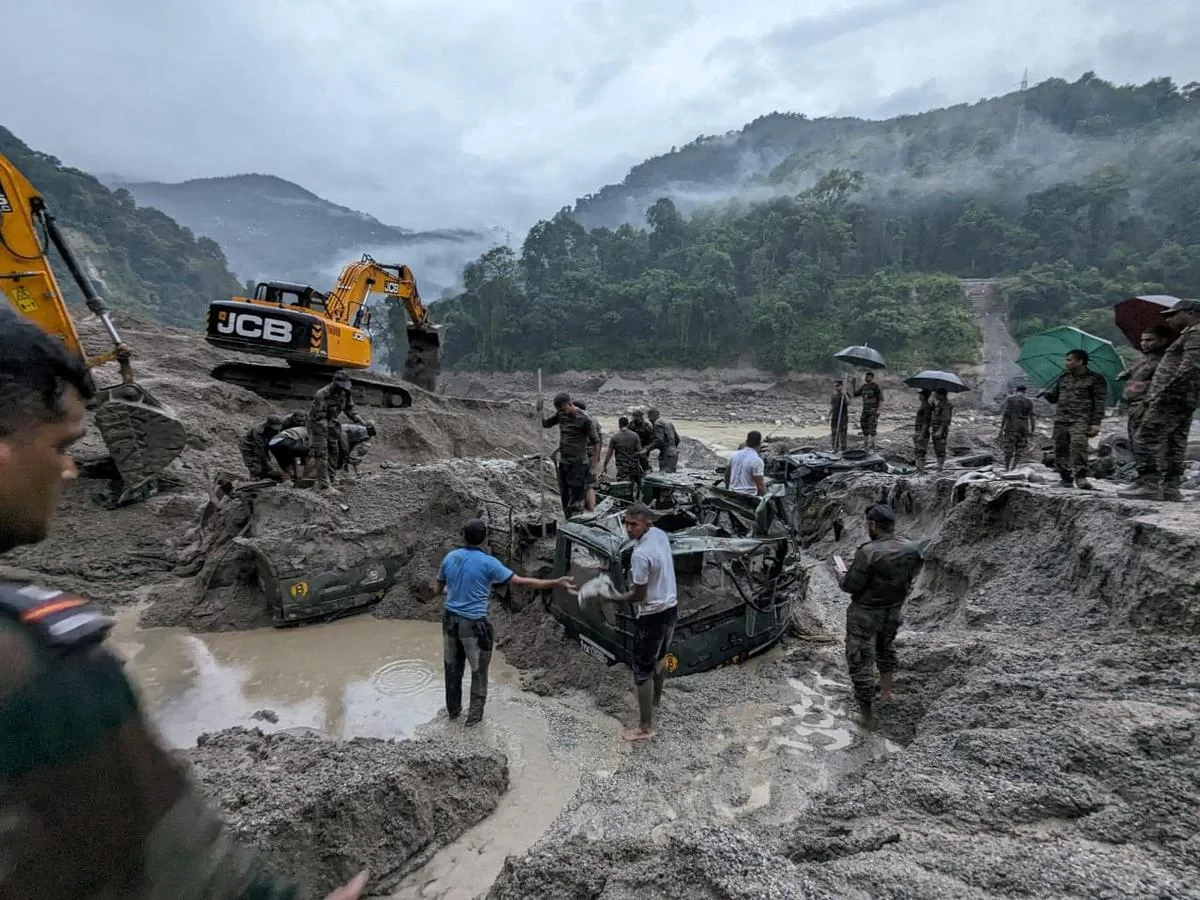
Similarly, in the second week of Ashoj, 2081 BS, destructive floods and landslides across the country dealt a major blow to Nepal's economy. Due to the heaviest rainfall in four decades, Kathmandu Valley, Kavrepalanchok, Sindhuli, Makwanpur, and Dhading districts in the Bagmati and Koshi provinces were severely affected. In this great calamity, 249 people died and 177 were injured. In Jhyaple Khola, Dhading, 35 people lost their lives prematurely when vehicles were buried by a landslide.
According to the assessment of the National Disaster Risk Reduction and Management Authority, these floods and landslides caused economic damage worth a total of 46.68 billion rupees, which is about 1 percent of Nepal's Gross Domestic Product. Physical infrastructure alone suffered damage worth approximately 38.92 billion rupees, with 41 major road sections and 44 bridges damaged, and 26 hydropower projects damaged, disrupting about 980 megawatts of electricity production from the national grid.
In addition, due to rising temperatures in the Himalayan region, glacial lake outburst floods are also increasing. In Saun, 2081 BS, the bursting of two small glacial lakes in the Thame region of Solukhumbu caused a flash flood that devastated local settlements. In early 2082 BS, glacial lake outburst floods in the Hilsa region of Humla and in the Rasuwagadhi area of Tibet, China's autonomous region, washed away the Miteri Bridge connecting Nepal-China and caused billions in physical damage. Such incidents confirm that Nepal is now at high risk of multi-hazard and transboundary disasters.
Amidst this terrible series of disasters, the strengthening of specialized institutions established to address them has become a neglected aspect of the budget. The National Disaster Risk Reduction and Management Authority, established after long efforts and continuous pressure from civil society, appears to have its performance affected due to a lack of necessary budget, manpower, and administrative authority.
In this context, Surya Bahadur Thapa recalls the demands of civil society and says, 'The institution formed based on the issues we have been raising should also be equipped with resources, means, manpower, and authority, but that does not seem to be the case.' Thapa states that as long as the authority is not financially and administratively strengthened, policies risk remaining only on paper.
Similarly, the inability to mainstream disaster risk reduction into every development activity and the programs of various ministries is another structural challenge. Sectors such as agriculture, education, health, and infrastructure construction are directly linked to disasters. However, the budget does not seem to have incorporated disaster management as an integral part of these sectoral ministries.
Dr. Basanta Raj Adhikari advocates for a separate budgetary provision for disaster management, saying, 'Unless disaster risk reduction is established as a national framework and a separate body, and a separate budget is allocated, Nepal's overall disaster risk reduction cannot be managed.' This highlights the reality that with budgets scattered across various ministries, a single-window system for post-disaster reconstruction and response cannot be implemented.
Although Nepal's constitution defines local governments as the primary responsible bodies for disaster management, the distribution of resources and means in practice is very weak. Local communities, women, children, persons with disabilities, and marginalized groups must face the initial brunt of disasters.
However, due to the lack of adequate financial transfer for preparedness, public awareness, and response down to the local level, these groups bear the brunt of disasters the most. On the other hand, unplanned infrastructure development without environmental impact assessment in rural areas, also known as 'dozer development,' is making landslide and flood disasters increasingly severe day by day.
Nevertheless, learning from past bitter experiences, some improvement efforts have also begun. Under the coordination of the Department of Hydrology and Meteorology, the early warning system has been made more modern and effective, with increased use of mobile message systems to alert citizens in risk-prone areas in a timely manner.
Similarly, every year the Ministry of Home Affairs approves the 'National Action Plan for Monsoon Preparedness and Response' and attempts to extend it to the local level. To end the situation of relying solely on the state for post-disaster reconstruction, the Insurance Board Nepal has initiated efforts to extend micro-insurance and agricultural insurance to vulnerable households, which is expected to help mitigate the financial risk of disasters to some extent.
Nepal has expressed its commitment by signing various treaties and conventions on international forums such as the Sendai Framework (2018-2030), the Paris Agreement, and Nationally Determined Contributions. Failure to link these commitments to national annual policies, programs, and budgets could raise questions about Nepal's credibility internationally. As Himalayan disasters are transboundary in nature, a budget allocation is also needed for specific mechanisms for exchanging hydro-meteorological data and early warnings with neighboring countries.
To control such man-made and natural disasters, scientific research, risk assessment, and mapping are extremely important. According to Dr. Adhikari, at least three to five percent of the annual budget should be allocated nationwide for multi-hazard risk mapping, establishing early warning systems, and training local manpower.
Failure to do so weakens the process of making science-based and fact-based decisions. In situations where the federal government is unable to allocate the necessary budget in some areas, there is a great opportunity for provincial and local governments to show activity in this sector. By prioritizing disaster management and climate adaptation programs in their internal plans, local levels can make communities safer.
This specific news has been automatically translated by AI. As a result, there may be some inaccuracies or language errors.
_ijSbeqwHME.jpg)