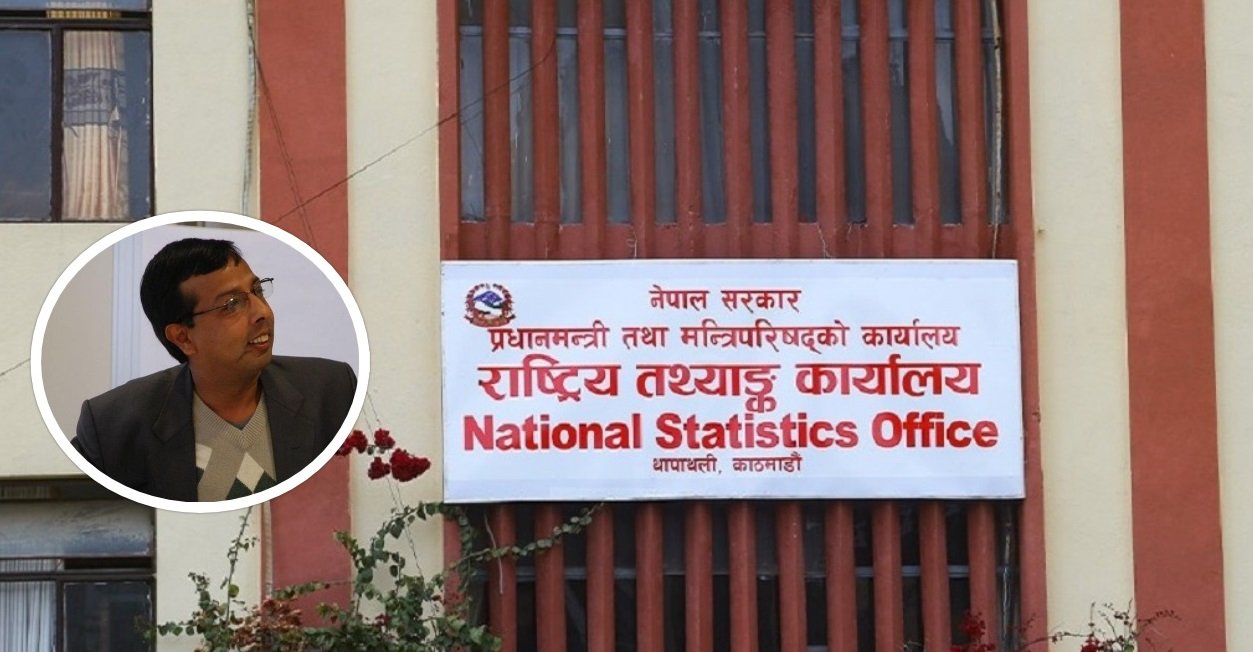
Nepal's Prime Minister Balen Shah Claims Nepal Has Encroached on Indian Territory, Reigniting Border Dispute


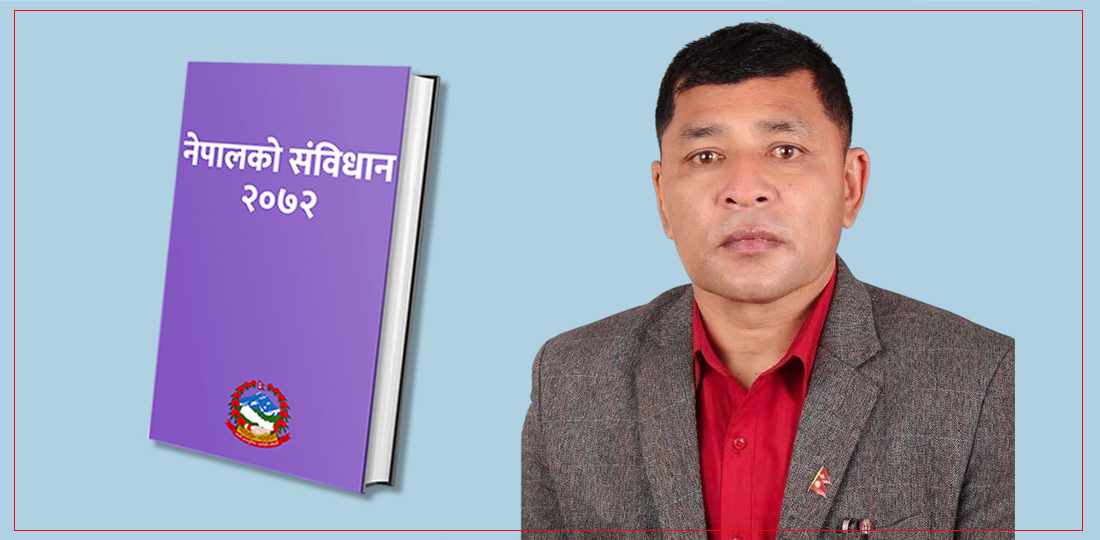
Nepal's Prime Minister Balen Shah has once again brought the border dispute with India to the center of discussion by claiming in parliament that Nepal has also encroached on Indian territory. This statement is considered different from Nepal's traditional stance, as Nepal has generally accused its larger neighbor India of occupying Nepali land.
Shah, 35, who became the country's youngest prime minister at the beginning of this year, made the remark on Sunday while addressing the Federal Parliament. This was his first formal address to parliament since becoming prime minister. His statement caused dissatisfaction and anger among Nepali lawmakers.
There has been a dispute between Nepal and India for decades over border areas including Limpiyadhura, Lipulekh, and Kalapani. This dispute, linked to history, geography, politics, and mapping, surfaces from time to time.
Here, we discuss what Shah said, the background of the border dispute, and what it might mean.
What did Prime Minister Shah say about Kalapani-Lipulekh?
‘You will be surprised to hear a fact that I recently learned only after becoming prime minister. Not only has India encroached on Nepali land, but Nepal has also encroached on Indian land in many places,’ Shah said in parliament.
However, he did not provide further details about which Indian territories Nepal has encroached upon. ‘Now both countries must study the facts and resolve this issue as friendly nations,’ he added.
Shah took the oath of office as Nepal's Prime Minister on March 27 this year. Before that, he was the Mayor of Kathmandu Metropolitan City. He was elected mayor as an independent candidate in 2022.
As mayor, he became controversial after launching a strict crackdown campaign against street vendors. Civil society leaders criticized it. Before entering politics, Shah was a musician who raised issues of corruption and inequality through his creations.
Shah joined the Rastriya Swatantra Party in December 2025. Before that, the then government collapsed under the pressure of the youth movement, and in September 2025, the then Prime Minister Khadga Prasad Oli resigned.
Ravi Lamichhane, a former journalist and founder of the Rastriya Swatantra Party, established about four years ago, is currently a member of parliament. Lamichhane has reached New Delhi for a five-day visit to India on Monday with a program of high-level political and diplomatic talks with Indian Prime Minister Narendra Modi and leaders of the Bharatiya Janata Party (BJP).
Shah also stated in parliament that he had contacted China and the United Kingdom regarding the border dispute. He mentioned that contact was made with the UK due to the history of British colonial rule in the Indian subcontinent.
According to Nishchal Pandey, director of the Center for South Asian Studies in Kathmandu, Shah did not ask for mediation from the UK. ‘He did not ask for mediation from the UK. Assistance has been sought to provide old survey maps from 1827 and 1834, which can strengthen Nepal's position in talks with India,’ Pandey told Al Jazeera.
Former Nepali diplomat Lokraj Baral had said in an interview with Al Jazeera in 2020 that Nepal has historically lacked its own maps and had to rely on maps published by British India.
What is the Kalapani-Lipulekh dispute?
India and Nepal share an open border of approximately 1,800 kilometers. Citizens of both countries do not need a visa to cross the border.
However, the territory encompassing the Limpiyadhura, Lipulekh, and Kalapani areas in the far-western region is disputed. The root of this dispute goes back to the Sugauli Treaty of 1816. Through that treaty, Nepal determined its western border with British colonial rulers towards India.
‘Nepal is the oldest sovereign nation in South Asia. It did not go to war with India, but with the British,’ Pandey said.
According to him, the Sugauli Treaty of 1816, signed after the Anglo-Nepal War, mentioned that Nepal would cede ‘the territory west of the Kali River,’ but it was not clarified where the actual origin of the Kali River is. Also, no map was attached to the treaty.
He said, ‘Due to this mapping ambiguity, various arguments have arisen regarding whether Limpiyadhura, Lipulekh, and Kalapani are Nepali territory or not.’
India, on the other hand, has been rejecting Nepal's claim. Citing revenue records from the 1830s related to India's Uttarakhand state, India claims that the area has historically been under its administration.
India deployed troops in the Kalapani area after the war with China in 1962. Nepal, situated between India and China, maintained neutrality at that time. Since then, Nepal has claimed that the origin of the Kali River, considered the basis of the India-Nepal border, is in Limpiyadhura. India, however, states that the river determining the border starts from Lipulekh.
According to Nepal's argument, the river considered the border by India is actually only a tributary of the original Kali River mentioned in the 1816 treaty. The disputed territory lies between these two rivers.
How has this dispute resurfaced now?
Last month, India announced the resumption of religious pilgrimage through the disputed Lipulekh pass. This journey had been suspended since 2020 due to the COVID-19 pandemic.
Nepal's Ministry of Foreign Affairs reiterated that Limpiyadhura, Lipulekh, and Kalapani are integral parts of Nepal and stated that the government's stance on this issue is clear and firm.
In response, India's Ministry of External Affairs stated that Hindus, Buddhists, Jains, and Bon followers have been undertaking pilgrimages to Kailash Mansarovar in Tibet via Lipulekh since 1954.
The spokesperson for the Indian Ministry of External Affairs said, ‘This is not a new issue. India has consistently maintained the view that such claims are not based on historical facts and evidence. Unilateral expansion of territorial claims cannot be accepted.’
In May 2020, India inaugurated an 80-kilometer-long Lipulekh road as the shortest route from New Delhi to Kailash-Mansarovar. Nepal had protested the construction of this road.
The statement issued by Nepal's Ministry of Foreign Affairs at that time said, ‘The Government of Nepal expresses its regret over the information that India has inaugurated the Link Road connecting Lipulekh via Nepali territory.’
Is this the same Shah who had published the 'Greater Nepal' map?
Prime Minister Balendra Shah had supported the concept of 'Greater Nepal' in the past, which depicted some territories currently within India as part of Nepal.
In 2023, after a 'Akhand Bharat' mural was placed in the Indian Parliament building, Shah hung a 'Greater Nepal' map in his office. That map included territories that were historically part of Nepal but are now in India.
Neither of these maps were political maps clearly showing the current borderlines. Nor were places like Lipulekh or Kalapani clearly marked. Rather, both maps presented a vision of a larger historical territory.
In June 2023, as the mayor of Kathmandu, Shah had instructed to stop the screening of Hindi films in the capital's cinemas, but at the end of the same month, the high court issued an interim order following a request from the Nepal Film Association, directing that Hindi films should not be stopped, and their screening resumed.
What was the reaction to Shah's statement?
Basana Thapa, a Member of Parliament from the opposition Nepali Congress, has demanded clarification on Shah's statement. According to the Nepali daily Kantipur, Thapa said, ‘My demand is that if the Prime Minister's statement about the border between the two countries is not based on facts, it should be removed from the record.’
Ramesh Kumar Malla, a Member of Parliament from the opposition Communist Party of Nepal, called Shah's statement an ‘insulting remark on the integrity of the nation.’
Former Nepali Ambassador Nilambar Acharya has also stated that Nepal has not encroached on Indian territory. He said, ‘The Nepali state has not encroached on any Indian territory. The situation is not as the Prime Minister has stated.’
On Sunday, Nepal's Ministry of Foreign Affairs issued a clarification regarding Shah's statement. The statement mentioned that both Nepal and India have expressed their commitment to resolving the border dispute related to Lipulekh through diplomatic means and mutual dialogue.
Anurag Acharya, a former journalist and political analyst based in Kathmandu, told Al Jazeera, ‘The government's desire to discuss the border dispute with India is not new or surprising.’
According to him, past governments had also made similar efforts. In 2016, the Oli government and India had agreed to form a Joint Experts Group (EPG) to review the overall Nepal-India relationship and suggest ways to resolve pending bilateral issues.
‘But that process was affected by the very problem of mistrust it was trying to resolve,’ Acharya said.
The Ministry of Foreign Affairs clarified that Shah's statement implies that there might be technical discrepancies or ‘cross-border encroachments’ between the legal borderlines and actual land use. For example, Nepali citizens might be cultivating or residing on land legally belonging to India, and vice versa.
The ministry stated, ‘To manage the long border between Nepal and India in an organized and scientific manner, border-related mechanisms and technical teams are actively working in the demarcated areas.’
What could be the impact on Nepal?
According to political analyst Anurag Acharya from Kathmandu, the Prime Minister making an unprepared statement on sensitive diplomatic issues inside parliament could affect Nepal's negotiations with India.
He said, ‘The Prime Minister's ill-considered statement made inside parliament on a controversial issue like border dispute will have a serious impact on bilateral talks with India. In my opinion, this can become a burden that Nepali negotiators will always have to carry when discussing this complex issue.’
From Al Jazeera
This specific news has been automatically translated by AI. As a result, there may be some inaccuracies or language errors.