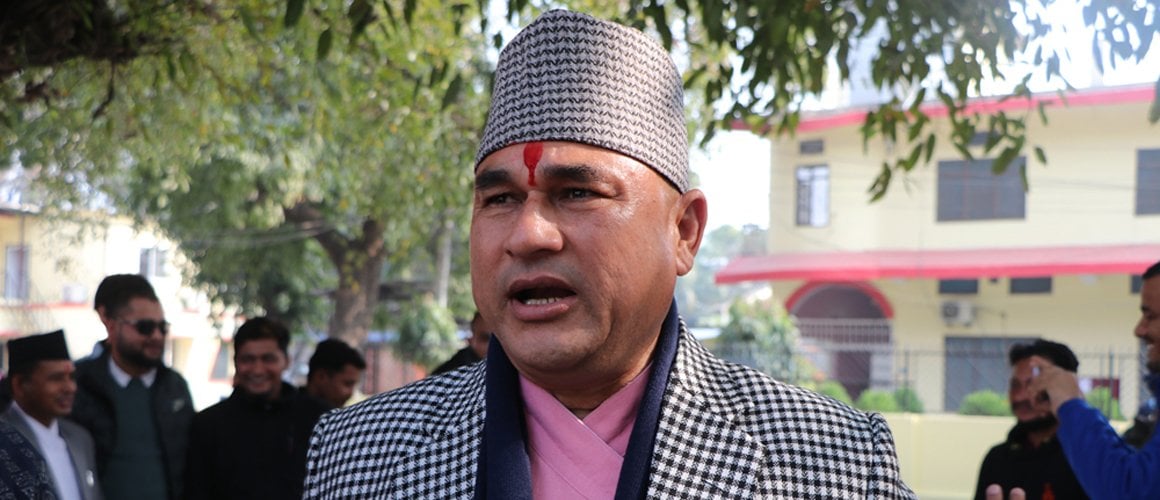
Prime Minister Balen Shah's Statement on Border Dispute Sparks Controversy


Kathmandu. ‘Not only India, Nepal has also encroached upon India’s land in many places. I came to know about this only after becoming Prime Minister.’
This statement made by Nepal’s Prime Minister Balen Shah in the House of Representatives meeting on Sunday has created a great stir in both Nepal and India. While there is strong criticism within Nepal regarding this statement, the Indian side is enthusiastic.

The statement made by the chief executive of the country, the Prime Minister, from the rostrum of the parliament is considered an expression of the country by the Permanent Court of International Justice (PCIJ) and the International Court of Justice (ICJ). This is because such public oral declarations and statements made by high officials representing the state create ‘binding unilateral legal obligations’, and the speaker and the state cannot retract from such statements, a precedent established in the 1919 ‘Ihlen Declaration’ case, where Norway lost Greenland to Denmark due to a statement by its then Foreign Minister Nils Claus Ihlen.
- That ‘Ihlen Declaration’ of 1919
Due to an oral statement made by Norway’s then Foreign Minister Nils Claus Ihlen to the Danish government, not only did Norway’s claim over Eastern Greenland end, but the territory had to be lost to Denmark. In fact, it was the ‘Ihlen Declaration’ of 1919, in which Norway’s Foreign Minister Ihlen stated that ‘if Denmark does not object to Norway’s claim over Spitsbergen and other Arctic regions, Norway will not object to Denmark’s claim of sovereignty over all of Greenland’.
Denmark argued before the PCIJ that this declaration constituted a binding agreement. And this unilateral opinion or declaration became a precedent for creating legal obligations under international law.
The PCIJ’s interpretation of the Ihlen Declaration established that such public oral declarations by high officials representing a state create binding unilateral legal obligations in the field of international law.
In essence, the court ruled that Ihlen’s statements, made in an official capacity, represented a commitment that Norway could not later retract. The PCIJ concluded that this declaration affirmed Denmark’s dominion over Greenland, including its eastern regions, thereby weakening Norway’s subsequent claims. This ruling underscored the significance of diplomatic communications and informal agreements in shaping territorial disputes, even in the absence of formal written treaties.
The PCIJ’s interpretation of the Ihlen Declaration set a standard in international law that such public oral declarations by high officials representing a state create binding unilateral legal obligations, and the individuals and countries involved cannot escape from such declarations.
The verdict delivered by the PCIJ in favor of Denmark on April 5, 1933, had far-reaching implications for the interpretation of treaties and territorial sovereignty in international law. The court confirmed that even when treaties and diplomatic exchanges are informal, they can serve as evidence of a state’s intentions and international recognition. It also demonstrated that oral commitments can carry significant meaning and weight in judicial proceedings.
According to some legal scholars, the PCIJ’s reliance on the Ihlen Declaration established a potentially problematic precedent, as it elevated informal statements to the level of binding obligations without clear evidence of mutual intent.
It also proved that while effective occupation or possession is important, it is not always the sole determinant of sovereignty. Despite Denmark’s limited physical presence in Eastern Greenland, historical claims and traditional recognition based on treaties were not in its favor. This precedent has guided subsequent disputes in the Arctic and Antarctic regions, where historical agreements often play a decisive role in the absence of continuous state control.
However, this decision was not without criticism. According to some legal scholars, the PCIJ’s reliance on the Ihlen Declaration established a potentially problematic precedent, as it elevated informal statements to the level of binding obligations without clear evidence of mutual intent. The decision has also been accused of not fully addressing the ambiguities associated with oral agreements. Nevertheless, this case has become a fundamental reference for understanding the interrelationship between treaties and sovereignty in international law, and it has given legal recognition and made binding any statements by responsible individuals, regardless of their nature.
- Some examples of territories or rights lost due to oral statements or diplomatic negligence
In international law, the ‘Ihlen Declaration’ by the Norwegian Foreign Minister is considered the most irrefutable and standard example of how informal or oral statements by a leader of any country can create legally binding obligations and bind the country. However, there are many historical cases before the Permanent Court of International Justice (PCIJ) and the International Court of Justice (ICJ) where a country has directly lost its territorial claims or treaty benefits due to oral statements, public declarations, or diplomatic conduct (such as accepting silence or informal signatures) by its leaders.
Such diplomatic weaknesses are mainly based on three principles of international law: 1) Unilateral Declaration, 2) Estoppel (the principle that one cannot retract from one’s word or commitment), and 3) Tacit Acceptance (accepting silently without protest).
The most famous and historical case after the Eastern Greenland affair, concerning territorial disputes, is the case of the Temple of Preah Vihear between Cambodia and Thailand (1962). This dispute arose over the ownership of an ancient temple located on the border between Cambodia and Thailand (then Siam). In fact, in 1908, the French prepared a border map in which, deviating from the natural watershed line previously agreed upon by the two countries, they showed the temple within French-controlled Cambodia. When this map was handed over to the officials of Siam (Thailand), they did not protest or object in any way. Later, in 1930, when a Thai prince visited the temple, French colonial officials stationed there formally welcomed him under the French flag. Even then, the prince did not object.
The case of the border dispute between Burkina Faso and Mali in 1986 can also be considered to test whether the statements or interviews of heads of state or government can extinguish territorial claims.
Decades later, Thailand argued that the temple technically belonged to it and that the map was erroneous, but the International Court of Justice (ICJ) ruled in favor of Thailand. The court held that due to the silence of Thai officials, lack of protest, and diplomatic silence, Thailand had tacitly accepted the French map. The court ruled under the principle of ‘estoppel’ that Thailand could no longer retract from its previous tacit acceptance. Consequently, Thailand permanently lost the area of the ancient temple.
The case of the border dispute between Burkina Faso and Mali in 1986 can also be considered to test whether the statements or interviews of heads of state or government can extinguish territorial claims. This case also shows whether an oral statement by a country’s president at a press conference can invalidate a border claim.
During the border dispute between Burkina Faso and Mali, the then President of Mali, Moussa Traoré, gave an interview. In the interview, the President stated that ‘Mali would accept the outcome of the border line determined by a specific arbitration commission, whatever it may be.’ Later, Burkina Faso argued in court that this oral statement by the President was a binding unilateral declaration, like the ‘Ihlen Declaration’, which weakened Mali’s claim to that territory.
The ICJ ruled that although a head of state’s oral statement could create binding obligations, there must be a clear intention to make a legal commitment in such a statement. In this particular context, the court held that the Malian President had merely made a political statement to reassure his neighbors, not to relinquish any formal legal claim. However, this case further solidified the rule that if a leader intends to make a legal promise in their speech or interview, it will be legally enforceable against them.
Another example of losing treaty/sovereign rights due to public statements is France’s loss of the nuclear testing treaty (1974) against Australia and New Zealand. This is the biggest legal precedent showing how public oral statements by top leaders can extinguish a country’s legal flexibility and rights.
It is considered extremely rare in history for the head of state of a country to mistakenly cede their territory to another on live television.
France was conducting atmospheric nuclear tests in the South Pacific Ocean, which Australia and New Zealand strongly opposed. Amidst legal and diplomatic pressure, the President and Defense Minister of France held press conferences stating that France would stop atmospheric testing and move towards underground testing.
Although France later attempted to retract its statement, the International Court of Justice held that these public oral declarations by high officials representing the state had already created binding unilateral legal obligations. Due to the oral promises made by its leaders to the international community, France lost its sovereign right to resume atmospheric nuclear testing in that region. This also makes it clear – the consequences of irresponsible statements by responsible individuals are often unfortunate.
It is extremely rare in history for the head of state of a country to mistakenly cede their territory to another on live television. This is because modern diplomatic rules and procedures are very strict and systematic to prevent such mistakes. However, there are some famous incidents in modern history where a leader’s oral mistake, mistranslation, or unplanned irresponsible statement has led to significant territorial damage, diplomatic crises, or immediate military confrontation.
- From the Berlin Wall to the Atom Bomb
There are also specific instances where a leader’s oral error has changed the course of history. The fall of the Berlin Wall was also due to such an accidental statement. Due to the statement of East German politician and spokesperson Günter Schabowski (1989), an entire country immediately lost control over its sovereign borders.
On November 9, 1989, East German leaders drafted a temporary law allowing their citizens to apply for visas to travel to the West. Their intention was for this process to begin gradually and according to administrative rules the next day. Without being fully informed of the details, Schabowski was handed the note just before the international press conference began. When a journalist asked, ‘When does this new regulation take effect?’, Schabowski, flipping through his notes, said orally without thinking, ‘As far as I know... it takes effect immediately, without delay.’
His statement was broadcast live on television. Within minutes, thousands of East Berliners converged on the border crossings to cross the Berlin Wall. The security forces at the border were confused and, in the absence of orders from higher authorities, eventually surrendered to the massive crowd and opened the gates. The Berlin Wall fell that very night, completely disregarding the government’s timeline, accelerating the process of East Germany’s collapse.
Another horrific example of how a terrible mistranslation of a leader’s ambiguous oral response can lead to devastating geopolitical consequences is the complete destruction of Hiroshima and Nagasaki.
In July 1945, after the Allied powers demanded Japan’s unconditional surrender through the ‘Potsdam Declaration’, Prime Minister Kantaro Suzuki held a press conference. When journalists pressed for a statement, he used the Japanese word ‘mokusatsu’. Suzuki’s intention was ‘not to comment for now as his cabinet was considering the terms’.
The word ‘mokusatsu’ is very ambiguous; it can mean ‘to remain silent’, but it can also mean ‘to reject with contempt’ or ‘to ignore’. International news agencies and Allied translators translated his oral statement to the world as: ‘The Japanese government ignores the final warning of the Allied powers.’
Interpreting the Japanese Prime Minister’s statement as a direct and arrogant rejection of peace, the United States proceeded with its military plans accordingly. Within a few days, atomic bombs were dropped on Hiroshima and Nagasaki, forcing Japan to surrender unconditionally.
- How dangerous is Balen Shah’s statement?
Border dispute is one of the most sensitive issues in Nepal-India relations. Especially concerning the Kalapani, Lipulek, and Limpiyadhura areas, which are Nepali territories encroached upon by India, and due to the unequal treaty of 1950, India has been established as an aggressor or encroacher and Nepal as a victim country not only within Nepal but also in international circles. In such a situation, statements from the Prime Minister that weaken one’s claims will have long-term effects on the country, according to experts.
Ranjit Rae, former Ambassador of India to Nepal, has interpreted Balen Shah’s statement as a ‘diplomatic victory’ for India. According to him, this statement, while creating controversy in Nepal’s internal politics, has strengthened India’s stance on the border dispute in its view.
India had been rejecting the new political and administrative map issued by Nepal in 2020. Since then, the debate on nationalism has intensified in the political circles of both countries. If Nepal’s Prime Minister has indicated the need to reconsider past claims regarding the border in parliament, some Indian diplomats may see it as an opportunity to enhance the validity of their side.
Arvind Gupta, a security analyst based in New Delhi, shares a similar view. According to him, although Nepal initiated a ‘map war’ in the past, the Prime Minister himself has now claimed to have admitted a weakness. According to his argument, this proves that India’s old stance was correct.
Akhilesh Upadhyay, an expert on India-Nepal relations, argues that the Prime Minister’s statement has weakened Nepal’s ‘bargaining power’ in talks with India.
Reference Material
https://digitalcommons.law.utulsa.edu/cgi/viewcontent.cgi?article=1073&context=tlr
https://www.icj-cij.org/node/100962
The Fall of the Berlin Wall, 1989)
This specific news has been automatically translated by AI. As a result, there may be some inaccuracies or language errors.