Government Forms New Committee to Resolve Land Issues After Dissolving Previous Commission


Kathmandu. The government has formed a new committee to resolve land-related problems after dissolving the land commission. The cabinet meeting held on Tuesday decided to form the 'Land Problem Resolution Committee' and appoint its office bearers. This is the 20th mechanism formed by the government in the name of resolving landless and squatters' problems.
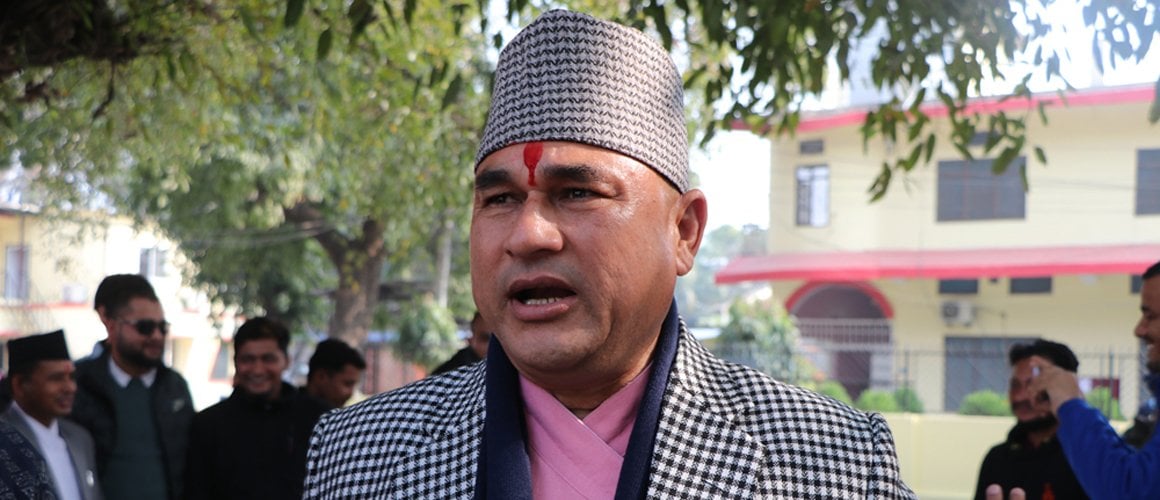
According to the cabinet decision, Balbhadra Bastola from Kaski has been appointed as the chairman of the committee. Similarly, Amir Prasad Neupane from Kathmandu, Padmanidhi Soti from Lamjung, and Dr. Rohana Shrestha from Kathmandu have been appointed as members of the committee.
Previously, the government had dissolved the previous land commission by issuing an 'Ordinance to Amend Some Nepal Laws' and amending the Land Act, 2021. According to Section 76, Additional Number 9 of the ordinance published in the gazette, Sub-section (8) of Section 52G of the act has been removed and Section 52G1 has been added thereafter.
The new section states that 'the Government of Nepal may form a committee or task force at the central and district levels' for the purpose of providing land to landless Dalits, landless squatters, and unorganized settlers.
Damoar Wagle, spokesperson for the relevant ministry, informed that this committee was formed on Tuesday under the new legal provision. As per the provision in the gazette, this new committee has been given the authority to resolve issues related to land ownership, registration deeds, or map certification of lands distributed by various commissions or task forces formed by the Government of Nepal in the past.
Previously, the government led by KP Sharma Oli had formed a land commission at the center and district commissions with political appointments under it in each district. However, although the current government has formed a committee at the center, it will not form politically appointed mechanisms at the district level. According to the ministry, instead, the work will be carried forward by the regular administrative mechanism led by the Chief District Officer (CDO) at the district level.

This is not the first time efforts have been made to resolve land problems in Nepal. Previously, 19 committees, commissions, and task forces have been formed, including a commission led by Hariprasad Rizal.
Despite the repeated formation of commissions and committees, the problem remains unresolved. According to the latest data submitted to the government by the then National Land Problem Resolution Committee on April 4, the total number of landless Dalits, landless squatters, and unorganized settlers in Nepal has reached 1,203,519 families.
According to the data, unorganized settlers form the largest group. More than 923,000 families across the country are categorized as unorganized settlers. Additionally, there are 178,504 landless squatters, and among them, 98,390 are landless Dalits.
Based on provinces, Lumbini Province shows the most significant land problem. A total of 317,190 families in Lumbini are registered as squatters and unorganized settlers, with 250,721 families being unorganized settlers alone.
Koshi Province is second, with 249,542 families still facing unresolved issues. Sudurpashchim Province is affected by this problem with 230,573 families.
Bagmati Province has 134,389 families, and Madhesh Province has 122,448 families with land problems. Madhesh Province has a statistic of 23,408 landless Dalit families.
Gandaki Province has 92,072 families as squatters and unorganized settlers. Karnali Province has the least land problem in the country, with a total of 57,305 families registered. In Karnali, the number of unorganized settlers is 52,553.
The amended act has imposed some restrictions on land distribution. The act also legally prohibits providing land to landless Dalits or squatters residing on riverbanks, lake shores, national parks, reserves, forest areas, within road boundaries, or other risky locations, and mandates arranging alternative settlements for them.
This specific news has been automatically translated by AI. As a result, there may be some inaccuracies or language errors.