Government Drafts 'Sunset Law' to Expedite Infrastructure Projects


Kathmandu. The government has prepared a preliminary draft of the 'Sunset Law' with the objective of implementing infrastructure development projects at a rapid pace.
The committee formed to study and prepare suggestions on this matter has seriously reviewed the provisions in existing laws such as the Forest Act, Environment Protection Act, and Land Acquisition Act that obstruct development construction and prepared proposals for improvement.
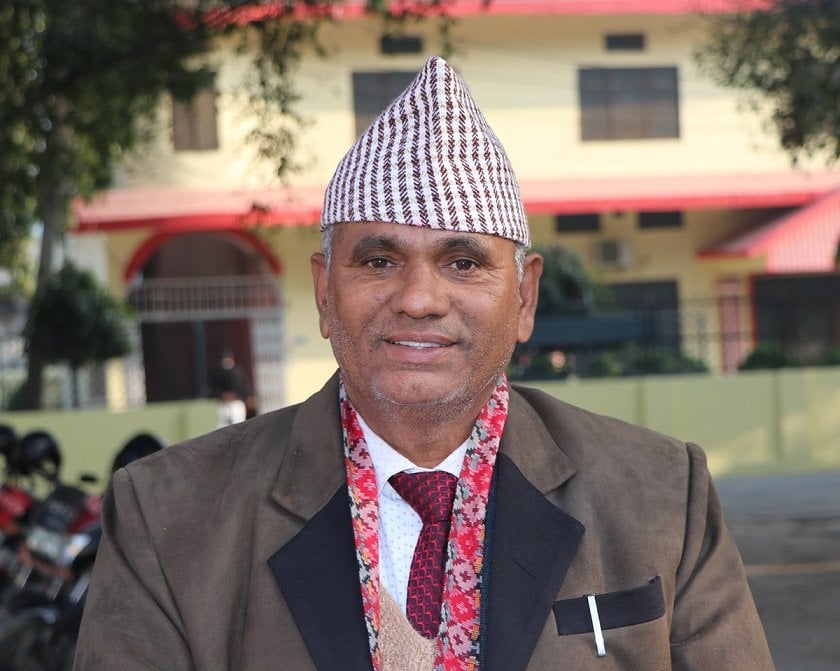
Committee Coordinator and National Planning Commission Member Arjun Jung Thapa informed that necessary amendment proposals have been made through the Sunset Law to end the situation where development projects are stalled for years due to procedural and legal complexities.
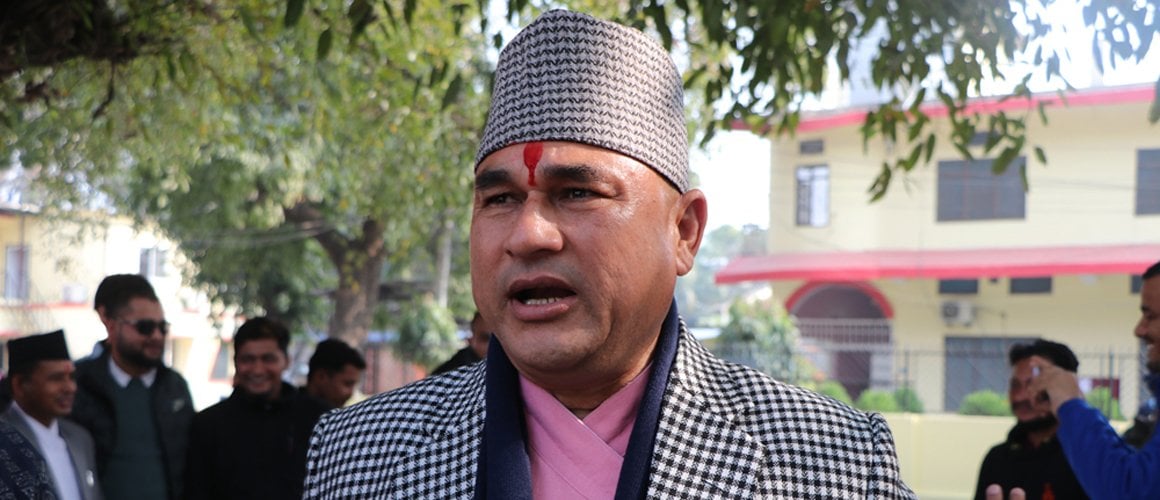
Speaking at a program organized by News Agency Nepal, Coordinator Thapa said that the draft also includes the objective of resolving personal interests and obstacles seen during implementation along with legal reform. He presented the example of the Prithvi Highway expansion project, which started in 2018, being delayed because local levels demanded a fresh Initial Environmental Examination (IEE) even though the Environmental Impact Assessment (EIA) was approved and the source and quantity of construction materials were clear.
According to the proposed arrangement, if the source of construction materials is clearly mentioned in the approved EIA of a project, the compulsion to conduct a separate IEE again will be removed. To end the situation where forest land use and tree felling processes are prolonged for years, a mandatory rule has been proposed for concerned bodies to make a decision within three months. If a decision is not made within the stipulated time, the steering committee chaired by the Prime Minister can make the necessary decision and proceed with the process.
Especially for projects declared 'transformative projects' by the Government of Nepal or hydropower and other infrastructure projects operating within national parks and conservation areas, concerned bodies will have to make a decision within three months. The draft also includes a provision for action against responsible officials who do not make a decision within the stipulated period.
In addition, proposals for necessary amendments have been included in the Guthi Act, Land Acquisition Act, Electricity Act, and Public Procurement Act. The path has been opened to work through a shorter method by removing the compulsion to complete long procurement processes for tasks such as relocating electricity lines that need to be moved during road expansion, thereby facilitating the public procurement process.
This preliminary draft prepared by the committee is being prepared to be submitted to the Government of Nepal this week. After that, it will be presented in the parliament after incorporating suggestions through discussions with concerned bodies such as the Ministries of Finance, Law, Forest, Energy, and Physical Infrastructure, and after approval from the Council of Ministers.
According to the proposed arrangement, if stones, gravel, and sand excavated during foundation digging or road cutting in construction projects are used in the same project, royalty will not be levied on them. However, if such materials are to be taken elsewhere for sale or use, the provision of paying royalty to the concerned local level according to prevailing laws will remain. This practical problem is being addressed because development construction has been affected due to royalty being demanded even on materials used at the project site.
Thapa clarified that the proposed arrangement is prepared according to the principle of 'rule of law' and not 'rule by law', stating that its objective is not to weaken the law but to remove impractical and double procedural obstacles seen in development construction. Projects that proceed legally should not be unnecessarily stopped, and responsible bodies must provide necessary support.
Speaking at the same program, former Secretary Keshav Kumar Sharma said that the government can bring a 'Legal Framework Sunset Law' to remove complexities in infrastructure construction or remove obstacles in the overall legal structure. He stated that if such a legal structure is prepared, many challenges will not arise in court, and if this matter is concluded within the first quarter of the current fiscal year, it will significantly contribute to increasing capital expenditure and accelerating project implementation.
He clarified that the issue of 'price adjustment' raised by construction entrepreneurs should not be understood as a demand for additional funds or 'price increase', and stated that it is natural for the amount to be adjusted in proportion to the cost when the market price fluctuates. He also clarified that the current law does not create any obstacles in addressing the issue of price adjustment.
This specific news has been automatically translated by AI. As a result, there may be some inaccuracies or language errors.
_jxKX1kXOlf.jpg)