New Study Links Climate Change to Increased Antibiotic Resistance in Bacteria


Kathmandu. A new study has shown that the risk of food poisoning is rapidly increasing as the effect of antibiotic drugs on bacteria is decreasing. Globally, climate change is no longer just a problem of weather or environment, but is becoming a major challenge for human health.
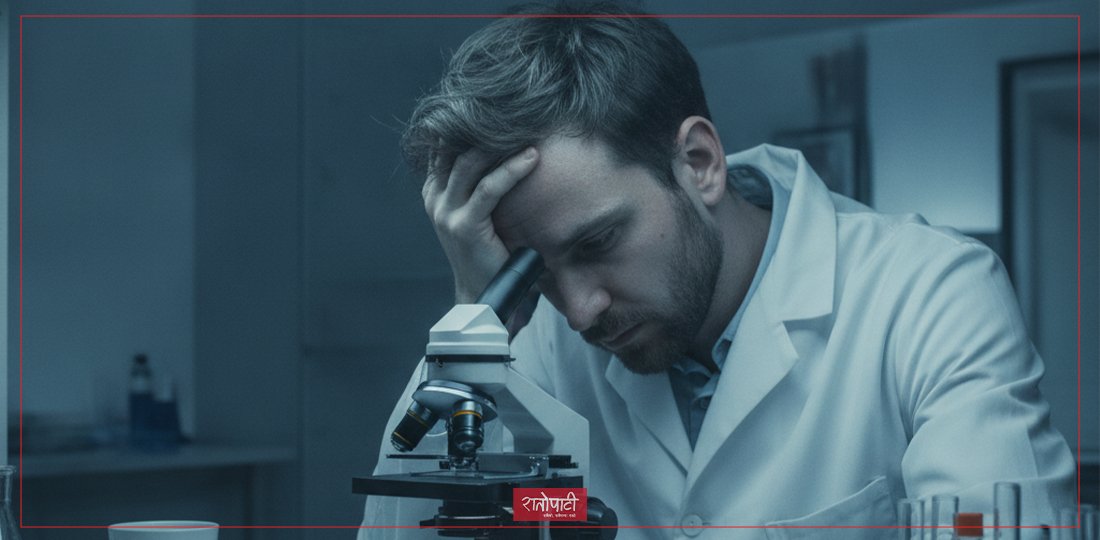
According to the new study, rising temperatures and changing rainfall patterns are making bacteria more dangerous. As a result, the effectiveness of antibiotic drugs is decreasing and the treatment of infections is becoming more difficult. This research was specifically focused on Salmonella bacteria, which are considered the main cause of diseases like food poisoning. According to scientists, if appropriate steps are not taken in time, this problem can become more serious in the future.
What does the new study say?
This study was jointly conducted by scientists from the United Kingdom, France, Australia, Switzerland, and China. According to the study, between 1940 and 2023, antibiotic resistance genes in Salmonella have increased by about 10 percent due to climate change. This research has been published in the medical journal Lancet Planetary Health. Scientists analyzed more than 480,000 Salmonella samples collected from 139 countries. The relationship between temperature, rainfall, and the resistance genes in bacteria was studied.
Why is antibiotic resistance dangerous?
Antibiotic resistance means that bacteria develop the ability to survive the effects of drugs. In such a situation, even the treatment of common infections becomes difficult. It is estimated that more than 1 million people worldwide die each year due to problems related to antibiotic resistance. According to experts, the excessive and incorrect use of antibiotic drugs is its main cause. But now climate change is also rapidly increasing this risk.
According to the researchers, rising temperatures and changing weather affect the bacteria's ability to survive, spread, and change rapidly. This also increases the exchange of antibiotic-resistant genes among bacteria. The study found that resistant genes in Salmonella have increased in 82 percent of countries.
Scientists said that the most impact has been seen in the Middle East, North Africa, South Asia, and Sub-Saharan Africa. Experts have warned that if control measures are not adopted in time, food poisoning and other bacterial diseases could become more fatal in the future.
This specific news has been automatically translated by AI. As a result, there may be some inaccuracies or language errors.