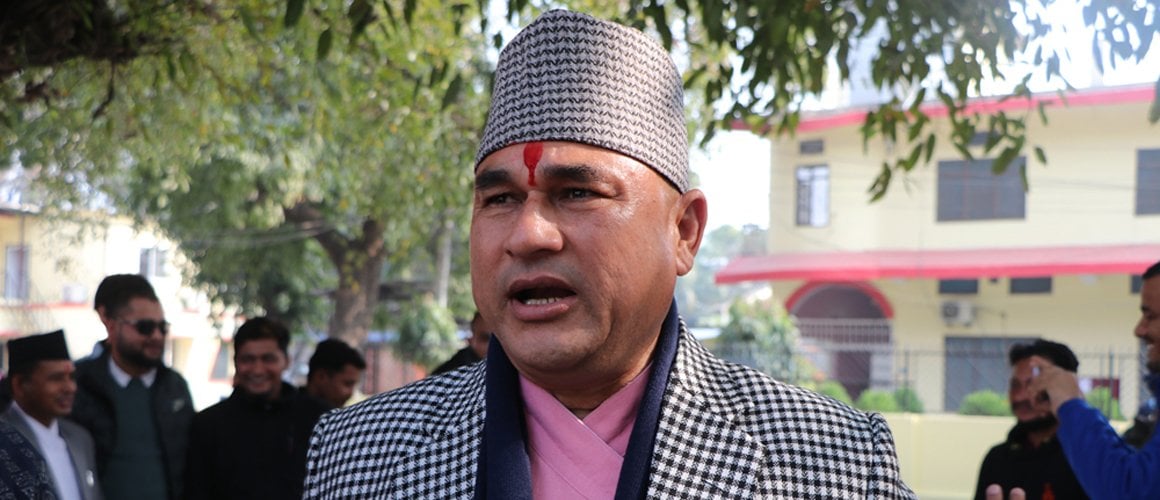
President Addresses Republic Day, Prime Minister Balen Shah Declines to Speak

Kathmandu. The tradition of the executive head addressing on the occasion of Republic Day has been broken for the first time. On the occasion of entering the 19th year of the Federal Democratic Republic, President Ram Chandra Paudel broke the past tradition by addressing the special ceremony organized at Tundikhel Military Ground on Friday.
Prime Minister Balendra (Balen) Shah, although present at the program, did not wish to address. However, he had sent a letter to President Paudel requesting him to address the special ceremony. Addressing the Republic Day ceremony for the first time, President Paudel stated that changes in the political system and governance structure alone will not fulfill the expectations of the era. He said, “We must all understand that changes in the political system and governance structure alone do not fulfill the expectations of the era; for this, it is necessary to bring about changes in our character of state power, conduct, political integrity, and values and norms. Otherwise, practice will not confirm political change.”
Previously, there was a tradition of the head of government addressing in the presence of the President, Vice President, distinguished state officials, and guests from foreign missions. Balen, who addressed a Nepal Army program in Bhaktapur for the first time after becoming Prime Minister on Chaitra 26, has not addressed public ceremonies since then.
The fact that Prime Minister Balen, who is the coordinator of the Republic Day Main Ceremony Committee, did not wish to give good wishes on Republic Day is being viewed with significance. Even more interesting is that the ruling party, Rastriya Swatantra Party (RSP), and its chairman, Rabi Lamichhane, have also not given any good wishes on the occasion of Republic Day. The absence of good wishes from the head of government and the party leading the government towards the republic obtained through the sacrifice of thousands of martyrs has increased suspicions of an attempt to devalue the system.
CPN-UML Secretary Dr. Rajan Bhattarai states that in a parliamentary system, the Prime Minister is the chief executive, and therefore, there is a tradition of addressing important state ceremonies. He argues that past practices, traditions, values, and norms should not be broken in the name of breaking the sequence.
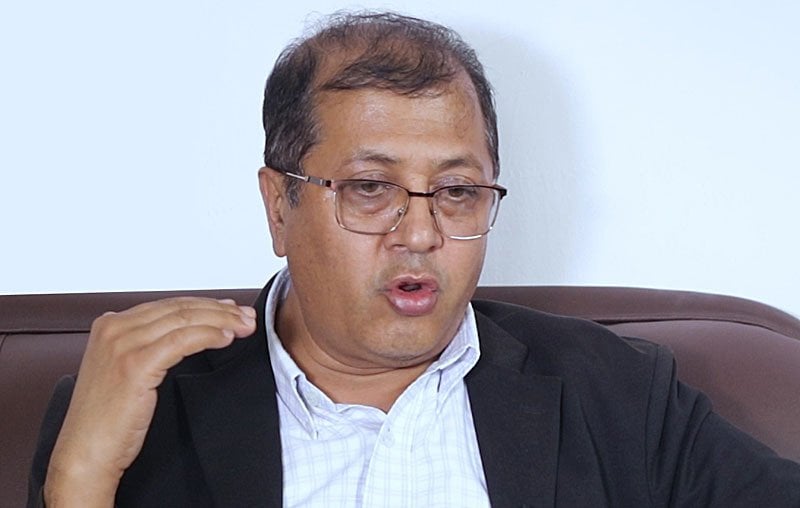
Bhattarai told Ratopati, “It is the practice for the chief executive to give policy statements at important state ceremonies and to participate and give speeches at national festivals. The current Prime Minister is not following that practice.” He added, “In a democratic country, some things are written in the constitution, and they are interpreted in law. Some things are based on practice, values, and norms.”
Bhattarai says that if one proceeds by disregarding those traditions simply because they are not written in the constitution and laws, it will create confusion in society. “It breeds disgust towards the system itself. Therefore, representatives entrusted by the people should not fail to perform their roles accordingly,” he said.
He argues that the government does not have the right to behave differently after winning by contesting the election accepting the current system and constitution. “They did not go to the people saying they did not like this system. They did not ask for votes to change the system. They asked for votes saying they would abide by this system and constitution and amend it if there were any flaws. The public is observing the behavior of acting differently now,” he said.
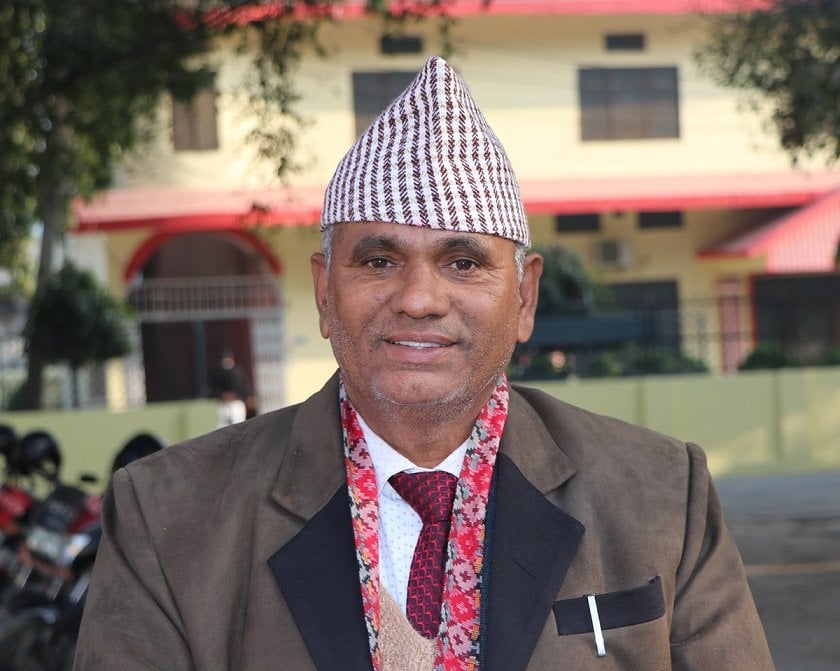
_yNgdfWrIHb.jpg)
However, Bhattarai believes there is room to doubt the intentions due to the lack of clear political and ideological commitment. Prime Minister Balen is also criticized for not answering the questions raised by MPs on the government's policy and program presented in Parliament on Baishakh 28. Opposition parties have continued to obstruct parliament over the issue of the Prime Minister not participating in the question-and-answer session held in the first week of every month as per Rule 56 of the House of Representatives Regulations. Prime Minister Balen has been heavily criticized for leaving the parliament midway while the President was addressing, and for not wearing national or formal attire at formal events.
Nepali Congress Spokesperson Devraj Chalise says that they are in a “wait and see” situation because those who influence publicly and those who act invisibly are different. Chalise clarified that the mandate received by RSP in the election was for changing the situation, not for changing the system.

Chalise said, “This is not a government that received a mandate to change the system. It is a government that received a mandate to change the situation. There is room for suspicion due to activities like bringing ordinances by bypassing parliament and the Prime Minister being absent in parliament, but politicizing based on assumptions is also hasty. We are in a wait and see situation.”
He speculates that Prime Minister Balen may have adopted the mentality of a directly elected executive and is behaving accordingly, considering that he received a mandate based on his popularity.
Meanwhile, CPN (Maoist Centre) leader Devendra Poudel states that the government should not break traditions and practices in the name of appearing different in the republic brought by the people. He believes that a government elected by abiding by the system and constitution has no right to deviate.
Poudel said, “Traditions and practices cannot be broken in the name of appearing different in the republic brought by the people. It must be further institutionalized. One cannot change parents in the name of breaking tradition! The Prime Minister does not have the right to use the republic and constitution established by the sacrifice of thousands of martyrs and go to the government, and disregard the sovereign rights of the people.”
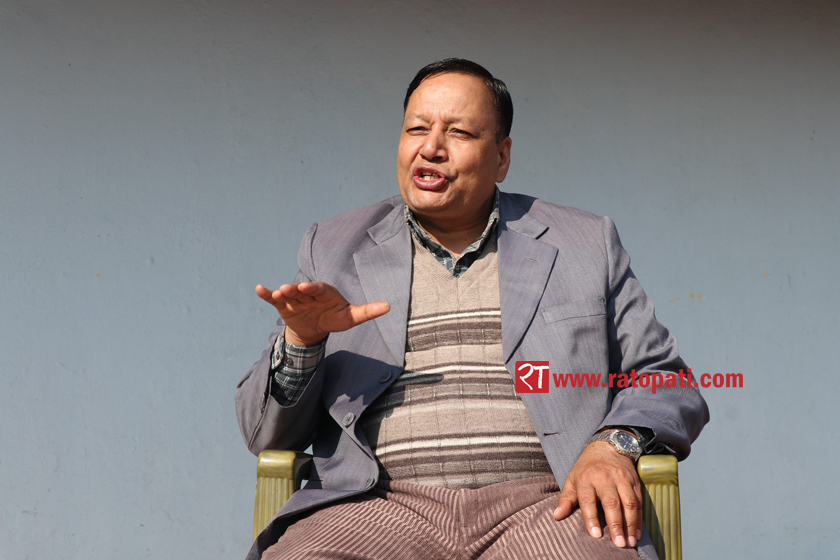
He states that the government has no right to flee from parliament, the place of its origin, as the sovereign people have the right to question an elected government.
When asked about this matter, RSP Treasurer Lima Adhikari expressed ignorance. “Hasn't a statement been issued? I will inquire with the party about what happened,” Adhikari said.
The 12-point agreement between the then rebel CPN (Maoist) and the seven parliamentary parties in Mangsir 2062 BS was the foundation for the People's Movement in 2062/063 BS. With the strength of the massive People's Movement, the traditional monarchy was abolished, and the first Constituent Assembly elections were held in Chaitra 2064 BS. The Federal Democratic Republic was formally established by the Constituent Assembly on Jestha 15, 2065 BS. However, disillusionment grew as the old political parties in power failed to perform according to the people's expectations.
Due to the inaction of political leaders and rulers, the old power structure collapsed due to the movement organized by the GenZ youth group on Bhadra 23 and 24, 2082 BS. The government led by former Chief Justice Sushila Karki dissolved the elected parliament and announced elections for Falgun 21.
Before the election, a 7-point agreement was reached between RSP Chairman Rabi Lamichhane and former Kathmandu Metropolitan City Mayor Balen Shah. The preamble of that agreement states the commitment to establish good governance within a pluralistic democratic system with an inclusive economy based on social justice, committed to equitable progress, to fulfill the aspirations of the common citizens.
In the manifesto published by RSP, it has also pledged to build a civilized society within the framework of the current system and constitution. According to that manifesto, RSP won 5.185 million popular votes and secured close to a two-thirds majority with 182 seats.
This specific news has been automatically translated by AI. As a result, there may be some inaccuracies or language errors.