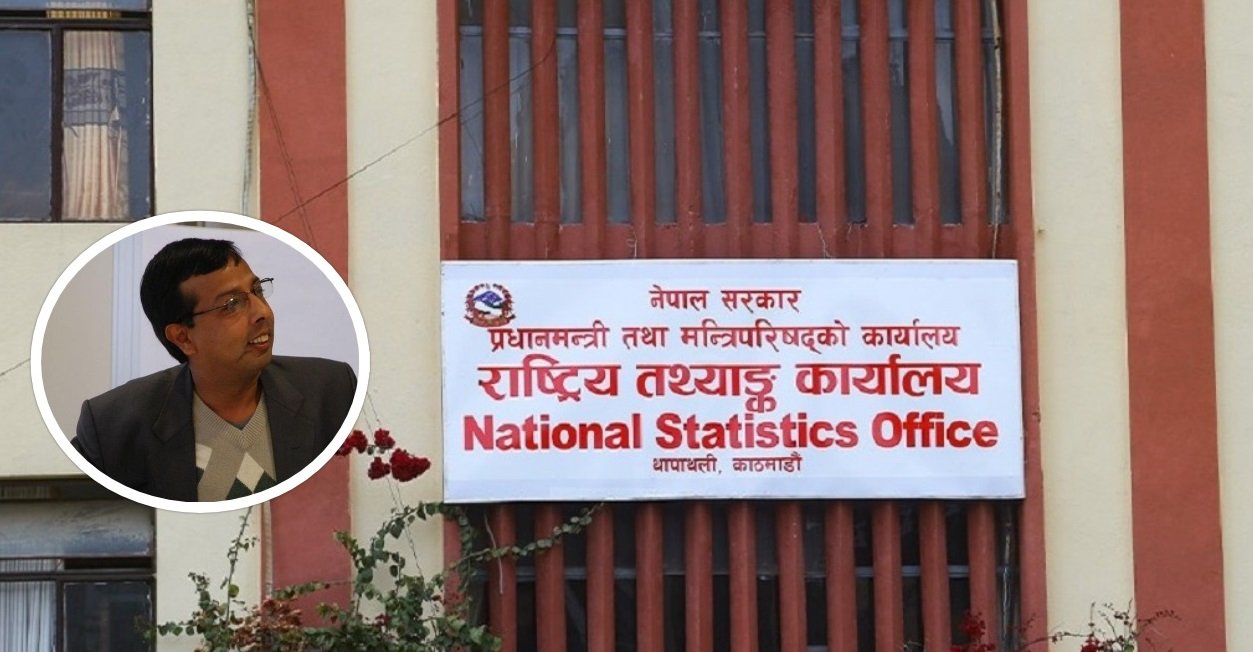
New Government Faces Challenges Ahead of Budget Presentation

Sixty days have passed since the new government led by Balen Shah was formed. The government has had the unprecedented opportunity to present a new budget within two months of its formation.
Although the steps taken by the Balen government in 60 days and its activities have not been well-received by many, i.e., the old parties. The new government is not without its shortcomings. In the name of eradicating inconsistencies, the business environment has been ruined. Businessmen are in distress. Investors in the stock market have lost more than four hundred billion rupees during this period. The landless have been driven from their homes, and they are in fear of whether their management will be done tomorrow or not.
Businessmen have been arbitrarily arrested on various charges. As proof is insufficient, they are being released by court order. All government appointments were simultaneously dismissed by making laws. As a result, service delivery has become more difficult. The two-day holiday is negatively impacting school education and health services.
Government media alone have been monopolized for government advertisements, bypassing private ones. As a result, the media sector, considered the evergreen soldiers of democracy, is on the verge of collapse. Thousands of self-employed journalists in small media outlets with low incomes are suffering from this.
Since the formation of the new government, transportation fares and fuel prices have increased drastically. This has drastically increased inflation. As a result, the struggling people living in urban areas have been burdened. Due to the high cost of living, the poor and laborers are starting to migrate from the cities.
Thus, the steps of the new government are novel and unexpected. At the same time, these steps are also burdensome for the poor and low-income people. Nevertheless, a new budget is coming. What kind of budget will the new government bring, opening the door to prosperity with its clear five-year roadmap? Everyone is watching with interest. Will the new government truly appear as 'visionary'? Will the new government bring a budget beneficial to the poor, the disadvantaged, and the middle class? The new budget, coming on Jestha 15, will provide answers to these questions.
Whether the new government is different from the old one or not, and how scientific, objective, equitable, and considerate of every class and sector the programs in the budget it brings will be, and whether they will lead the country towards prosperity, will be revealed by Jestha 15.
Our learned Finance Minister Dr. Swarnim Wagle has said that the budget to be presented by the government led by Rastriya Swatantra Party will be transformative this time.
The budget is the biggest tool for the government to show its work. It is also the package of the government's principles, policies, and priorities. Therefore, the budget that comes tomorrow will show whose government it is or if it is for everyone. The budget affects the kitchen of three crore Nepalis to their daily lives. The budget must bear the responsibility of fulfilling the dreams of the people. Therefore, the budget is a very important document for the country.
Indeed, our learned Finance Minister Dr. Swarnim Wagle has said that the budget to be presented by the government led by Rastriya Swatantra Party will be transformative this time. He claims that the budget will break the trend of the past.
However, the objective condition of the country is not such that it will be completely transformed as he says. This is because the country's revenue sources are very weak. Revenue sources have shrunk compared to previous fiscal years. Last year, while revenue collection was slightly more than 12 kharba, 11 kharba 80 arab 65 crore was allocated for current expenditure (government operating expenses). Thus, the government's income is not even enough to cover current expenses. Nepal is compelled to allocate 65 percent of the total budget to current expenditure.
Public debt has exceeded 30 kharba. The situation has arisen where the government has to allocate more funds for financial management (amount allocated to pay loan principal and interest) than for development budget. Although the development budget is allocated around three kharba, due to the lack of progress in contracting work by the end of the fiscal year, it is not even spent 60-65 percent. That is, the government cannot even spend two kharba annually on the development budget. Such is the situation.
Amidst such a fragile state of the country's income and expenditure, it is difficult for the government to present a transformative budget that will completely overhaul the country. This is because the programs included in past budgets are not bad. Budgets always sound sweet and pleasant, but their implementation is always poor. Nevertheless, the private sector in Nepal is capable and strong compared to the public sector.
Since its initial days, the government has not been able to create a business environment. Instead of listening to businessmen who have done wrong, they are immediately imprisoned, and the court has to release them on bail.
Currently, the private sector accounts for 86 percent of the total Gross Domestic Product-GDP (66 kharba). In such a situation, the government must be able to present a budget that makes the private sector dynamic. The government should encourage private sector investment by attracting extensive investment in government infrastructure and the energy sector. The private sector has money. A budget that increases investment in collaboration with the government and travels together on the journey of prosperity is the need of the hour.
However, since its initial days, the government has not been able to create a business environment. Instead of listening to businessmen who have done wrong, they are immediately imprisoned, and the court has to release them on bail. Fundamentally, in the name of cleaning up yesterday's mess, the business environment should not be destroyed, and employment should not be ruined. A businessman cannot be thought of as just an ordinary person; the thousands of jobs he creates in society sustain the livelihoods of millions. Therefore, a business environment is the main door to prosperity. The government should present a budget that revitalizes the business environment and encourages share investors.
Currently, the main problem of contemporary Nepal is unemployment, especially educated unemployment. Yes, the budget should be made based on that root. In the past, a lot of work has been done in infrastructure in Nepal. Not only work, but a lot of corruption also happened. This is why Nepal has reached its current state.
The government has been prioritizing 27 national pride projects. More than that, the country's first priority should be job creation.
Entrepreneurship and employment are the links to building a prosperous Nepal. No matter how much infrastructure development occurs, if there are no jobs and entrepreneurship does not flourish, despair will spread among the people. Therefore, this budget must come with the main priority of solving the unemployment problem and flourishing entrepreneurship.
The government has been prioritizing 27 national pride projects. More than that, the country's first priority should be job creation. It should be in promoting entrepreneurship. If not, 'Gen Z' movements will continue. The country will have to bear the burden of destruction, people's wars will be repeated, and social economic inequality will continue to increase.
However, if thought can be given to providing employment to the youth or employable workforce in the country and making them entrepreneurs-businessmen, it will mitigate the causes of much inequality, rebellion, or destruction. People will upgrade themselves through employment and opportunities. Currently, 9 million Nepalis are abroad. This is the result of many previous governments failing to focus on job creation. Being unemployed or poor is equivalent to hell in today's modern and competitive era. The government should not force the youth to live a hellish life by neglecting them. They should not be made to knock on foreign doors. This should be the difference between the past and the current budget. Thought should be given to creating broader employment and entrepreneurship.
There are three main areas of potential in Nepal: energy production, agricultural production, and tourism. The budget should come targeting these three areas. To succeed in the government's goal of producing 12,000 megawatts of electricity in the next 10 years, both the private sector and foreign investment must be attracted. Similarly, extensive commercial investment is needed in agriculture. Attention should be paid to tourism infrastructure and security. By making progress in these three areas, the door to development and prosperity for the Nepali people will open simultaneously. Let the budget come accordingly.
(Gautam is an economic writer and analyst.)
This specific news has been automatically translated by AI. As a result, there may be some inaccuracies or language errors.