Government Grants CDO Full Authority Over Land Distribution and Problem Resolution

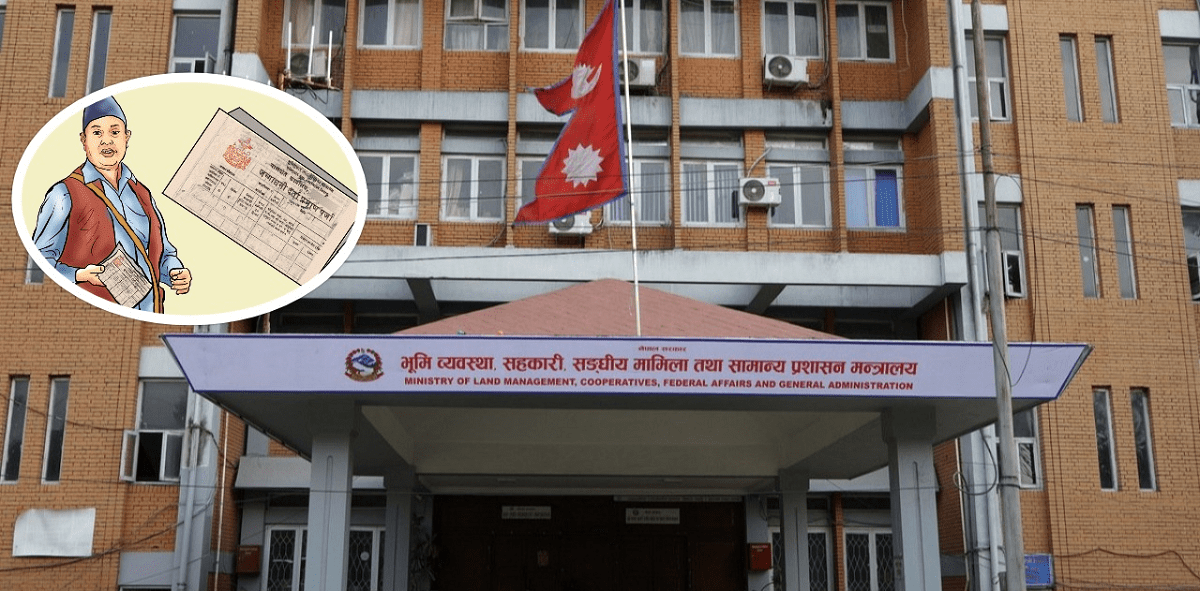
Biratnagar. The Government of Nepal has given the Chief District Officer (CDO) complete authority at the district level to distribute land and resolve land-related problems.
Through the 'Land Related (Twenty-first Amendment) Rules, 2083', the government has broken the tradition of political appointments and handed over all land-related issues to the CDO.
According to these rules, no political appointments will be made to the district mechanism responsible for managing landless Dalits, squatters, and unorganized residents. The Balen government has made the CDO the sole commander of this process.
Rule 41 A 6 of the amended rules, published in the gazette, has made the structure of the 'District Land Problem Resolution Committee' formed at the district level entirely administrative. As per Rule 41 A 6, Sub-rule (1), the Chief District Officer will now be the chairman of this committee.
In previous years, district chairpersons of such committees or commissions used to be appointed based on political quotas. Leaders who had lost elections or contributed to political parties were appointed as district chairpersons and members solely to provide them with jobs.
The new rules have closed that avenue, and the committee chaired by the CDO will include the Chief Administrative Officer of the local level within the district, the District Coordination Officer, the Chief of the Land Revenue Office (Malpot) in the district headquarters, the Chief of the Division Forest Office, and a representative officer from the District Administration Office as members, as designated by the Chief District Officer.
Similarly, Rule 41 A 6, Clause (ch), designates the Chief of the Survey Office as the member-secretary of the committee.
This new legal provision brought by the Balen government, specifically Rule 41 A 8, has given unprecedented and unlimited authority to the committee led by the Chief District Officer to resolve the squatter problem.
According to the provisions from Rule 41 A 8, Clauses (a) to (ch), the entire responsibility of formulating, approving, and effectively implementing the action plan necessary to provide land to landless Dalits and landless squatters within the district and for the sustainable management of unorganized residents lies with this committee led by the CDO.
Furthermore, as per Rule 41 A 8, Clause (ch), the committee is also authorized to closely monitor the identification, data collection, and verification of landless and squatters being carried out by local levels and to provide orientation training to local level officials and employees on matters related to its work area.
The CDO has been empowered with special authority to overcome any complexities that may arise during work at the district level. Rule 41 A 8, Clause (ch), grants the committee the authority to seek immediate necessary assistance from the relevant bodies if peace and security are required during the process of providing land to the landless and managing unorganized residents.
The final key to distributing land ownership certificates, or Lalpurja, has also been secured in the hands of the Chief District Officer. Rule 41 A 13 lays down strict and clear provisions regarding the distribution of certificates.
As per Rule 41 A 13, Sub-rule (1), after the Lalpurja is prepared based on the land map and records for the landless Dalits, squatters, and unorganized residents identified and verified by the committee, it shall be distributed by the Chief of the concerned Land Revenue Office in the presence of the Chief District Officer or an authorized representative designated by him/her.
Similarly, Sub-rule (2) of the same rule makes a mandatory provision for preparing and issuing certificates in the joint names of the husband and wife living together. Legal provisions stipulate that a single land ownership certificate will only be issued in the name of an individual if either the husband or wife is not present, thereby ensuring women's property rights.
The CDO has been empowered with special authority to overcome any complexities that may arise during work at the district level. Rule 41 A 8, Clause (ch), grants the committee the authority to seek immediate necessary assistance from the relevant bodies if peace and security are required during the process of providing land to the landless and managing unorganized residents.
Likewise, Rule 41 A 7 contains provisions regarding the committee's meeting procedures. According to this, a meeting of the committee will be considered quorum if more than 50 percent of the total members are present, and the decision will be based on the majority opinion. In case of a tie, the chairperson, i.e., the Chief District Officer, will have the casting vote to finalize the dispute, as per Rule 41 A 7, Sub-rule (4).
A monitoring system has also been put in place through this amendment to ensure transparency and accountability in the work. As per Rule 41 A 19, Sub-rule (1), the committee must submit a progress report of its work and activities to the ministry within seven days of the end of each month.
The committee has also been granted autonomy in terms of human resources and budget through the rules. Technical staff such as Amin and Surveyors who will be deployed in the field for land measurement can be hired on a contract basis and deployed as per Rule 41 A 18.
Rule 41 A 17 gives the CDO-led committee the authority to prepare proposals for programs and budgets required for itself and the district committee, send them to the ministry, and spend within the limits of the approved budget.
A monitoring system has also been put in place through this amendment to ensure transparency and accountability in the work. As per Rule 41 A 19, Sub-rule (1), the committee must submit a progress report of its work and activities to the ministry within seven days of the end of each month.
Rule 41 A 23 has strengthened the complaint hearing mechanism to prevent irregularities that occurred in the past in the name of resolving the squatter problem. As per Rule 41 A 23, Sub-rules (1) and (2), anyone can file a complaint with the ministry regarding the actions of the committee or its members, and the ministry must conduct an immediate investigation.
If, upon investigation, any member is found to have not honestly fulfilled their official duties, they can be recommended for removal from their post at any time as per the provision in Sub-rule (4) of the same rule, through the ministry.
Upon completion of all work, as per Rule 41 A 8, Clause (j), the committee must hand over the prepared land ownership records, decision books, and decision files to the Land Revenue Office, and the survey maps and fieldbooks to the Survey Office for secure record-keeping.
This move by the Balen government has completely prohibited the political maneuvering, middleman dealings, and vote bargaining that have been occurring for decades in the name of land distribution, through the enactment of rules.
By entrusting all legal responsibilities and accountability to the civil administration, the government has laid a strong foundation for the fair, transparent, and swift resolution of the problems of the truly landless.
This specific news has been automatically translated by AI. As a result, there may be some inaccuracies or language errors.