Government Presents Economic Survey 2082/83 Highlighting External Sector Strength Amidst Internal Challenges


Kathmandu. The government on Wednesday made public the 'Economic Survey 2082/83'.
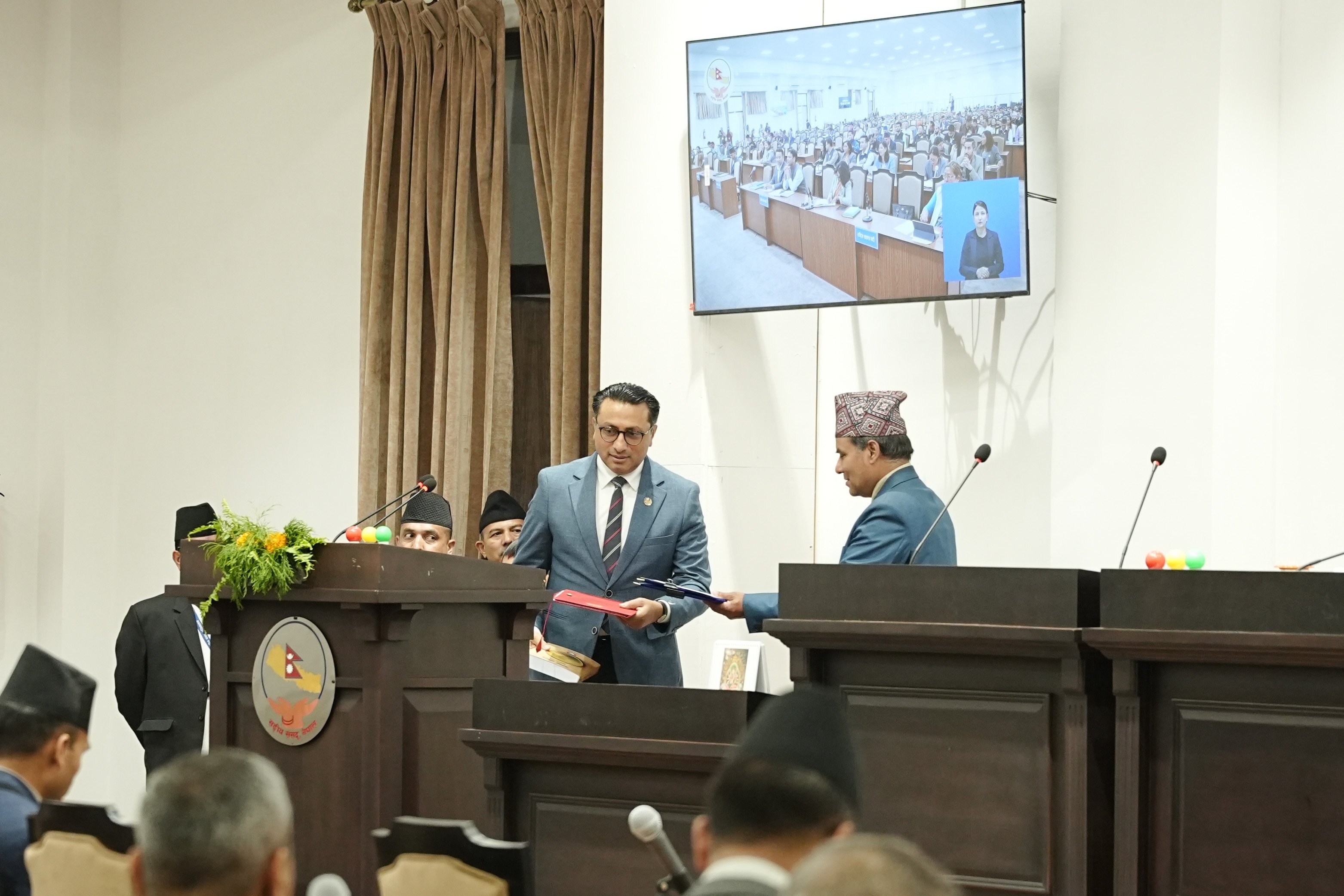
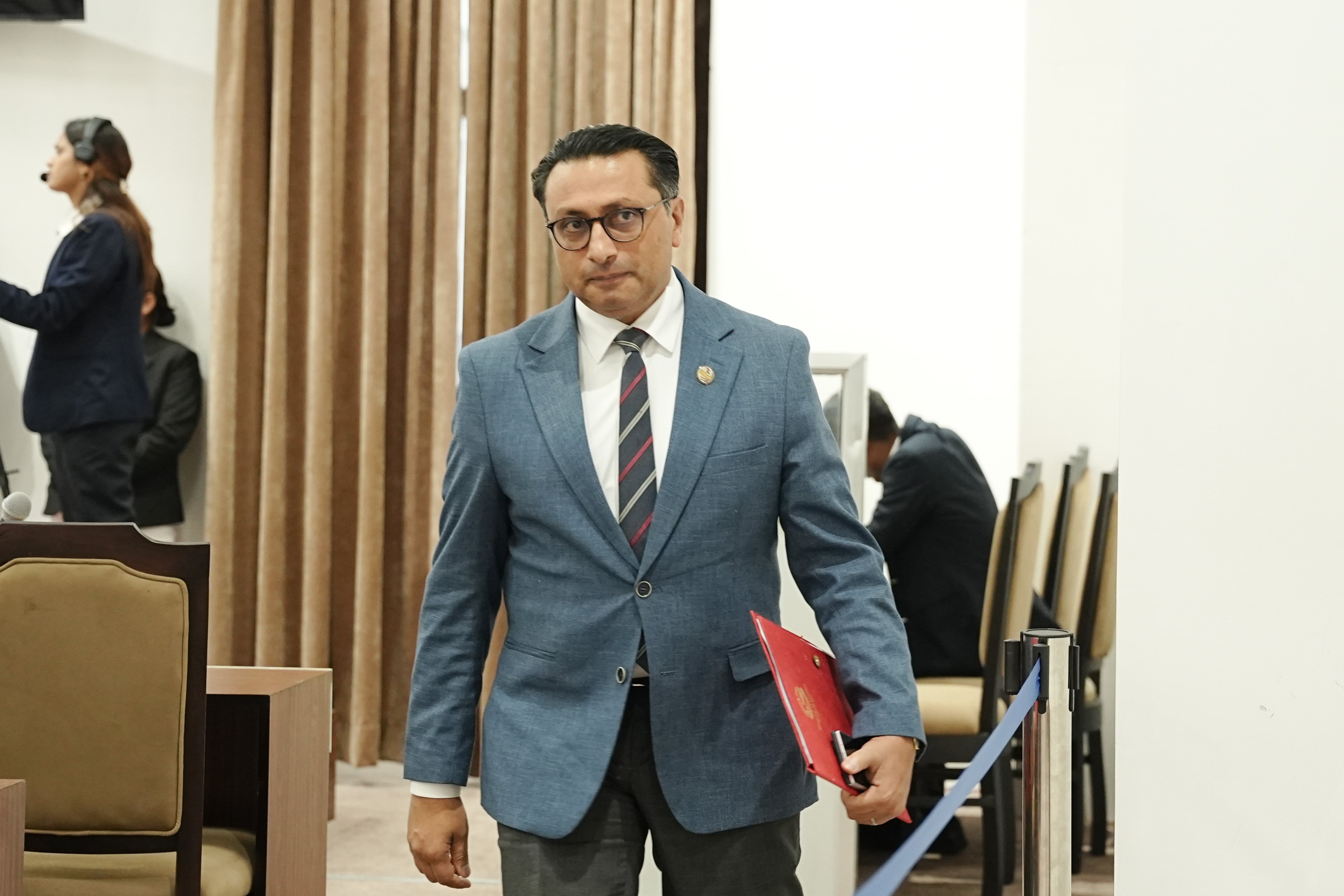
Finance Minister Dr. Swarnim Wagle presented the Economic Survey in both the House of Representatives and the National Assembly.
As per the Economic Procedure and Financial Accountability Act, 2076, the Finance Minister presents the survey in both houses of parliament before the budget each year, informing the house about the country's macroeconomic situation.
In accordance with the said act, Finance Minister Wagle presented the Economic Survey in the Federal Parliament, reflecting the real picture of the country's current economy. Key economic and financial data up to Falgun of the current fiscal year have been made public.
According to the survey presented by Finance Minister Dr. Wagle, the external sector of the economy has become very strong and secure with remittances and foreign exchange reserves setting historical records. However, Finance Minister Wagle has admitted that this external sector enthusiasm has not been reflected in the domestic economy.
He pointed out in the survey that the accumulation of excess liquidity in the banking system, the inability of credit demand from the private sector to increase, capital expenditure not being as expected, and economic growth rate falling below target are structural challenges of the economy.
Finance Minister Dr. Wagle stated that although some positive signals are visible in the country's economy, structural challenges still remain. He said, 'Nepal's external sector is strengthening, inflation is under control, and remittances have increased significantly. Weak capital expenditure, increasing trade deficit, expansion of public debt, and slow credit flow to the private sector are seen as major challenges for the economy.'
The government has set the budget for the upcoming fiscal year in accordance with the Economic Survey 2082/83. Finance Minister Wagle stated that due to the uncertainty in the global economy, trade disruptions, and ongoing conflict in the Middle East in the current fiscal year, the risk of global economic expansion being limited to 3.1 percent and inflation remaining above 6 percent in 2026 is present.
Finance Minister Wagle said that despite the uncertainty in the global economy and regional conflicts, Nepal's macroeconomic indicators have improved and there has been satisfactory progress in the social sector.
He mentioned that due to the impact of global economic trends, the economic growth in the current fiscal year will be limited to 3.85 percent, which was 4.43 percent last year.
Key Economic Issues Highlighted by the Government in the Survey
- Contraction in Economic Growth Rate and Increase in Economic Size
According to the data presented by the Finance Minister in parliament, while sectors like electricity production, transport, communication, and retail trade have seen growth, the main reason for the decline in the overall economic growth rate is the weak performance of the agricultural sector.
Drought in the Terai region during the paddy planting season and excessive rainfall during the harvest led to a decrease in paddy production. This directly impacted the agricultural sector's growth rate, causing the overall economy's growth to shrink below target. The estimated growth rate for the agricultural sector in the current fiscal year is only 1.58 percent, compared to 3.05 percent last year.
Despite the slow economic growth rate, the country's GDP is estimated to increase to 66 kharba 9 crore rupees. Additionally, the per capita gross national income of Nepalis is estimated to reach 1,535 US dollars and per capita gross domestic product to 1,513 dollars.
Regionally, while Bagmati and Gandaki provinces have growth rates above the national average, other provinces are expected to have growth rates below the average.
According to the survey, the contribution of the agricultural sector to the gross domestic product is estimated to be 24 percent, and the non-agricultural sector's contribution is 76 percent. Bagmati Province dominates economic activity, contributing 36.7 percent to the gross domestic product.
- Structural Challenge of a Consumption-Oriented Economy
Another challenge identified in the economy's structure is the excessive consumption trend, as shown by the survey. The country's economy is fully focused on consumption, the survey indicates. In the current fiscal year, 90.3 percent of the gross domestic product is estimated to be spent on consumption. Finance Minister Wagle's survey mentions that more than 90 percent of the income generated and earned within the country is spent on daily necessities and consumption, leading to a very weak state of capital formation and national savings (only 9.7 percent).
The continuous decline in the agricultural sector's contribution to gross domestic product to 24 percent is not a good sign for the economy. However, the government has pointed out a continuous downward trend in recent times. Looking at it this way, the contribution of the non-agricultural sector (industry and services) has reached 76 percent. As the economy increasingly shifts towards the service sector, the shrinking of the manufacturing sector is considered a challenge for long-term economic stability.
- Slow Capital Expenditure and Rising Public Debt
The government's capital expenditure, considered the main tool for making the economy dynamic, has been very disappointing this year as well, a fact Finance Minister Wagle admitted regarding the inability to increase capital expenditure. He stated that the government has not spent capital as expected. As of Falgun, the federal government's revenue collection has increased by only 3.2 percent, while overall expenditure, including current expenditure, has increased by 10.4 percent.
Revenue is barely sufficient to cover current expenses, and due to not meeting revenue collection targets, the government has not been able to mobilize adequate resources for development work.
Due to the low growth rate in revenue collection, the government's dependence on public debt for resource management has increased significantly. This is why capital expenditure is decreasing. As of Falgun of the current fiscal year, the federal government's fiscal balance is in deficit by 58 arba 1 crore. The country's total public debt has reached 28 kharba 78 arba 30 crore. The proportion of public debt to gross domestic product reaching 43.6 percent increases the risk that a large portion of the government's budget in the coming days will be spent on repaying the principal and interest of the debt (debt servicing).
- Excess Liquidity in Banking but Slow Credit Flow
The Economic Survey has brought to light a major paradoxical situation in the banking sector. Currently, there is no shortage of investable funds (liquidity) in banks and financial institutions. As of Falgun of the current fiscal year, bank deposits have increased by 6.64 percent to 77 kharba 45 arba 88 crore. However, despite money accumulating in banks, there is no demand for credit in the market.
During the same period, credit extended to the private sector has increased by only 4.4 percent to 57 kharba 41 arba 24 crore.
The credit-to-deposit ratio (CD ratio) is at a very comfortable level of 74.07 percent. Similarly, the adequacy of primary capital relative to risk-weighted assets indicates that banks are ready to lend. However, due to the sluggishness in the economy, the decline in overall market demand, and the low morale of businesses, the private sector has not been able to demand credit for new investments.
Non-performing loans (bad loans) in banking have increased. Due to businesses not running well, borrowers are unable to repay loan principal and interest on time. The survey shows that the average ratio of non-performing loans in banks and financial institutions has increased to 5.42 percent. This indicates a risk to the health of the banking system.
- Enthusiasm in Public Participation in the Capital Market
Despite the sluggish economy, public attraction and participation in the capital market (stock market) have been historic. As of Falgun 2082, the NEPSE index stood at 2,820.45 points. The size of the capital market has expanded, with total market capitalization reaching 47 kharba 44 arba.
As of Falgun, the number of Demat accounts opened has reached 7.639 million. This is approximately 26 percent of Nepal's total population. Similarly, the number of 'Mero Share' users has reached 6.613 million, indicating that the capital market is now accessible to the general public nationwide, not just a limited urban class, according to the survey.
- External Sector at Historical Heights
Regardless of the internal economic challenges, Nepal's external sector appears to be in a strong position. As of Falgun of the current fiscal year, remittance inflow has increased at a high rate of 37.7 percent, reaching 14 kharba 49 arba 70 crore.
Bolstered by these remittances, the country's foreign exchange reserves have reached an all-time high of 34 kharba 13 arba 77 crore. This reserve is sufficient to cover 18.5 months of imports of goods and services. The balance of payments is in surplus by 6 kharba 35 arba. However, the increase in the trade deficit of goods by 11.2 percent to 10 kharba 98 arba 14 crore confirms the structural reality that Nepal's economy is entirely dependent on imports and remittances.
- Improvement in National Savings due to Remittance Growth
Although Nepal's total national savings have improved, gross domestic savings have further declined. Finance Minister Dr. Swarnim Wagle mentioned in the Economic Survey 2082/83 that gross domestic savings have decreased. While the savings-investment gap in the gross domestic product was 20.9 percent in the last fiscal year, it is estimated to decrease by 2.8 percentage points to 18.1 percent in the current fiscal year. This gap was highest in the fiscal year 2076/77 in the last decade.
However, the national savings situation has shown improvement. The report states that total national savings have increased due to the growth in remittance inflow, business services, and income from information technology exports. The Economic Survey mentions that the ratio of national savings to investment, which was 9 percent last year, is estimated to increase to 12.8 percent this year.
Analysis suggests that despite some sluggishness in economic activities and low economic growth, the increase in national income sources (especially remittances and service exports) has shown positive signs in some economic indicators.
The per capita gross domestic product of the country (at current prices) is estimated to increase by 5.5 percent in the current fiscal year to 217,946 rupees. Last fiscal year, this income was 206,625 rupees.
- Construction Sector in Rhythm
The Economic Survey 2082/83 shows a gradual improvement in the country's industrial sector. According to the survey, the value-added growth rate of the mining and quarrying sector is estimated to be 3.52 percent, which was only 1.39 percent last fiscal year.
Due to the improvement in the construction sector and the increase in royalty collection from the mining and quarrying sector, a significant improvement is seen in the value addition of this sector. However, the contribution of the mining and quarrying sector to GDP is projected to decrease slightly to 0.43 percent compared to 0.45 percent last year. Following the decline in fiscal year 2080/81, the manufacturing sector is also showing gradual improvement.
The contribution of the manufacturing sector to GDP is estimated to reach 5.72 percent this year, compared to 5.66 percent last year. The average growth rate of this sector in the last decade was 4.03 percent. The construction sector, which has been sluggish for a long time, has also picked up a positive rhythm this year.
It is mentioned that the value addition in the construction sector has improved due to the increase in the import of construction materials and domestic production of construction-related industrial goods. The contribution of the construction sector to GDP is estimated to increase from 5.35 percent to 5.52 percent.
The economic survey presented by the government acknowledges that the strength of the external sector has saved the economy from crisis and provided significant relief. However, the survey admits the reality that this external strength has not been transformed into domestic production, job creation, and capital formation.
This specific news has been automatically translated by AI. As a result, there may be some inaccuracies or language errors.
_jxKX1kXOlf.jpg)

_htFaNqpIDJ.jpg)