Nepal Aims for 30,000 MW Electricity by 2035 Amidst Challenges


The government has set an ambitious target of generating 30,000 megawatts of electricity within the next 10 years. The previous government had set a target of 28,500 megawatts, which was welcomed by the Independent Power Producers' Association, Nepal (IPPAN). The current government, with a two-thirds majority, has increased this target to 30,000 megawatts by 2035. This target is positive for generating hope for development and prosperity among the people.
However, merely announcing targets is not enough. The success or failure of this target will be determined by how the government approaches policy reforms, infrastructure development, and the role of the private sector in its implementation.
- Basis for Investment and Production: How to Mobilize 60 Trillion?
Generally, an additional 20,000 megawatts of electricity production in 10 years requires approximately 60 trillion rupees in capital. Many may wonder how such a large sum will be mobilized, but analyzing its practical and technical aspects, it is not impossible.
Currently, about 4,200 megawatts of electricity have been connected to our national grid, with the private sector contributing the majority. Similarly, projects with a capacity of about 5,600 megawatts are under construction. Thus, a target of about 10,000 megawatts is already secured under the current circumstances.
Hydropower is not an unproductive sector like roads, bridges, or view towers. It is considered a sector that generates cash flow as soon as production begins.
Now, according to the government's target, we need to construct an additional 20,000 megawatts. Hydropower projects in Nepal are not built by a single individual; they are group infrastructure projects. Currently, about 98 hydropower companies are listed in the capital market (NEPSE). These 98 companies represent 98 strong groups. If just 40 active groups commit to building projects of 500 megawatts each in the next 10 years, then generating 20,000 megawatts of electricity will be easy.
The issue of mobilizing investment needs to be addressed, for which the principle of rolling money (circular investment) is necessary. For example, the 4,200 megawatts of projects that have been completed are now generating an income of 30 to 40 million rupees per megawatt annually.
Hydropower is not an unproductive sector like roads, bridges, or view towers. It is considered a sector that generates cash flow as soon as production begins. It is necessary to reinvest the profits from the projects that are currently completed and under construction into new projects. Looking at it this way, there will be no financial problem in achieving the target of 30,000 megawatts in 10 years.
- Obstacles to Development: Ministry of Forest and Land Acquisition
The biggest obstacles to achieving the target are our government mechanisms and anti-development laws and regulations. Especially, the Ministry of Forests and Environment has become a major obstacle to development. All infrastructure construction projects (hydropower, transmission lines, roads, etc.) are stalled due to forest-related issues.
Generating 30,000 megawatts of electricity is not enough; transmission lines are the means to deliver it to the market.
Similarly, land acquisition is another major headache. The government undervalues land. However, during compensation distribution, locals do not agree even if 5 million rupees are offered for land worth 500,000 rupees. Private sector companies looking to build projects are told to 'negotiate with locals themselves.' We are prepared to pay double or triple the value determined by the state. However, the state should facilitate land acquisition through the Chief District Officer (CDO) using its authority.
As long as development-friendly laws that facilitate development construction are not enacted, the talk of 30,000 megawatts risks remaining just talk.
- Precarious State of Transmission Lines: Private Sector is Indispensable
Generating 30,000 megawatts of electricity is not enough; transmission lines are the means to deliver it to the market. However, the condition of transmission lines in Nepal is currently extremely dire.
What is the use of a car if there is no road to drive it on? There is electricity in the power houses, but there are no wires and towers to deliver it to consumers or borders. Currently, the Nepal Electricity Authority (NEA) has a monopoly in transmission line construction, but the NEA alone cannot build transmission lines. We have repeatedly stated that the private sector must now be allowed to construct transmission lines.
For example, look at India, where the private sector is successfully engaged in electricity generation, transmission, and trade. The notion that the private sector is incapable of building transmission lines is completely false. The private sector has already built over 2,500 kilometers of transmission lines (132 kV, 66 kV, 33 kV, etc.) with its own investment, carrying more than 3,500 megawatts of electricity from its power houses to the NEA's substations. If the government guarantees a return of 15-17% through a 'BOOT model' or any other commercial model, the private sector can build even the largest trunk lines.
The main culprit for hydropower companies incurring losses is the Nepal Electricity Authority. Due to the NEA's failure to build transmission lines on time, the electricity from 37 hydropower companies is going to waste.
The example of the Markichowk-Naya Butwal transmission line, for which a Chinese company won the contract but could not complete the work on time, is before us. If these sick projects are handed over to the Nepali private sector instead of waiting for foreigners, capital will be mobilized here, and the work will be completed on time. The government must show flexibility in building transmission lines, just as it has in electricity generation.
The main culprit for hydropower companies incurring losses is the Nepal Electricity Authority. Due to the NEA's failure to build transmission lines on time, the electricity from 37 hydropower companies is going to waste. The project is ready, electricity is being generated, but there are no connecting wires. In my own 10-megawatt project, the NEA is purchasing only 2 megawatts, resulting in 8 megawatts going to waste. How can the company not incur losses?
It is also important to understand the inequality in the agreement here. If the private sector fails to build the project on time or supply electricity as per the agreement, it has to pay a 5% penalty to the NEA. However, even when the private developer faces bankruptcy due to inability to pay bank interest because the NEA fails to build transmission lines on time, the NEA does not pay any compensation. Banks do not consider profits or losses; they require installments and interest. Developers have had to sell personal assets or issue rights shares to pay interest. In this way, the private sector is becoming a victim of the negligence of state bodies.
- First Priority: Domestic Consumption
The first and best market for the electricity we produce is within the country itself. Rather than becoming rich by selling electricity to India or Bangladesh, it is wiser to circulate the economy by consuming that electricity domestically. According to an analysis by economists, if we earn an average of 8 to 9 rupees per unit by selling electricity to India, consuming that same unit of electricity within Nepal (in industries, electric vehicles, domestic use) creates a multifaceted impact equivalent to 119 rupees on the economy.
Currently, projects with a capacity of over 2,500 megawatts are waiting for electricity purchase agreements, but the NEA dismisses it by saying there is no market.
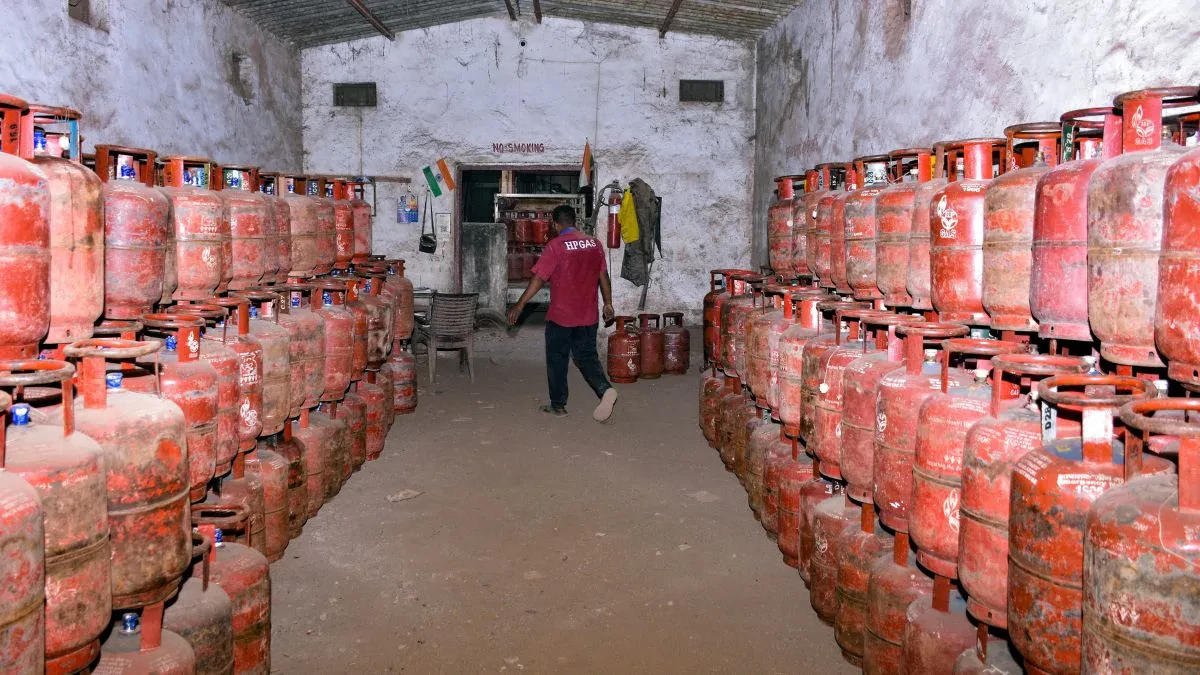
So, should we aim to earn 9 rupees or achieve 119 rupees in economic growth? Certainly, the country's benefit lies in domestic consumption. For this, transmission lines and distribution systems must be reliable. If a family in a village is guaranteed that the power will not go out while cooking with an induction stove, who will buy LPG gas for 1800 rupees? Electricity for 850 rupees can cook for a whole month instead of gas. This reduces our trade deficit and improves the standard of living for the people. Therefore, the government must work day and night on policies to increase consumption.
- Entry of Private Sector in Electricity Trading
The system where the private sector generates but the NEA has a monopoly in trading is not suitable for today's open market economy. We have long been demanding permission for the private sector to trade electricity, but the government has been withholding licenses.
Currently, projects with a capacity of over 2,500 megawatts are waiting for electricity purchase agreements, but the NEA dismisses it by saying there is no market. If the NEA cannot find a market, it should issue licenses to the private sector. We will sell electricity directly to industries on a 'B2B' model. We will sell it ourselves in India's open market.
Even within the country, many industries are not receiving sufficient electricity and are forced to run diesel generators. We are ready to sign agreements with industrialists and supply them electricity at a cheaper rate. This will not burden the government financially; the state will instead receive wheeling charges (fees for using hubs and wires) and revenue.
If the private sector is not allowed to trade, the target of 30,000 megawatts in 10 years will prove to be hollow. The hydropower sector is the main basis for Nepal's economic transformation. The private sector has already proven its capability. Now, the government must adopt a policy of facilitation, not control, towards the private sector.
To meet the target of 30,000 megawatts, there is no shortage of capital; what is lacking is strong political will and development-friendly policies. If the cumbersome provisions of the Ministry of Forests are removed, land acquisition is facilitated, the private sector is opened up for transmission line construction, and the monopoly in electricity trading is broken, then Nepal can achieve not just 30,000 megawatts but a greater energy revolution.
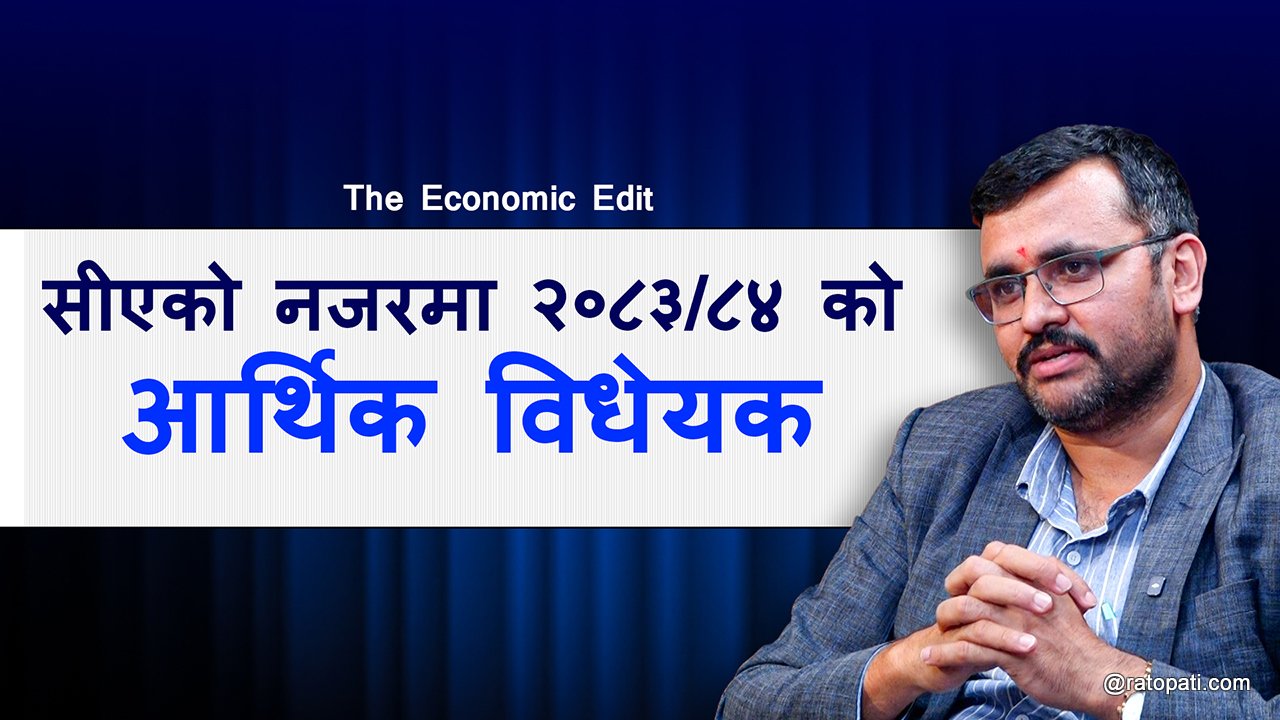
(Based on an interview with Mohan Dangi, Senior Vice President of IPPAN)
This specific news has been automatically translated by AI. As a result, there may be some inaccuracies or language errors.
_jxKX1kXOlf.jpg)

_htFaNqpIDJ.jpg)