Researchers Warn of Cognitive Decline Due to Over-reliance on AI


Researchers have expressed concern as large language models (LLMs) continuously take over human intellectual tasks. They have warned that there will be a price to pay for such a tendency to 'outsource mental work'.
Research scientist Natalia Koshmina found the cover letters she received while searching for interns to be suspiciously similar. The letters were long and neat. After the introduction section, the letters would suddenly delve into abstract and irrelevant topics related to her work.
It became clear to her that the applicants were using LLMs to write the letters. LLMs are a form of artificial intelligence (AI) that power chatbots like ChatGPT, Google Gemini, and Claude.
At the same time, while teaching at the Massachusetts Institute of Technology (MIT), Koshmina also realized something else. Studying human-computer interaction, she found that many students today forget what they have read much faster than a few years ago.
She suspected that the increasing reliance on LLMs might be affecting her students' intellectual abilities. She then decided to study this further.
The main concern of researchers like Koshmina is linked to excessive reliance on AI. Their understanding is that such dependence can negatively affect the language we use and our ability to perform general intellectual tasks. Research increasingly shows that the tendency to 'outsource cognitive work' to AI can lead to a decline in our mental capacity. The consequences could be dire, and human intellectual capacity could diminish over time.

It is well known that the tools we use can change the way we think. For example, with the advent of the internet, tasks that previously required deep research can now be found by simply asking a question in a search box. Research has shown that as the use of search engines increased, people stopped remembering small details. This is called the 'Google effect'. However, some argue that the internet acts as an external memory system, freeing up our minds for other tasks.
However, as we increasingly entrust our thinking to LLMs and other types of AI, concerns are growing that this could have even more serious effects on our memory and problem-solving abilities. AI tools can write satisfactory poems, give financial advice, and converse as friends. Students are also increasingly drawn to the tendency of outsourcing their work to AI tools.
Various studies have shown that the younger generation may be particularly at risk from the negative impact of AI use on important intellectual skills such as critical thinking. However, Koshmina wanted to study its potential effects more deeply.
- Decreased Mental Effort
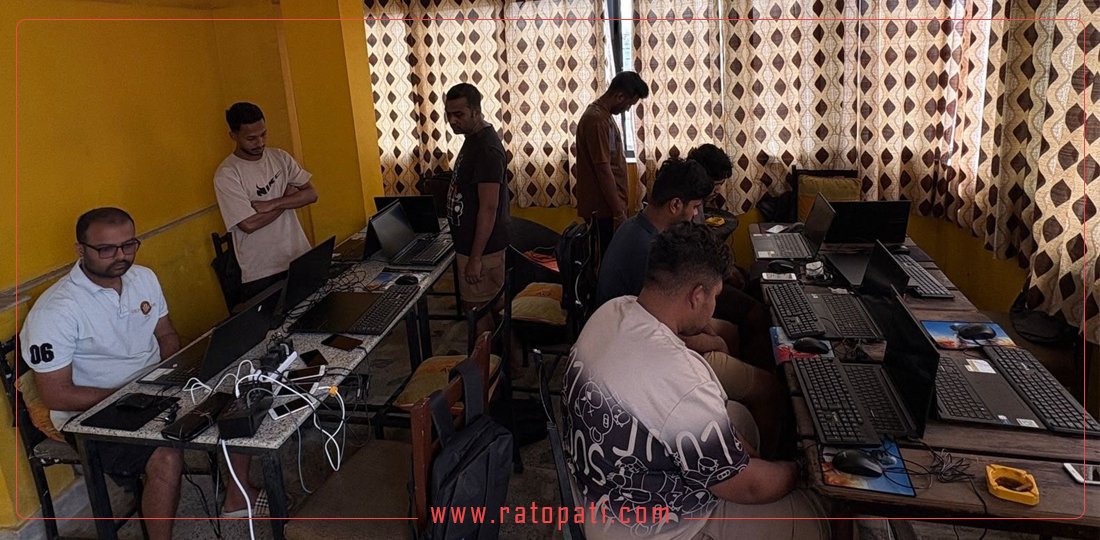
She and her colleagues at the MIT Media Lab gathered 54 students to write short essays and divided them into three groups. The first group was instructed to use ChatGPT. The second group was allowed to use only Google Search, with AI-generated summaries turned off. The third group was not allowed to use any technology.
The essay topics were intentionally kept open-ended. Since the topics were related to loyalty, happiness, or our daily life choices, not much research was needed for this task.
Although the results of this research have not yet been published in any scientific journal, Koshmina says they are eye-opening. She states that the brains of those who used their own minds were extremely active, with widespread activity in many parts of the brain. The visual part of the brain in the group using only search engines still showed strong activity. However, the brain activity in the group using ChatGPT was significantly lower (up to 55 percent less).
Koshmina says, 'The brain wasn't completely asleep, but the parts of the brain responsible for creativity and processing information were much less active.'
ChatGPT was also found to affect human memory. After submitting the essays, people in the AI group could not quote parts of their essays. Many did not feel any ownership of the work. Other studies have also shown that using AI tools like ChatGPT reduces people's ability to remember and recall information.
Although these findings are under peer review, they align with the results of other studies. A study by researchers at the University of Pennsylvania showed that some people engage in 'cognitive surrender' when using generative AI chatbots. This means they readily accept the information provided by AI without question or verification and are willing to disregard their own intuition.
Similar effects can be seen outside the world of AI chatbots, even in life-or-death situations. A recent multinational research team found that doctors who used AI tools to detect colon cancer for three consecutive months were later less proficient at identifying tumors without AI.
_tKbbulREU5.jpg)
Koshmina warns that relying on AI risks losing originality and creativity. In her study, the essays written by students using ChatGPT were monotonous. Koshmina says that the teachers who evaluated them described the essays as 'soulless' creations lacking originality and depth. 'The essays were so similar that one teacher asked if the students had written them together,' she said.
While these studies illustrate the short-term effects of LLMs on the brain, their long-term impact remains unclear. Koshmina and her colleagues' study offers a glimpse. Four months after the initial study, they had students write another essay. This time, students who had used ChatGPT were asked to write without LLM assistance. Their neural connectivity appeared lower than that of students who had not used technology initially but used it later. This indicates that they did not connect well with the subject matter initially.
- Decline in Intellectual Capacity
However, Vivianne Ming, author of 'Robot-Proof' and a computational neuroscientist, believes that LLMs can be positive tools to aid thinking. But for this, we should not completely outsource our mental tasks and rely solely on them. She is concerned that most people do not interact with this technology in this way.
Her argument comes from research for her book. During that research, Ming had a group of students at the University of Berkeley predict real-world outcomes, such as oil prices. She found that most participants simply asked AI questions and copied its answers.

When she measured the activity of the students' brain's gamma waves, which are considered indicators of intellectual effort, she found very low activity. Her research is also yet to be published. However, Ming is concerned that if further studies confirm her findings, there could be long-term consequences. For example, other research has linked weak gamma wave activity to cognitive decline in later life.
Ming says, 'This is a really worrying thing. If this is the natural way people interact with these systems, and these are smart kids, then this is a very bad thing.'
She states that deep thinking is our superpower. 'If we don't use it, the long-term effects on our intellectual health will be very serious,' she said.
When we rely on LLMs, they demand very little mental effort from us. But for a healthy brain, the opposite is true, requiring sufficient mental exercise, Ming adds.
However, a small group of less than 10 percent of participants behaved differently. They used AI only as a tool for data collection and analyzed the data themselves. These individuals made more accurate predictions than other participants, and their brain activity was also stronger.
About two decades ago, Ming predicted that due to our over-reliance on Google Maps, the rate of dementia (forgetfulness) in humans would significantly increase in the next 20 to 30 years. 'I said that to jolt people,' Ming says, 'If you don't have to use your own brain to find your way, there will certainly be some visible effect.'
While we don't have exact statistics for this prediction, a three-year study on 13 individuals has linked the increasing use of GPS to weakened 'spatial memory' over time. Another study suggests that poor spatial navigation may also be a potential indicator of Alzheimer's disease.

It is clear that the more active our brain is, the more protected it is from cognitive decline. Therefore, LLMs can not only reduce creativity but also harm people's thinking abilities and increase the risk of dementia, Ming says.
As the use of AI tools increases, we must use them in a way that benefits us without causing harm. According to Ming's suggestion, our ultimate goal could be a form of 'hybrid intelligence', where humans and machines work together on 'difficult tasks'.
This means that instead of asking AI to directly answer our questions, we should first think for ourselves and then use tools only to challenge our thinking. Koshmina agrees with this. She suggests learning the subject matter without AI tools first to build a strong foundation, and then consider using LLMs.
Ming recommends using a 'nemesis prompt' to challenge one's own thinking. Under this, AI is instructed to act as one's 'lifelong enemy'. Then, the AI is asked to explain in detail why one's ideas are wrong and how they can be improved. This forces people to defend and refine their arguments rather than passively accepting the AI's answers.
Another technique she suggests is to prioritize 'productive friction'. This involves providing context to the AI and asking it to ask questions instead of giving direct answers. She found that when tested by configuring the AI bot not to give direct answers, many individuals became more engaged in the work.
Ultimately, we all need to be aware of such 'intellectual shortcuts'. Koshmina says, 'Our brains love these shortcuts.' Clearly, for long-term brain health, we must continuously challenge ourselves. In this process, our minds, creativity, and intellectual health will benefit.
This specific news has been automatically translated by AI. As a result, there may be some inaccuracies or language errors.




_Hd6sr8PGgB.jpg)