Nepali Film 'Lalibazaar' Sparks Debate on Structural Discrimination and Inclusive Policies


The recently released Nepali film Lalibazaar has initiated a serious debate on structural discrimination and exclusion that still exists in Nepal, not just as a medium of entertainment. The film has made the historical oppression faced by women of the Vadi community, especially in Bardiya and other parts of western Nepal, its central theme.
The film raises an uncomfortable but essential question: Have Nepal's inclusive policies and reservation system truly reached the most marginalized communities?
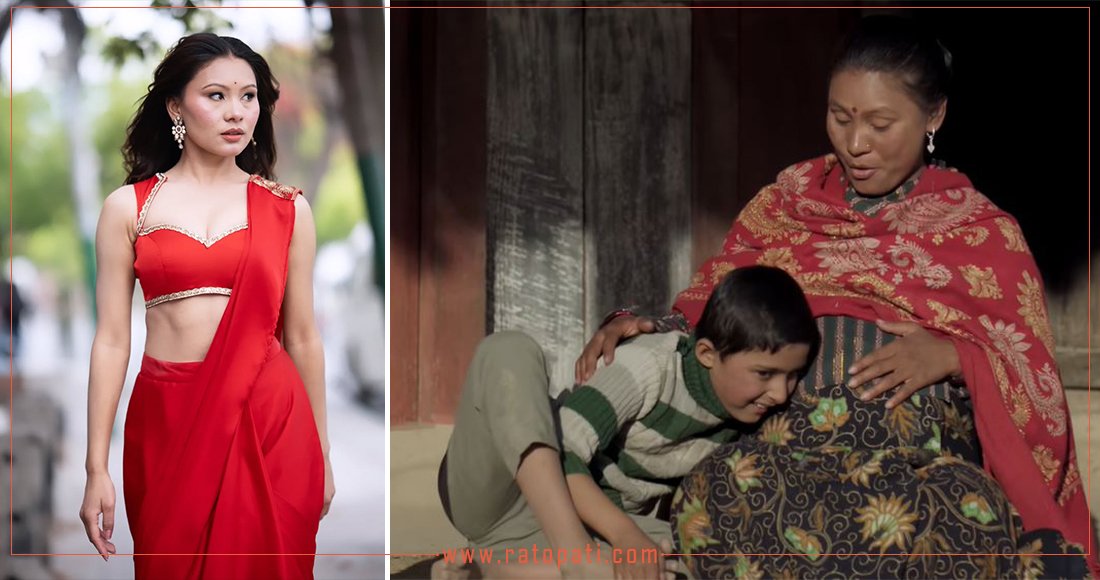
In Nepal, the debate on reservation is often framed in terms of 'equality.' But Lalibazaar reminds us that not all women have the same social reality. The life of a woman born in Kathmandu, educated in a private school, with urban access, social media, English education, and benefiting from economic structural advantages is not the same as that of a woman raised in the Vadi community of Bardiya.
While legally providing reservation by placing both under the same category of 'women' may seem equal, it may not be socially just. And this is where the fundamental difference between 'equality' and 'equity' begins.
The Vadi community has long been a victim of caste and gender discrimination. Lalibazaar attempts to portray on screen the reality of landlessness, poverty, lack of education, and social exclusion that has been crushing Vadi women for generations.
Everyone who watches the film realizes that the suffering depicted is not just a fictional social allegory but a harsh reality of Nepal's social history. However, the film's significance is not limited to showing the story of the Vadi community.
Its significant contribution is not only questioning inclusive policies but also asking whether all women are born with the same social status. The film prompts everyone to consider the condition of Dalit women within these groups.
The Constitution of Nepal recognizes inclusivity as a fundamental value of democratic republicanism. Article 18 (3) of the Constitution of Nepal permits the state to make special provisions for the empowerment and development of women, Dalits, indigenous nationalities, Madhesis, Tharus, Muslims, backward regions, and other marginalized communities.
These constitutional provisions were crucial for providing representation in the state structure to historically excluded communities in Nepal. But today's challenge is not just about representation; it is about ensuring justice within representation. This is because not all inclusive groups experience the same level of exclusion.
Our reservation system is currently mainly based on broad identity groups. Women, Dalits, Janajatis, Madhesis, etc., are broad categories. However, internal inequality is increasingly found to be growing within such systems.
For example, individuals from urban, educated, and relatively affluent families can repeatedly utilize reservation opportunities, while communities facing extreme poverty and social exclusion in remote geographies are still eliminated at the initial stages of competition.
This is called 'elite capture' in policy language. That is, the situation where the most capable or accessible class benefits more from reservation. Therefore, the time has come for Nepal to seriously consider 'cluster-based reservation' or 'intersectional inclusion'.
The cluster system does not mean ending reservation but making reservation more just. Under this system, an individual's identity is not determined solely as a woman or a Dalit. It also considers geography, economic status, educational access, caste background, rural-urban divide, and the level of structural exclusion.
This means the state must formally acknowledge the reality that a woman from Kathmandu and a woman from Bardiya are not on the same competitive footing. Because equality of opportunity is not established by simply giving equal treatment on paper. If a person has a good school, social network, language proficiency, and financial security, they naturally gain an advantage in competition.
On the other hand, telling individuals from communities deprived of basic state services, 'You also have equal opportunity,' is not practically just. Therefore, Nepal today needs substantive equality more than formal equality.
The esteemed Supreme Court has also interpreted reservation not as a static and mechanical system but as a tool for social justice. In the writ petition of Binay Kumar Panjiyar vs. Ministry of Health and Population, Singha Durbar, the Supreme Court clarified that the objective of reservation is to provide opportunities to truly backward communities.
The esteemed court interpreted reservation not merely as a permanent privilege but as a remedial measure for historical discrimination. This means the reservation system must be linked to periodic review, fact-based restructuring, and assessment of actual exclusion. The objective of reservation is not just quantitative representation; it is to ensure equitable access.
There is no doubt that the representation of women has increased significantly in Nepal in recent years. The presence of women in parliament, civil service, media, universities, and non-governmental sectors has increased. But who is benefiting more from these opportunities?
In most cases, women from urban, educated, and relatively affluent classes are seen to be benefiting more from the state's inclusive policies. This does not mean they have not faced gender discrimination. But the claim that all women have faced the same level of exclusion is also not correct.
A Vadi woman from Bardiya faces not only gender discrimination but also caste exclusion, poverty, social oppression, and institutional neglect. Therefore, the debate on inclusivity needs to move from descriptive representation to substantive representation. Reform in the reservation system is a way to maintain long-term legitimacy and ethical credibility.
In this light, the power of Lalibazaar lies not in its story but in the question it poses to the state. Both the woman from Kathmandu and the woman from Bardiya fall under the protection of the constitution. But justice certainly does not mean considering them as coming from the same social situation. Justice means redistributing opportunities by acknowledging their different realities. And that is true inclusive justice.
This specific news has been automatically translated by AI. As a result, there may be some inaccuracies or language errors.
_I0a7yjtDaq.jpg)