
Former PM Sher Bahadur Deuba and wife Arzu Rana's prolonged stay abroad raises questions amid political turmoil

Kathmandu. Former Prime Minister Sher Bahadur Deuba, who flew to Singapore just before the February 21 elections, has not yet returned to Nepal. He had gone to Singapore on February 14 for follow-up treatment after being severely beaten at his Budhanilkantha residence during the Janji movement last year.
Instead of returning to Nepal from Singapore, he has now gone to Hong Kong. Former Foreign Minister and Deuba's wife, Dr. Arzu Rana, had gone to Hong Kong via India even before that. Even after three months, there is no sign of the Deuba couple returning to Nepal.
The Rastriya Swatantra Party (RSP) is leading the government after securing nearly two-thirds of the votes in the House of Representatives elections. With the government formed under the leadership of senior RSP leader Balendra Shah, the Deuba couple is unlikely to return to Nepal immediately as arrest warrants have been issued against them in a money laundering case.
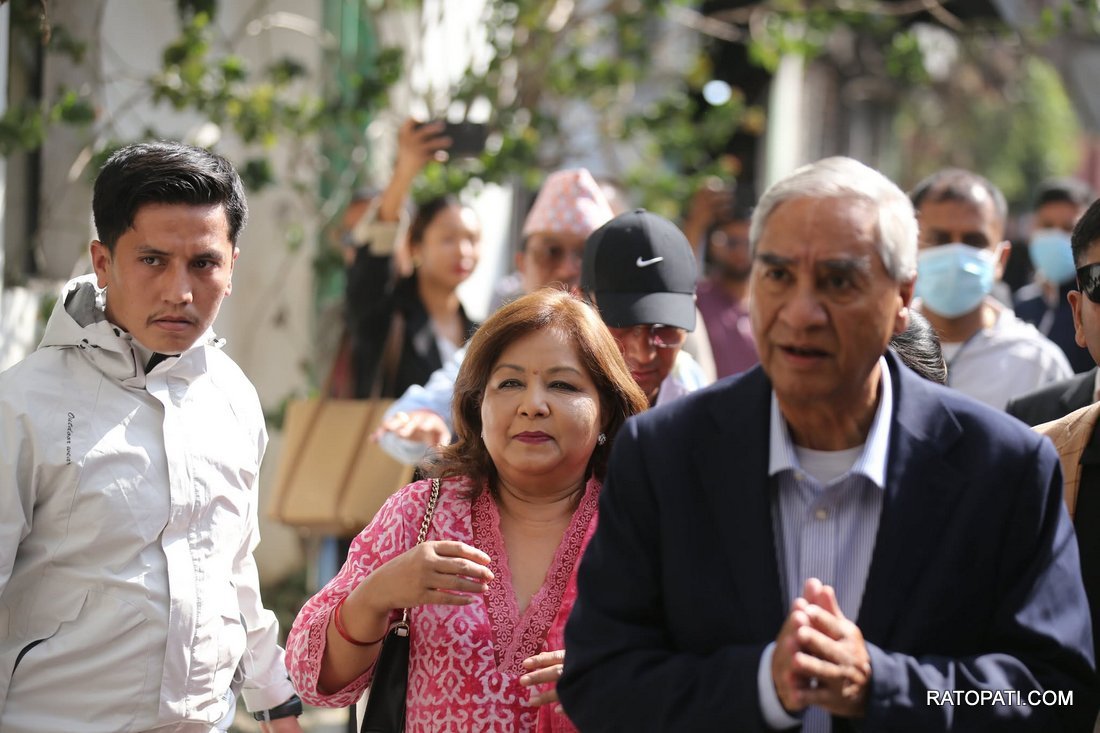
The Nepal Police has written to the International Police Organization (Interpol) to issue a Red Corner Notice against the Deuba couple. However, Interpol has refused to issue a Red Corner Notice, citing procedural irregularities.
Meanwhile, the Deuba couple has filed a case in the Supreme Court, claiming that the arrest warrants issued against them are procedurally flawed. They are seeking the annulment of the arrest warrants issued by the district court, arguing that the case should have been handled by a special court.
- The dream of becoming Prime Minister is shattered, the party is in Gagan's control
Had the Congress-UML coalition government led by KP Sharma Oli not fallen due to the Janji movement, Deuba would have become Prime Minister in the coming June. According to a 7-point agreement between Deuba and UML Chairman Oli on June 17, 2081, there was a pact for a rotational government. Accordingly, Oli became Prime Minister for two years on June 31. Deuba was supposed to be the Prime Minister of the election government for the periodic elections to be held in 2084.

Oli's government fell last August due to the Janji movement. Then Prime Minister Oli himself was forced to flee Baluwatar under army security. The Deuba couple was beaten at their residence. The physical structures of important state bodies such as Singh Durbar, Parliament House, and the Supreme Court were destroyed. After the movement subsided, Deuba went to Singapore for treatment on October 28, entrusting the responsibility of acting president of the Nepali Congress to Vice President Purna Bahadur Khadka.
However, upon Deuba's return to Nepal after a month, the internal balance within the party was on the verge of being altered. Acting President Khadka could not address the demands of the special general convention faction. Citing the inability to hold the regular general convention by November, Khadka decided to hold the 15th general convention only after the elections. However, the Gagan Thapa and Bishwaprakash Sharma group pressured the leadership by submitting signatures of 40 percent of the general convention representatives to hold a special general convention by November.
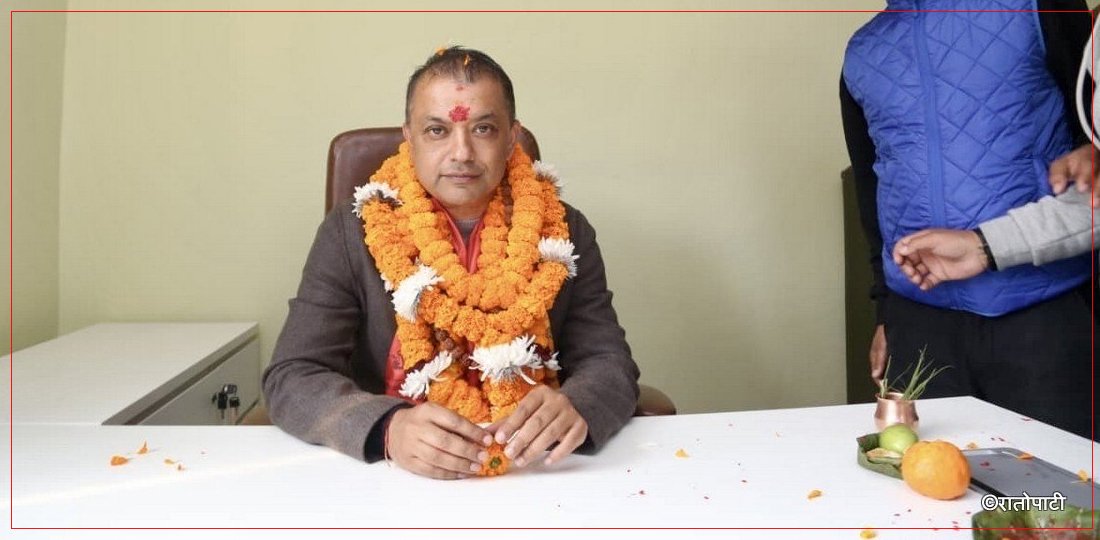
The Deuba faction, which rejected the demands of the special general convention faction, joined hands with the UML and submitted signatures to the Supreme Court for the restoration of the dissolved parliament. The Gagan-Thapa group, in protest of the leadership's style of functioning, captured the party leadership by holding a special general convention in the last week of December. The Deuba faction approached the Election Commission, concluding that the special general convention was illegal. The commission recognized the special general convention.
The Deuba faction appealed to the Supreme Court against the commission's decision, but the court also refused to issue an interim order in favor of the Deuba faction. The Congress was swept away in the elections due to internal party disputes on the eve of the elections, the Deuba couple's foreign trips, and the nationwide wave in favor of the RSP.
After the Supreme Court recognized the Congress led by Gagan Thapa on April 4, Deuba's position as president was officially lost. Deuba, who has left the country in his old age and is staying abroad, has become devoid of state power and party power.
Deuba, who wished to be elected to the House of Representatives for the eighth consecutive time, was not even nominated as a candidate by President Gagan Thapa. Consequently, the Deuba faction did not even campaign for the party during the elections. Due to sabotage from the Deuba faction itself, Congress could not achieve excellent results.
- 'Warm-up' for forming a new party!
After Gagan took control of the party leadership through the special general convention, the Deuba faction has been holding separate gatherings. Regional gatherings in Karnali led by former Vice President Purna Bahadur Khadka, close to Deuba, and in Koshi led by former General Secretary Krishna Prasad Sitaula have been completed.
There is talk that leaders close to Deuba are secretly working towards forming a new party. The meeting called by former Vice President Bimalendra Nidhi and former General Secretary Prakashman Singh, close to Deuba, at Chakibari has created ripples in Congress circles.
Meanwhile, the establishment faction has completed gatherings in all seven provinces. The work of updating active memberships is also underway.
_oLx4mwwKFb.jpg)
Analyst Dr. Pitambar Bhandari has expressed suspicion that Deuba himself may have signaled the formation of a new party.
“I heard that a meeting was held at Prakashman Singh's residence. It seems that the Sher Bahadur Deuba faction has not been able to accept those who came to leadership through the special general convention. It is possible that the meeting was called as a warm-up after Sher Bahadurji gave a signal. However, it has not been officially confirmed,” Bhandari told Ratopati.
However, another analyst, Shankar Tiwari, argued that the Janji movement clearly sent a message that the existing leadership of political parties has become irrelevant and needs to change. He clarified that if one does not understand the pressure of the situation according to the mandate of the Janji movement and tries to move forward, it would be contrary to the history and tradition of the Nepali Congress.
“The Janji upheaval on August 23 and 24 clearly sent a message that the existing leadership of political parties has become irrelevant and needs to change. The Nepali Congress held a special general convention accordingly,” he said, “Dissatisfied leaders have publicly admitted that things did not go well according to the mandate of the special general convention. If one tries to move forward without understanding the pressure of the situation, it will be contrary to the glorious history and tradition of the Nepali Congress.”
- Deuba's struggle for democracy
Deuba, who grew up with the birth of the Nepali Congress, is about to bear the stigma of splitting the party for the second time in the twilight of his life.
Born in Ruwakhol, Ganyapdhura Rural Municipality-1, in the marginalized district of Dadeldhura in Sudurpashchim, Deuba has successfully become the Prime Minister of the country five times. However, he could not gain recognition for his state governance.
Deuba, considered a master player in power politics, gained more notoriety than fame after becoming Prime Minister in 2052 BS. After the establishment of the Federal Democratic Republic in 2065 BS, Deuba became increasingly pro-communist. Deuba, who served as Prime Minister three times during the monarchy and twice during the republic, had neither of his terms end successfully.
On the political front, he deviated from the fundamental stance of the Congress and engaged in short-term power calculations. He allied with Prachanda at times and with KP Oli at others. It is alleged that Deuba could not escape criticism that Baluwatar, when he was Prime Minister, and his own residence in Budhanilkantha, when he was out of power, became centers for middlemen.
In the Congress Central Working Committee meeting held on October 28 after the Janji rebellion, Deuba gained sympathy by gracefully handing over the responsibility of acting president to Vice President Purna Bahadur Khadka before going to Singapore. However, he became active in politics again after returning to Nepal.
As per Deuba's plan, the Congress Central Working Committee meeting held in Sanepa on January 14, 2082, expelled then-General Secretaries Thapa, Sharma, and Assistant General Secretary Pharullah Mansoor from the party, barring them from even being ordinary members for five years.
Meanwhile, the general convention representatives formed a new working committee under Thapa's leadership. Ultimately, Deuba's position as president was lost.
Born on May 31, 2003, Deuba was known as the 'Lion of Sudurpashchim' at the beginning of his political career. He entered politics inspired by BP Koirala, a founding leader of the Congress.
After King Mahendra dismissed the elected government and carried out a political 'coup' in 2017 BS, Deuba became active in the democratic movement. While studying at Trichandra College, he was actively involved in the student movement. When the Nepal Students' Union was formed on April 6, 2027, he was its founding central member. Although he was defeated in the SU elections while studying MA at Tribhuvan University, he was immediately elected president of the Nepal Students' Union.
Deuba's association with BP, a founding leader of the Congress, only happened after BP returned to Nepal with the policy of national reconciliation on December 22, 2033 BS. BP used to favor Deuba due to his firm stance on the democratic movement.
After BP's death, Deuba associated with Ganesh Man Singh and Krishna Prasad Bhattarai. In 2048 BS, Deuba served as Home Minister in the government led by Girija Prasad Koirala and worked closely with Ganesh Man Singh and Krishna Prasad Bhattarai.
Deuba was elected to the House of Representatives from Dadeldhura in the first general election held after the political change of 2046 BS. He succeeded in making all 18 constituencies of Sudurpashchim a 'clean sweep' for Congress.
- An expert player in power politics
Deuba is the only politician to have won seven parliamentary elections from 2048 BS to 2079 BS. Besides Dadeldhura, he also won elections twice each from Kanchanpur and Kailali. He was victorious in the parliamentary elections held in 2048, 2051, and 2056 BS. In the Constituent Assembly elections held in 2064 and 2070 BS after the People's Movement of 2062/063, Deuba was elected from Dadeldhura as well as Kanchanpur-4 and Kailali-6. After state restructuring, he was also victorious in the 2074 and 2079 BS elections from his former constituencies.
In 2051 BS, due to internal party disputes, Prime Minister Girija Prasad Koirala dissolved parliament and announced mid-term elections. After the elections, the UML, being the largest party, formed a minority government. At that time, Deuba, sidelining influential party leaders, succeeded in becoming the leader of the opposition.
After Manmohan Adhikari's nine-month-long leftist government fell in August, Deuba became Prime Minister with the support of RPP. The Deuba government was notorious for forming a jumbo cabinet, corruption, mismanagement, the Pajero scandal, and the MP buying and selling scandal. He was also accused of failing to prevent the Maoist armed insurgency.
On June 1, 2058 BS, King Birendra's entire royal family was assassinated in the palace massacre. Thereafter, the relationship between King Gyanendra and Prime Minister Girija Prasad did not improve. After the government led by Girija Prasad fell, Gyanendra made Deuba the Prime Minister. In 2059 BS, the party expelled Prime Minister Deuba from the party, barring him from even being an ordinary member, for extending the state of emergency against the party's decision.
Deuba formed the Nepali Congress (Democratic) under his own leadership. Under pressure from all sides, Gyanendra reinstated the Deuba government in May 2061 BS. However, on January 19, Gyanendra dismissed the Deuba government and formed his own government. Deuba was accused of handing over democracy to the palace.
In January 2072 BS, after the death of former Prime Minister and then-Congress President Sushil Koirala, Deuba came to lead the party. After coming to power, he was accused of being a follower of communists by making agreements with the UML at times and with the Maoists at others. So much so that leaders and cadres were alienated from Deuba for forcing staunch Congress workers to vote for the UML's sun or the Maoists' hammer to maintain power.
This specific news has been automatically translated by AI. As a result, there may be some inaccuracies or language errors.
_BSX4jxIBxx.jpg)
_CuZWldRsJU.jpg)

