Experts Suggest VAT Reduction, Income Tax Exemption Hike, and Structural Reforms in Budget Discussion


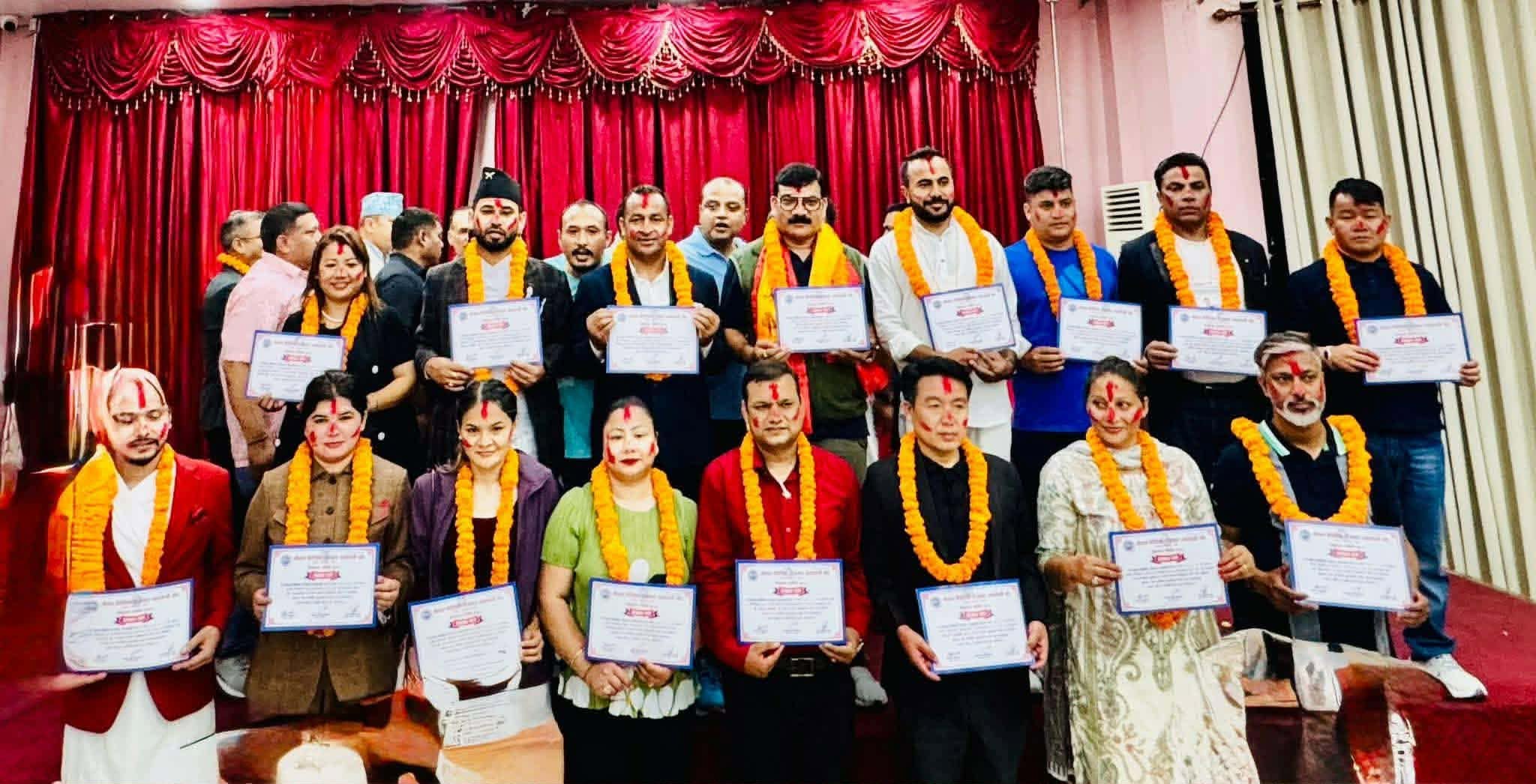
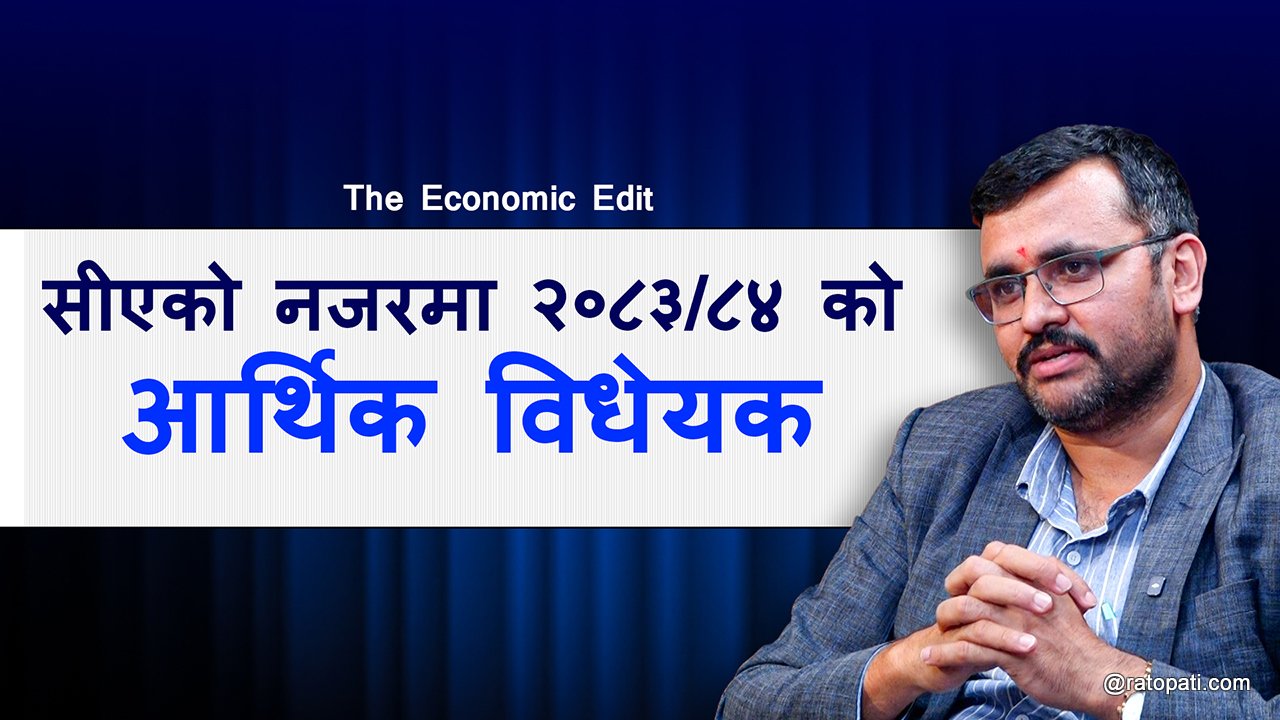
Kathmandu. Experts have suggested the government reduce the VAT rate from 13 percent, increase the personal income tax exemption limit, and implement structural reforms in tax and debt management in the upcoming budget discussion in the Finance Committee under the House of Representatives to make the economy dynamic. They stated that the upcoming budget needs to improve the tax structure and fiscal federalism, citing declining market demand, rising cost of living for the middle class, and a weakening pro-industry environment. During the discussion, tax expert Rup Khadka said the government should seriously review reducing the Value Added Tax (VAT) rate to boost economic demand and create a positive business environment. He suggested reducing the current 13 percent VAT rate to 12, 11, or 10 percent. Khadka added that when deciding to reduce tax rates, the overall tax structure should be analyzed, not just VAT. Khadka said, 'In the current context, if we want to increase market demand and create a positive environment, it is appropriate to reduce the Value Added Tax rate from 13 percent to 12, 11, or 10 percent. However, before reducing the tax rate, we need to consider whether to reduce the VAT rate, the excise duty rate, or the customs duty rate? For example, when importing glasses, VAT, excise duty, and customs duty are levied. Suppose the Nepali government needs to collect revenue of Rs 200 annually through all these means. We can collect that Rs 200 through VAT, excise duty, or customs duty. We have options because no single tax is levied on any item. Now, suppose we want to increase market demand, so we envision collecting only Rs 100 this year instead of Rs 200. In such a situation, we need to analyze whether to reduce that Rs 100 from customs duty, excise duty, income tax, or Value Added Tax (VAT).' Similarly, economist Chandramani Adhikari said that the personal income tax exemption limit should be significantly increased, considering the rising cost of living for the middle and lower-middle classes. He noted that the current tax exemption limit is unrealistic given the price increases in most daily consumer goods and services. He stated that since 61 to 64 percent of Nepal's trade is with India and price increases there directly impact Nepal, it is very low that while individuals earning up to 1.2 million Indian Rupees are exempt from tax in India, the exemption in Nepal is only 600,000 Rupees for couples and 500,000 Rupees for individuals. Adhikari said, 'The middle and lower-middle classes spend most of their family budget on items where prices have increased. In such a situation, we must increase the personal income tax exemption limit because inflation occurs at the same pace in India and Nepal; since 61 to 64 percent of our trade is with India, we import most things from there. When prices increase there, prices also increase here, and when prices decrease there, prices also decrease here. Therefore, comparatively, our purchasing power is still lower than theirs. For this reason, in India, generally, those with income up to 1.2 million Indian Rupees and salary income up to 1.275 million IC are not taxed, whereas in our country, the exemption limit is only up to 600,000 Rupees for couples and 500,000 Rupees for individuals. This exemption of 5 and 6 lakhs respectively is very low because who are the dependents in the family that the couple has to support? It could be two children and parents who cannot earn. Looking at it this way, two earners may have to support a family of at least six people. Therefore, the monthly or annual cost of living for a family of six needs to be studied and revised somewhere.' He suggested that the personal income tax exemption limit should be set at least at 1 million to 1.2 million Rupees. Former Secretary Dirgharaj Mainali pointed out the need for improvement in debt management. He stated that internal debt is currently being raised and used for salaries, allowances, and current expenses, and suggested developing a system to raise debt linked to specific projects or programs. Mainali said, 'Regarding debt management, if a mechanism for raising internal debt on a project or program basis is initiated, its direct impact will be seen. Currently, debt is being raised and spent on current expenses, salaries, or allowances. Instead of doing so, the raised debt can be linked to specific projects or programs.' Similarly, Prakash Kumar Shresta, former Vice-Chairman of the National Planning Commission, emphasized that the budget should address the serious anomalies seen in Nepal's fiscal federalism system. He highlighted the paradox where the central government is forced to borrow money and pay interest while all three tiers of government have large amounts of savings. Shresta said, 'We are currently seeing such an anomaly in our fiscal federalism that, looking at the data from just yesterday, the total savings of all three tiers of government is 380 billion Rupees, and on the other hand, the central government is borrowing money and paying interest on it. To manage this situation, it seems necessary to amend the Intergovernmental Fiscal Management Act itself. If this is not done, we will remain in a paradoxical situation of continuously borrowing while saving billions of Rupees.' Industrialist Haribhakta Sharma complained that domestic production is becoming uncompetitive due to the 'inverted tax' system where taxes are higher on imported raw materials than on finished goods. He stated that investors are discouraged by the excessive taxes imposed at the initial stage of establishing an industry. Giving the example of the pharmaceutical industry, Sharma said, 'As soon as a pharmaceutical industry is established in Nepal, the government imposes a 38 percent tax from the beginning. This means if I want to start an industry with an investment of 500 crore Rupees, the government takes about 200 crore Rupees as tax right at the beginning. Even in such a situation, our system, citing a liberal economic policy, tells us to 'compete with industries in India and China.' Therefore, my main suggestion is to reverse this 'inverted tax' system that discourages industries.' He claimed that the current Industrial Enterprise Act is old and not suitable for Nepal, clarifying that an investment-friendly environment cannot be created without a new legal structure.
This specific news has been automatically translated by AI. As a result, there may be some inaccuracies or language errors.

_IvrWQ1hN9m.jpg)
_jxKX1kXOlf.jpg)