Madan Bhandari and Jivraj Ashrit Memorial Day Observed
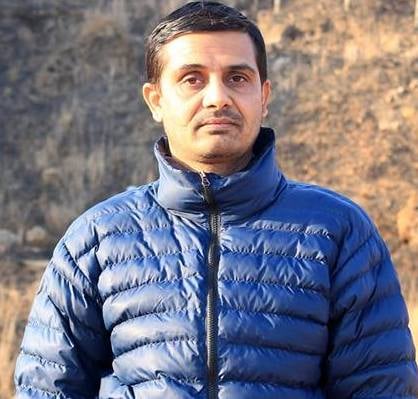

Kathmandu. The 33rd Madan-Ashrit Memorial Day is being observed today in memory of the then General Secretary of CPN-UML, Jananeta Madan Bhandari, and Organization Department Chief Jivraj Ashrit. May 3, the day of the mysterious death of Madan-Ashrit, is observed every year by UML as a memorial day.
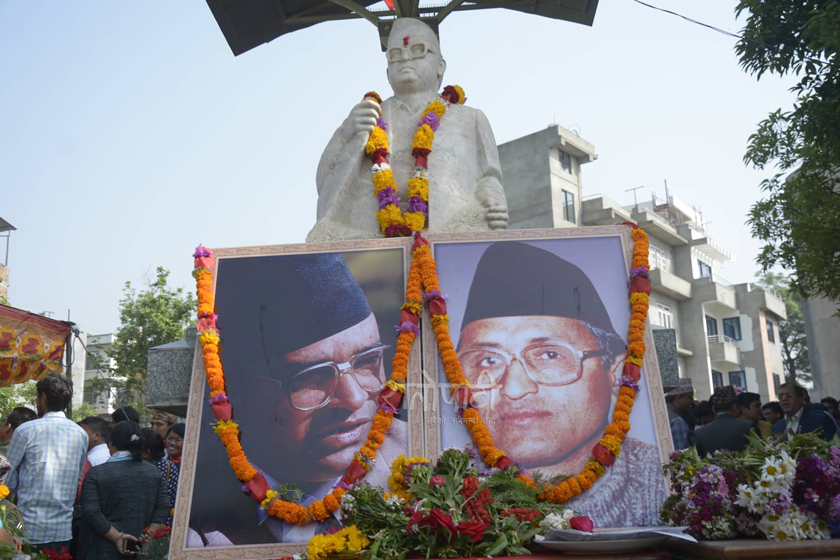
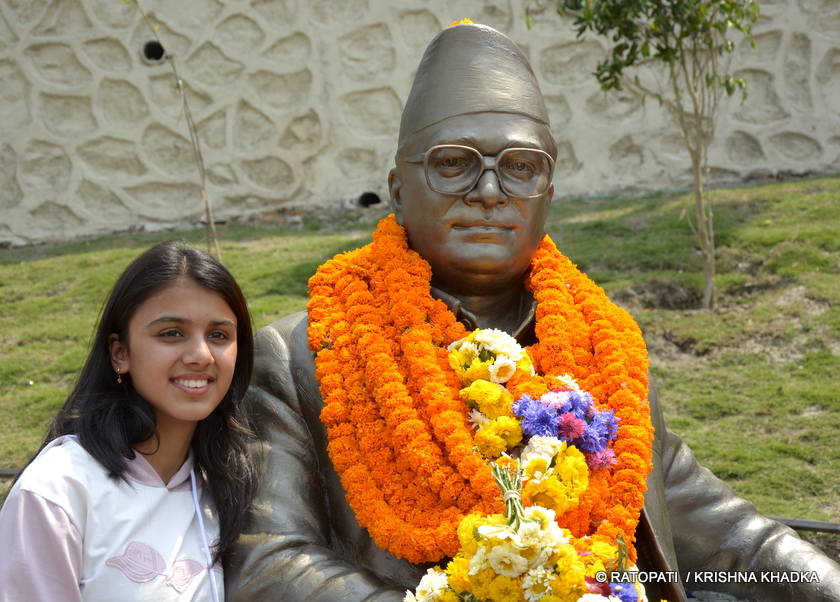
This year too, UML has directed its party committees across the country to hold memorial gatherings and various creative programs in memory of the two leaders. Organized by the party center, UML leaders paid homage to Madan's statue at Madannagar, Balkhu on Sunday, remembering his contributions.
Surprisingly, although three committees were formed to investigate the infamous Dasdhunga incident, the full report of others, except for the commission led by Padmaratna Tuladhar, has not yet been made public, leaving the mystery of how, by whom, and why the incident occurred unsolved.
After the death of Madan-Ashrit in a jeep accident, the then government formed an investigation commission under the convenorship of Trilok Pratap Rana. CPN-UML formed another investigation commission under the convenorship of KP Sharma Oli. Besides, a third commission led by Padmaratna Tuladhar was formed at the citizen level. The essence of the reports of all three commissions stated that the incident was 'conspiratorial'. It is true that after Madan's death, UML has led the government many times. Madan's wife, Bidya Bhandari, even became the President of the country. However, the truth of the accident not coming out has left the incident further shrouded in mystery.
According to political analysts, the People's Multi-Party Democracy (JBP) propounded by Madan has greatly guided the political transformation of Nepal. 'JBP has played an ideological role in the establishment of the republic, bringing the Maoists into the peace process, making the Congress support the issues of social justice, and building a constitution oriented towards socialism,' said UML leader Pradip Gyawali. 'JBP is the guiding principle of UML, and Madan Bhandari is the pathfinder.'

Political science professor Krishna Pokharel also states that Madan incorporated the characteristics of bourgeois democracy in JBP, believing that communists could establish themselves among the people through elections but would not be allowed to last, hence the inclusion of these characteristics.
'By including subjects like periodic elections, majority rule, minority opposition, and rule of law, Madan sought to show that if we come through elections, we can deal with those who cast a malicious eye on us, and we can question the difference between your democracy and ours, thus modifying his ideology in a timely manner,' said Pokharel.
However, Professor Pokharel states that the current UML is not walking according to Madan's ideology. 'Madan demonstrated in practice that internal democracy within the party should be strengthened and different opinions should be respected,' Pokharel told Ratopati. 'For example, even though CP Mainali had a different opinion, Madan brought him into leadership.'
In Pokharel's understanding, the current UML uses Madan's ideology to reach positions of power, but once in power, they act in an autocratic manner. 'The extreme example of this is the current chairman KP Oli, due to whom internal democracy within the party has been dying and sycophancy has flourished. As a result, the vitality between the party and the people has been lost,' said Pokharel.
- Who was Madan Bhandari?
Born on June 28, 1952, in the then DhungeSanghu VDC Ward No. 8 of Taplejung, Madan Bhandari was not very prominent in Nepali politics until the general elections of 1991. This was partly because the organization of the party he led at the time had not yet become nationwide. However, his influence was growing among some leaders and cadres.
Although the organization was expanding internally due to committed leaders and cadres, the party led by Madan was not widely discussed as UML had just emerged from a period of underground activity at the time. Many leaders of UML, including Madan, were underground until 1991. Within a year of coming into the public sphere from underground life, Madan Bhandari became so popular that he defeated Santaneta Krishna Prasad Bhattarai, who was also the Prime Minister of the interim government at the time, in the House of Representatives elections from Kathmandu Constituency No. 1.

In the 1991 elections, Madan contested from Kathmandu Constituency No. 1 and 5. At that time, democracy had just been restored in Nepal. In the elections to be held after the restoration of democracy, Madan Bhandari proposed to the Congress that top leaders of Congress and UML should not contest against each other. Accordingly, Madan's proposal was that Congress would not field a candidate against UML Chairman Manmohan Adhikari in Sunsari Constituency No. 1, and UML would not field a candidate against then Congress President and Prime Minister Krishna Prasad Bhattarai in Kathmandu Constituency No. 1.
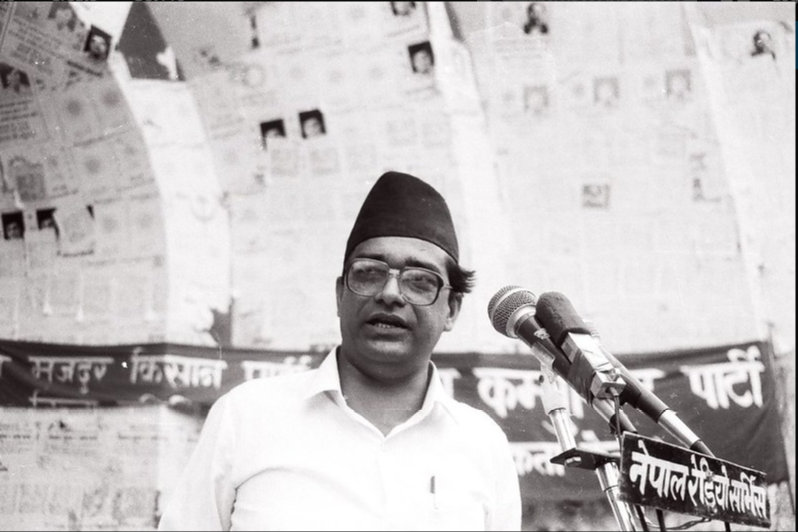
Madan's intention behind making such a proposal was that the country's top leaders, who are greatly needed by the country, should not be left out of the parliament. Madan's argument that mature leaders should not be defeated in elections to institutionalize and strengthen democracy was completely ignored by the Congress.
One of the reasons for Congress's rejection of Madan's proposal was the arrogance of having won a two-thirds majority alone in 2015 BS. According to UML leader Pradip Gyawali, Congress, confident that all their leaders would win easily after the restoration of democracy, refused Madan's proposal.
After Congress rejected Madan's proposal, Congress and UML entered into open electoral competition in the elections to be held on May 12, 1991, by the interim government led by Krishna Prasad Bhattarai, which was formed after the 1990 People's Movement against the Panchayat regime. In that election, Madan Bhandari defeated Prime Minister and acting Congress President Krishna Prasad Bhattarai from Kathmandu Constituency No. 1. The vote difference between Bhattarai and Bhandari in the election was 1,397. This result caused a stir of sorts.
Bhattarai, known as a saintly leader in Nepali politics, was considered much more popular than Madan before the election. After defeating such a leader from Kathmandu, Bhandari's fame skyrocketed. With that election result, the discussion about People's Multi-Party Democracy (JBP) propounded by Madan Bhandari intensified, which CPN-UML still considers its core ideology.

Madan embraced the idea of establishing and popularizing the Communist Party through electoral competition through JBP. In the initial phase, other communist parties and communist leaders worldwide did not favor Madan's idea. Instead, the idea was criticized as constitutionalist and revisionist. However, Bhandari was firm in his belief that the internal life of the party could be conducted through democratic competition, and that a communist party could also come to power through popular mandate and establish the progressive changes desired by the people. At that time, other communist groups in Nepal were active with the belief that no communist could exist without resorting to violence and that change in people's lives could not be brought about through elections, while Congress held the view that communists could never be democratic.
At such a time, UML had to contest elections alone against Congress. In the then parliament of 205 seats, Congress won 110 seats, while UML became the second largest party with 69 seats due to Madan's popularity. Another communist party, the United People's Front, won 9 seats in the 1991 elections. Congress at that time considered the United People's Front, rather than UML, as the true communist party. The People's Front also claimed to be the only communist party and described UML as a revisionist force at that time. Madan Bhandari saved UML, which was caught between the dual pressure of Congress and the People's Front. When Madan was elected to parliament in the 1991 elections, he was only 39 years old. At that time, apart from Manmohan Adhikari, there were no other well-known and senior leaders in UML. In such a situation, it was no small challenge for Bhandari to expand his party significantly.
- Madan Approved When Lenin Fell
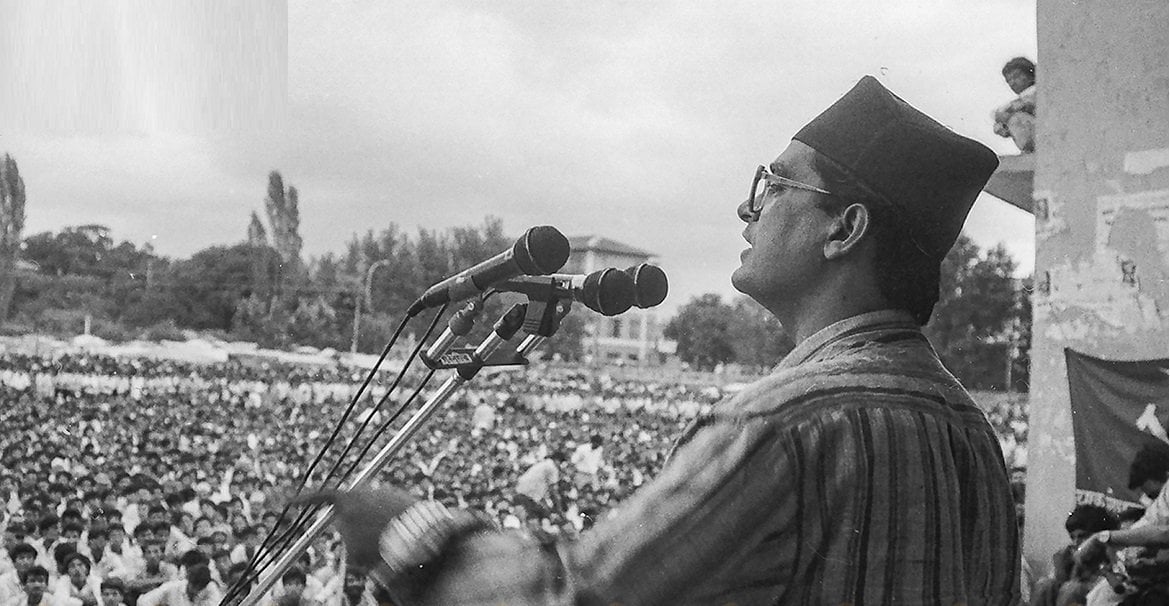
Bhandari became a center of public attraction for his oratory skills and balanced speaking style at the time. Although the general public did not fully understand Bhandari's foresight in ideology and principles, his ideology was a subject of intense debate within UML. This was at a time when the world was discussing the disintegration of the Soviet Union, the leader of the communist party, and the toppling of Lenin's statues.
According to experts, at a time when communist regimes were collapsing in Eastern Europe and other socialist countries, it was under Madan's leadership that the flag of the Communist Party was popularized in Nepal. He not only formulated and implemented a uniquely Nepali ideology but also played a significant role in democratizing the Nepali Communist Party and establishing it as a party serving the people, thus becoming a 'Jananeta' (People's Leader).
UML leader Pradip Gyawali states that the main reason for Madan Bhandari's rapid popularity in Nepali politics was his contribution to the democratization of the communist movement. 'The way he democratized the communist movement was his great contribution. This made Madan like a messiah and guide of the communist movement's crisis,' said Gyawali.
Gyawali said that after Madan won the elections in 1991 by defeating the incumbent Prime Minister from two constituencies in Kathmandu, it inspired the world. 'That's why Newsweek published his interview, stating that Karl Marx is alive in Nepal,' said Gyawali.
Memorized Rudri and Chandipath in Childhood
Born in a remote village in the eastern hilly district, Madan Bhandari was known as a sharp and brilliant student even at a young age. Some say that he used to recite Rudri and Chandipath from memory at the age of eight or nine.
Bhandari, who obtained Acharya degrees from Vrindavan and Banaras, preferred to use pure Nepali words in his speeches. Some of his speeches are still discussed today. He challenged the King to 'take off his crown and enter politics' while addressing from Khula Manch towards Narayanhiti.
- Madan's Political Activism
Madan, who became organized in communist ideology as a central member of the Communist Party of Nepal (Janabadi Krantikari Sanskritik Sangh) led by Pushpalal in 1972, became a member of the Communist Party of Nepal (Pushpalal group) through Balram Upadhyay in 1973. He became a member of Mukti Morcha, which separated from Pushpalal in 1976, and then a central member of the Revolutionary Co-ordination Centre. The group led by CP Mainali, the current General Secretary of the Communist Party of Nepal (Marxist-Leninist), and the group of current UML Chairman KP Sharma Oli, who started the revolution from Jhapa, were also part of the Co-ordination Centre. When the Communist Party of Nepal (Marxist-Leninist) was formed in 1978 by uniting various communist groups, Bhandari became a central member. By 1981, Bhandari became a politburo member of the Communist Party of Nepal (Marxist-Leninist), and from the Fourth General Convention in 1986, he was elected General Secretary.
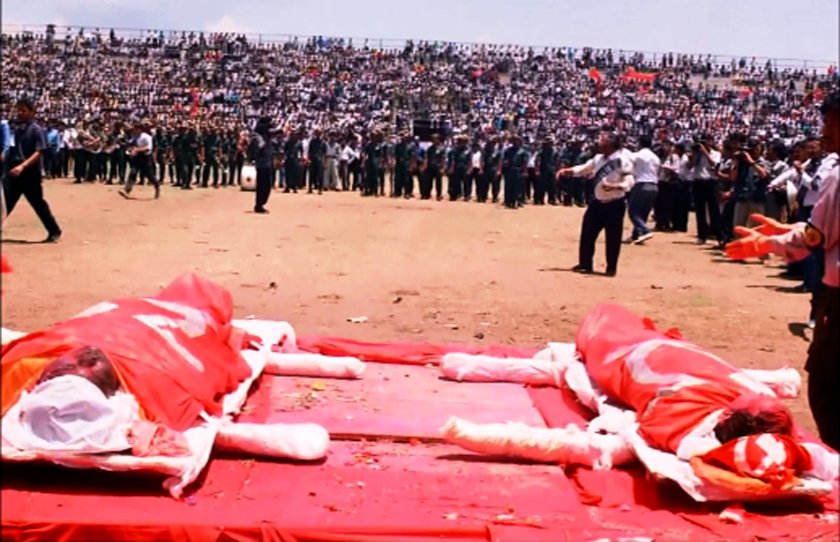
After the change of 1986, the Communist Party of Nepal (Marxist) led by Manmohan Adhikari and the Communist Party of Nepal (Marxist-Leninist) led by Madan Bhandari merged. The unified party was named CPN-UML. Madan Bhandari was elected General Secretary of UML at the Fifth General Convention of CPN-UML held in January 1993. However, less than four months after being elected General Secretary of CPN-UML, Bhandari and Organization Department Chief Jivraj Ashrit died mysteriously in a jeep accident in Dasdhunga on May 17, 1993. Bhandari, who lost his life in a short period after coming into public political life from underground life, became a peak personality in Nepali politics at a young age and in a short span of time.
Upon Madan's death, ordinary Nepalis even shaved their heads in mourning. Even Nepal's then King Birendra Shah issued a condolence statement on his death. Whereas, it was not customary for the King to issue such condolence statements on the death of other leaders before that. However, the then King Birendra not only issued a condolence statement but also described Madan Bhandari as a patriotic warrior and influential leader in his remembrance. Birendra stated that Madan's death was a great loss to the country. At that time, Manmohan Adhikari was the Chairman of UML. Manmohan had said about Madan at that time: 'I wish I had died and Madan had lived.'
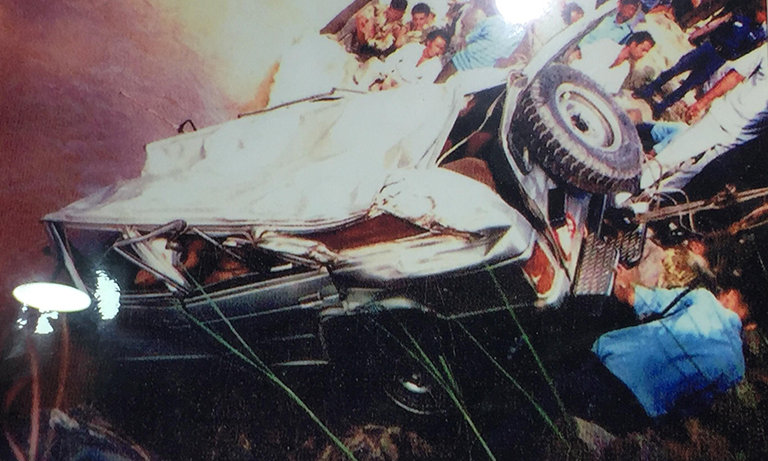
In the afternoon of May 17, 1993, the jeep carrying Madan-Ashrit met with an accident in Dasdhunga while traveling from a program in Kaski to Chitwan. A statue of Madan-Ashrit has now been erected at the accident site. As soon as the news of the jeep accident involving Madan-Ashrit in Dasdhunga 33 years ago spread, thousands of people from all over the country rushed to Dasdhunga that night. A few days later, the bodies of Bhandari and Ashrit were brought to Kathmandu and kept at Dasharath Stadium for two days for people to pay their respects. Millions of people participated in paying tribute. The funeral procession, which started from the stadium, continued without breaking through Tripureshwor, Ratnapark, Dillibazar, Maitidevi, Gaushala, and reached Aryaghat.
Political science professor Pokharel holds a slightly different view from the public and UML regarding the Dasdhunga accident case. He believes that the incident was merely used as a means to gain political capital by labeling it a murder.
'I have a different understanding of this. The Dasdhunga accident was merely used as a means to gain political capital by labeling it a murder,' he said.
UML leader Gyawali, however, believes that the incident remains a mystery because the ultimate सूत्रधार (mastermind) of the Dasdhunga accident, Amar Lama, was mysteriously murdered. 'Why would the Maoists have to kill Amar Lama? If they had affection for Madan and hatred for Amar Lama, they should have apprehended him and handed him over to the police so that evidence would not be destroyed. This raises more questions,' said Gyawali. 'It is a fact that its mystery has not been uncovered. Our efforts may have been incomplete in some respects, but I believe that this mystery must be revealed someday.'
This specific news has been automatically translated by AI. As a result, there may be some inaccuracies or language errors.

_3t4V8H4io0.jpg)