
Government's Land Eviction Drive Faces Challenges in Kailali and Kanchanpur


Dhangadhi. The government has launched a campaign to clear government and public land across the country. However, this campaign is not proving easy to implement in two districts of Sudurpashchim Province, Kailali and Kanchanpur.
According to the Land Problem Resolution Commission and local authorities, more than 150,000 families in these two districts alone are landless, squatters, or have irregular settlements. On one hand, the government wants to clear the land, while on the other hand, local authorities face the challenge of managing citizens who have been living there for decades.
According to the latest data from the Land Problem Resolution Commission, the number of applicants for registration of agricultural land in Kailali and Kanchanpur is very high. In Kailali, applications from 118,913 families have been verified.
_aWEkE9w424.jpg)
Out of these, 21,545 families are completely landless. This includes 7,639 Dalit landless families and 13,914 squatter families. The remaining families fall under the category of irregular settlers.
Kewal Chaudhary, mayor of Bhajani Municipality in Kailali, theoretically supports the federal government's move to clear government land but is concerned about the practical difficulties.
Similarly, in Kanchanpur, 58,635 applications have been verified. Among them are 2,29 Dalit landless, 2,400 squatters, and 53,506 irregular settlers. Combined, the future of more than 150,000 families in these two districts is in uncertainty between the government's actions and the commission's slow progress.
Kewal Chaudhary, mayor of Bhajani Municipality in Kailali, theoretically supports the federal government's move to clear government land but is concerned about the practical difficulties. According to him, while reclaiming land occupied by land mafias is welcome, it is not possible to displace landless and squatters who have been living there for 20-25 years without alternatives.
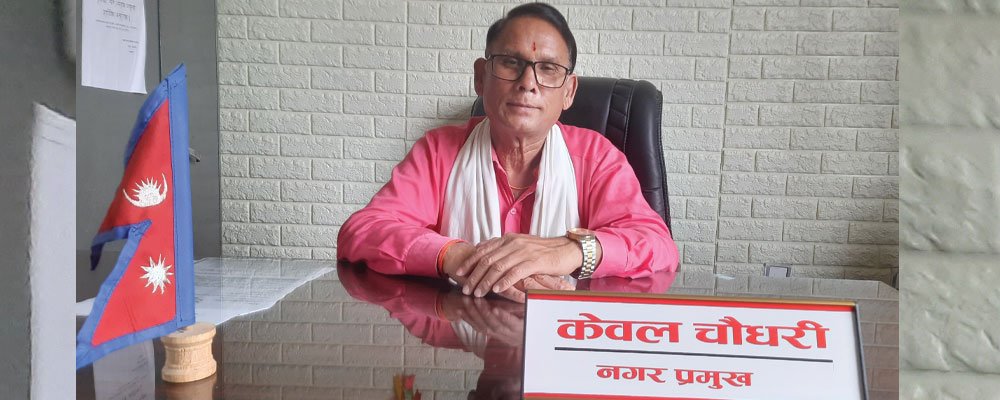
“We have also informed the District Administration Office – remove those who have recently encroached on forest land, but it is not just to remove those who have been living there for years and earning their livelihood without alternatives,” said Mayor Chaudhary.
Bhajani Municipality is currently deploying teams in wards to collect data to identify genuine squatters and those who have recently encroached on land. The municipality has made it clear that it will not hesitate to remove structures built by encroaching on roads, riverbanks, and public spaces.
The problem in Shuklaphanta Municipality of Kanchanpur is even more complex. The issue of victims displaced from Shuklaphanta National Park has remained unresolved for decades. According to Mayor Ran Bahadur Mahara, the municipality has already completed the measurement work for more than 70 percent of irregular settlers. However, the main problem lies in land availability.
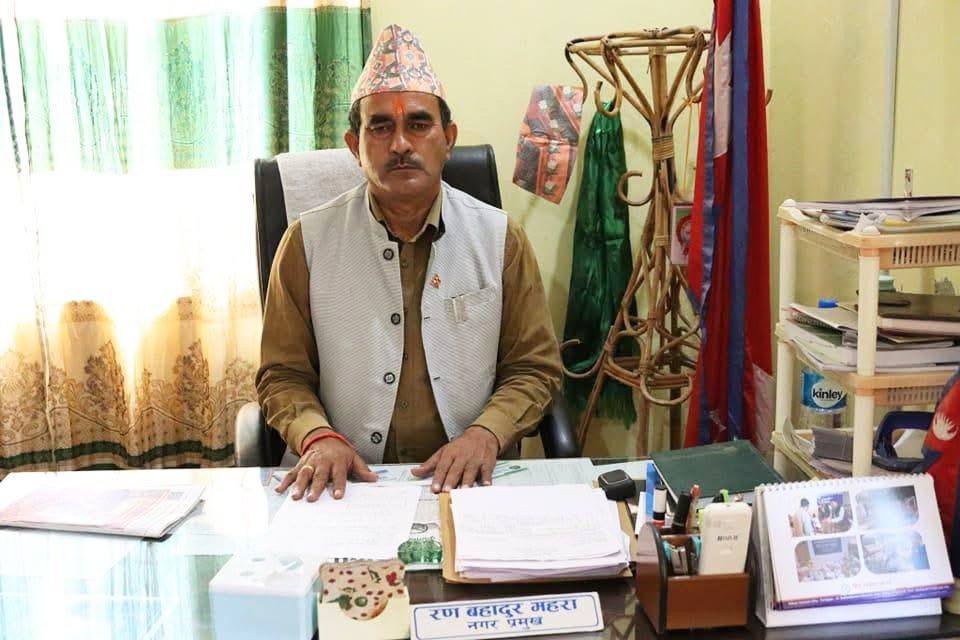
“We are collecting data, and coordination is underway with wards and community forests. But the main challenge is where to resettle them? There is no safe land,” said Mahara.
Families displaced by landslides from areas like Parshuram and Alital in Dadeldhura have also taken shelter on riverbanks and forest areas in Shuklaphanta.
“Local levels do not have the authority to distribute land; we can only facilitate. Unless the federal government creates concrete policies and laws, this problem will likely worsen instead of being solved,” he said.
In the past, the Land Commission had prepared to provide 1 katha of land for housing and 5 katha for agriculture to landless Dalits and squatters. For irregular settlers, it was proposed to provide land ownership certificates by collecting 10 percent revenue. However, this work was halted midway due to the cycle of dissolution and restructuring of the commission and the changing priorities of the government.
Currently, while local levels are measuring land, the Ministry of Home Affairs' circular is pressuring to clear public land. Local levels state that land designated for development projects, roads, and public offices should be cleared, but settlements under the guise of squatters and park victims should be managed with human sensitivity before removal.
Major markets in Sudurpashchim are also on agricultural land. Families in markets like Attariya, which are on government land, do not have land ownership certificates.
This specific news has been automatically translated by AI. As a result, there may be some inaccuracies or language errors.





-(2)_QJLjKxR87n.jpg)