Nepal's Economy Targets $100 Billion Amidst Generational Shift in Politics


A fundamental and epoch-making change has now come in Nepali society, politics, and economy. Just a few months ago, like Gabriel Attal, 36, leading France with great force, no one had imagined that the youth generation would play such an interventionist and leading role in the national politics of our country, but work is being done.
While a 36-year-old Prime Minister is leading the country, the oldest member of the Council of Ministers is over 50 years old. Until yesterday, the narrative of our society and politics was that one could not become a minister, prime minister, or senior leader without reaching 80 years of age, without graying hair, or without leaning on a cane. Today, that narrative has been shattered.
This extraordinary generational change and age-related transformation in politics is not just a change of faces. It is a complete shift in governance style, intention, and work culture. The private sector and the entire society need to understand and internalize this unprecedented change seriously.
The era of slowness, status quo, and setting in politics is ending. Now, the speed, thinking, and technology of work have changed. When the political leadership of the country has abandoned the old mindset and taken a new path. Our entrepreneurs, businessmen, and the entire private sector must also abandon their old accustomed habits.
Our chairman Rabi Lamichhane repeatedly says, 'We must not only learn but also practice forgetting old wrong things.'
Along with this fundamental shift in politics, it is now time to change gears in the economy as well.
- Economy of $100 Billion: An Impossible Journey Without the Private Sector
This government has no doubt that the private sector is the backbone of the economy. There is a saying in English, 'preaching to the choir,' meaning to preach to those who are already knowledgeable. I don't need to explain the importance of the private sector. The government has set an ambitious but realistic goal.
This extraordinary generational change and age-related transformation in politics is not just a change of faces. It is a complete shift in governance style, intention, and work culture. The private sector and the entire society need to understand and internalize this unprecedented change seriously.
The goal is to make Nepal's economy $100 billion (approximately 130 kharba rupees) within the next seven years. We set this milestone while contesting elections and when Rastriya Swatantra Party was writing its manifesto, but is it possible for the state machinery alone to build this $100 billion economy? Absolutely not. Today, the size of the budget brought by the government is 19-20 kharba, of which only about 16 kharba is spent.
The size of the country's economy is currently 54-55 kharba. Achieving a nominal growth of 12 percent by adding 6-7 percent real growth and inflation next year, our economy will reach 74 to 75 kharba. In this 74 kharba economy, the government spends only that 16-17 kharba.
The remaining more than 55 kharba will be contributed purely by the private sector. It is impossible to take the economy to another height without the support of the private sector, which accounts for more than 70 percent of the Gross Domestic Product (GDP), creates employment, and facilitates capital flow. The current government understands this well.
- See RSP's Manifesto
The manifesto brought by Rastriya Swatantra Party during the elections was not a ritualistic document for seeking votes. In the past, manifestos were thrown into the dustbin the day after the election, but the current government will work by keeping it on the table.
The policies, programs, and budget of the current government will be guided by that manifesto. That document has 100 fundamental points. Points 1 to 19 are about good governance. We had written in point number one – 'We will start work by apologizing to the Dalit community, who have been oppressed by the state for centuries' – to end the misgovernance that the public is fed up with.
We have already implemented this from the rostrum of the parliament. We will make it more meaningful through the budget.
Points 19 to 40 are entirely about the economic framework. Point number 19 clearly states – 'The private sector will have a leading role in production, employment, and investment, and the state will only act as a regulator and facilitator.'
Similarly, point number 21 contains a commitment to abolish two dozen old laws that hinder economic progress. Within the first 10 minutes of assuming office as Finance Minister, I started its implementation by signing a decision to abolish 15 laws that obstruct the economy.
- End of Lootocracy and License Raj
In the past, our legal and administrative structure was such that it never allowed honest businessmen to work. Discretion (personal discretion) always prevailed in the bureaucracy.
The system that developed, where work was not done without taking money, files were unnecessarily stalled, and opportunities were given only based on kinship and connections, is academically called kleptocracy. What a tragedy it was to have to go to 32 departments and 7 ministries to get a license for a hydropower project?
This rent-seeking (seeking undue advantage), license raj, and unhealthy cartelization prevented new, talented, and honest entrepreneurs from entering the market. Now the current government will dismantle this web of lootocracy.
Rastriya Swatantra Party has written this in point number 20 of its manifesto. Regulatory bodies were politically captured in the past. Now we are freeing those bodies from political interference, making them transparent and powerful.
_jk8gAxa73G.png)
Brick by brick, we will break down this distorted structure. We will not arrest honest businessmen; we will welcome them with a red carpet. If everyone reads point number 25 of our manifesto, it says, 'The structure of the Revenue Tribunal will be reformed and the Revenue Investigation Department will be abolished.'
These state bodies were used in the past to intimidate businessmen, extort donations, and cause trouble. That reign of terror will no longer continue.
- No Hitlist, Don't Be Afraid of Rumors
In the last few days, a narrative of fear has been sought to be created in the market, especially in the private sector. There is a big hitlist in the Ministry of Home Affairs, Ministry of Finance, or Prime Minister's Office to arrest businessmen.
Rumors are spreading that people are waiting in line to see whom to arrest and when. I want to clarify today as a responsible minister – there is no such hitlist in the government's pocket.
The days of state bodies calling to extort donations or intimidate like in the past are over. Any businessman who does business honestly, pays taxes, and creates employment does not need to be afraid, but one thing must be clear here. The state cannot grant impunity to those involved in serious criminal acts under the guise of being an entrepreneur. The culture of impunity has flourished so much since the years 46/47 BS. The arrogance of governance that anything can be done by making a deal was established.
The terrible public anger and explosion seen on the streets today is the result of that impunity. Therefore, files of serious crimes that were postponed or shelved due to political pressure in the past have certainly been opened. But those who do pure business have no reason to be unnecessarily agitated by this.
- The Imperative of Private Capital in Infrastructure
We are at a very sensitive and frightening juncture of the economy. On one hand, our youth are migrating abroad, and on the other hand, our society is aging rapidly.
Per capita income has just reached around $1500, but we are in danger of becoming old before becoming rich. In the next few years, our window of demographic dividend will close. Not only that, for the past 50-60 years, we have taken loans from institutions like the World Bank and the Asian Development Bank (ADB) at low interest rates of 1 to 1.5 percent with repayment periods of 30-40 years.
We built bridges, roads, and hydropower projects that are now built or under construction, but now, due to the increase in our per capita income, the path to obtaining that cheap loan is closing. Now we will have to take short-term commercial loans with high interest rates. In such a situation, the country cannot be built by the government treasury alone.
Our mandatory liabilities (salaries, allowances, pensions, loan principal and interest) have increased so much. Even with a budget of 20 kharba next year, 14 kharba will be spent there. Capital expenditure of 2 kharba rupees cannot be achieved. Then how will big roads, tunnels, and airports be built? The only solution is to bring in private sector and foreign investment in infrastructure development.
The rise of the 36-year-old generation in politics has completely displaced the old operating system of state governance. Old policymakers were afraid of the private sector, viewed businessmen as thieves or smugglers, but we have come with a clear vision, clean intentions, and high morale.
In neighboring India, just as Union Minister of Road Transport Nitin Gadkari revolutionized the road network over the past 10-12 years using the Hybrid Annuity Model and other private partnership models, we must also adopt the same path.
We need to adopt a crowd-in policy. That is, for every 1 rupee invested by the government, it should be able to attract 7 rupees of investment from the private sector.
By providing hydropower and access roads in the cement industry, Nepal has reached a stage of exporting cement today. This is a successful example of crowd-in.
Now we will remove legal and practical obstacles to bring private capital into tunnels, expressways, and large projects.
- Upcoming Budget and Market Economy
We are on the verge of preparing the budget for the upcoming fiscal year. Due to the short time, a major surgery in this year's budget does not seem possible, but the budget will focus on addressing the main problem of the economy, which is the overall contraction in demand.
We believe in the model of a social market economy. This is like the Nordic countries' model, where capital formation, innovation, and economic growth occur through the open competition of the private sector, but the state guarantees equitable redistribution in areas like education, health, and social security.
Our belief is that investment can be made in citizens even if it is a poor country. We will make the tax system more scientific and less burdensome.
Policy doors will be fully opened in digitalization, mineral excavation, information technology, tourism, and new potential areas. The talk of one-stop solutions has been going on for a long time. Now we will put it into practice.
The rise of the 36-year-old generation in politics has completely displaced the old operating system of state governance. Old policymakers were afraid of the private sector, viewed businessmen as thieves or smugglers, but we have come with a clear vision, clean intentions, and high morale.
The private sector also needs to adapt itself to this new rhythm of speed. Our journey to make this country a $100 billion economy has already begun. Do not harbor unnecessary doubts and fears about this. The state is ready to be your guardian and facilitator.
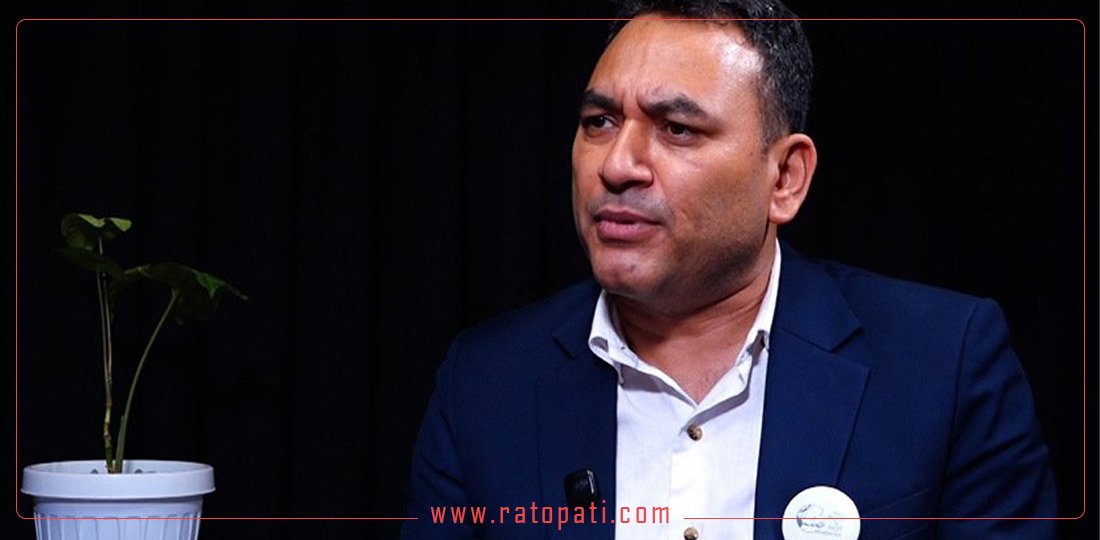
(Based on the views presented by Finance Minister Wagle at the 60th Annual General Meeting of the Federation of Nepalese Chambers of Commerce and Industry.)
This specific news has been automatically translated by AI. As a result, there may be some inaccuracies or language errors.