
University Senate Representation Removed by Ordinance

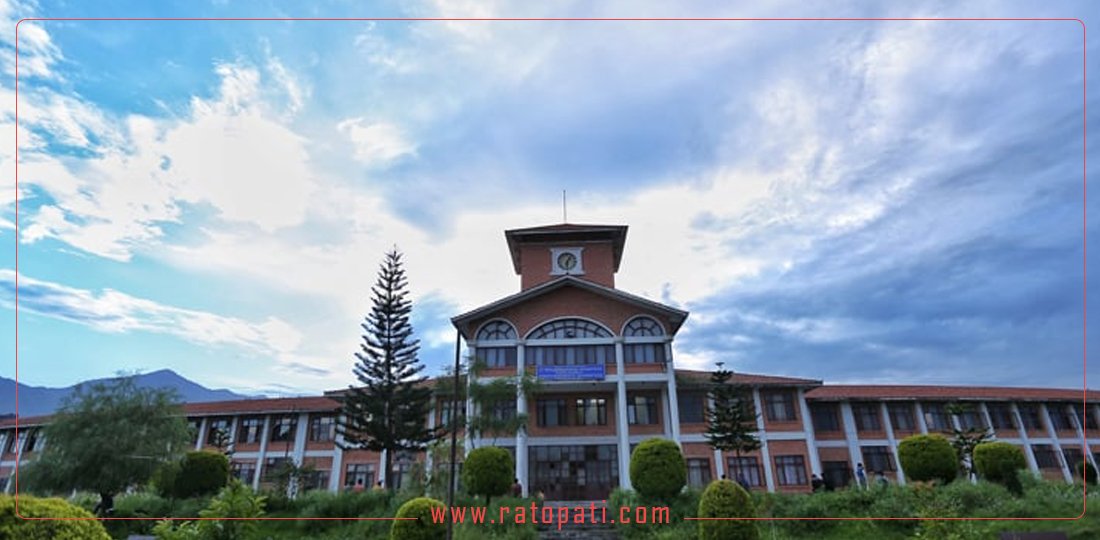
Kathmandu. Representation of the Professor Association, Employee Association, and Student Organization has been removed from the University Assembly (Senate), the highest body of all 18 universities operating across the country.
The ordinance to amend some Nepal laws brought by the government has made arrangements to remove such representation from all universities across the country.
Previously, in most university assemblies, there was a provision for representatives from the Professor (Teacher) Association, Employee Association, and Free Student Union (SWOVYU). Since the elected person from the respective organization would be a representative ex-officio, there was no appointment system.
According to the new arrangement, instead of a representative of the Professor Association, a person selected from among the overall professors will be in the assembly.
Similarly, instead of a representative of the Employee Association, a representative selected from among the employees will be present. In the case of students, instead of a representative from among the SWOVYU chairpersons, a representative from among the general students will be present. The authority to select such representatives has been given to the Chancellor.
Amendment to Leadership Qualification
The ordinance has also determined the qualifications for the appointment of Vice-Chancellor, Rector, and Registrar of universities.
For Vice-Chancellor and Rector of multi-disciplinary universities such as Tribhuvan University, Kathmandu University, Purwanchal, Pokhara University, Mid-Western University, Far-Western University, Nepal Open University, Rajarshi Janak University, one must have obtained a doctorate degree in any subject and have at least 10 years of experience in teaching or research. However, even before this, individuals with weak qualifications were not appointed as Vice-Chancellors.
Besides this, for specialized universities like Nepal Sanskrit University, Agriculture and Forestry University, Lumbini Buddhist University, Vidushi Yogmaya Himalayan Ayurveda University, etc., there is a provision to obtain a doctorate degree in the respective field.
For example, to become the Vice-Chancellor and Rector of Nepal Sanskrit University, one must now have a doctorate in Sanskrit language or literature. Similarly, to become the Vice-Chancellor and Rector of Lumbini Buddhist University, a doctorate in Buddhist philosophy is mandatory. For the Vice-Chancellor of Agriculture and Forestry University, one must have obtained a doctorate degree in Agriculture, Veterinary, and Forestry science.
In the new universities opened recently, the qualification for the Vice-Chancellor has been kept as it was, as it was already determined earlier.
Similarly, to become a Registrar, there is a provision of at least a postgraduate degree and at least 10 years of experience in multi-disciplinary universities.
Qualification of Vice-Chancellor Selection Committee Specified
Before the ordinance was issued, the Prime Minister, as the Chancellor, used to form a committee of three people from among the members of the University Assembly, and the person recommended by this committee was appointed as the Vice-Chancellor.
In such a case, there was a possibility of any kind of person coming to the committee. This could lead to weak individuals becoming Vice-Chancellors. Now, the qualification of the Vice-Chancellor has been specified in the law itself. According to the new arrangement, the convener of the recommendation committee for appointing the Vice-Chancellor must be a person with the qualification to become a Vice-Chancellor.
Similarly, among the other members of the committee, one must be a former Vice-Chancellor, former Rector, or former Registrar, and another member must be a person with 10 years of experience in educational management.
Opposition from Three Organizations Regarding the Ordinance
All three organizations have opposed the removal of representation from the Professor Association, Teacher Association, and Student Organization from the University Assembly.
Basanta Dhakal, President of the Professor Association of Tribhuvan University, the largest and most student-populated university in the country, says that this step taken through the ordinance is the beginning of the government's dictatorial journey. 'This government is heading towards dictatorship,' he says.
Similarly, Chhatrabahadur Karki, President of the Tribhuvan University Employee Association, also states that this arrangement is against the right to organize and the International Labor Organization's rights. He says that since the employee who will have representation in the assembly from now on will be selected at the discretion of the government or the Vice-Chancellor, it will not represent the feelings of the employees.
'Until now, we had representation in the Tribhuvan University Assembly, but not in the Executive Council. We had said that the Registrar should be from the employee side, it is unfortunate that this is not happening,' he says.
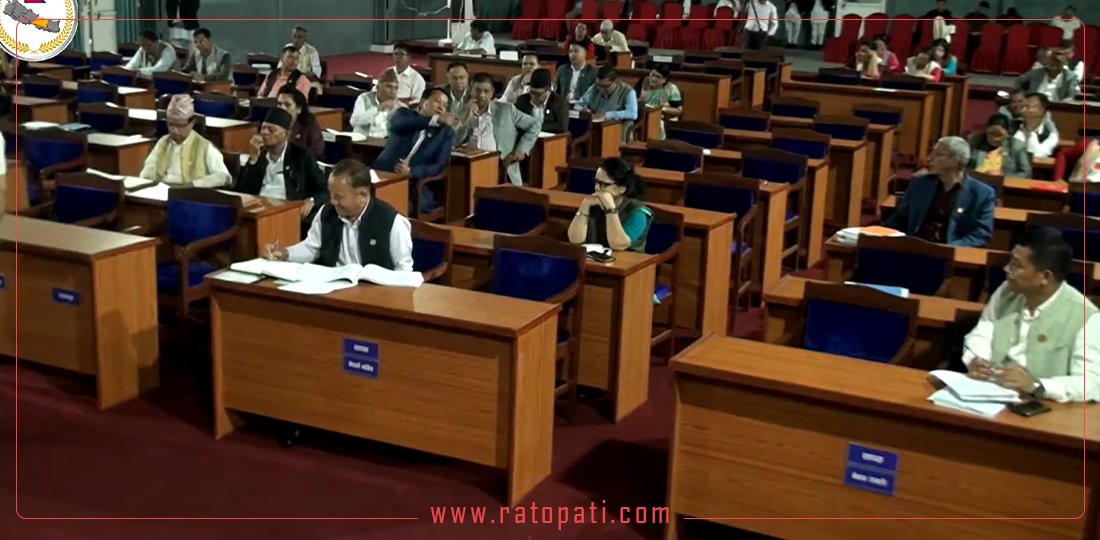
Deepakraj Joshi, Chairperson of the Free Student Union Central Campus, who was a member of the Tribhuvan University Assembly and was removed from his post due to the ordinance, says that this step will create a government shadow in the university. He claims that this will create a state of academic emptiness in the university.
This specific news has been automatically translated by AI. As a result, there may be some inaccuracies or language errors.



_kE6hmvuewe.jpg)
