
Communist Party of Nepal Faces Setbacks and Internal Disputes After Election

Kathmandu. The Communist Party of Nepal (CPN) did not achieve the expected results in the House of Representatives elections held in February. The CPN, formed by the merger of 25 constituent parties including the former CPN (Maoist Centre), CPN (United Socialist), and others, was reduced to 17 seats, falling to fourth place.
Prior to the elections, the CPN had internally assessed that it could win around 60 seats and become a decisive force. However, following a major setback for the entire leftist movement in Nepal, coordinator Pushpa Kamal Dahal 'Prachanda' called the first central coordination committee meeting on March 19.
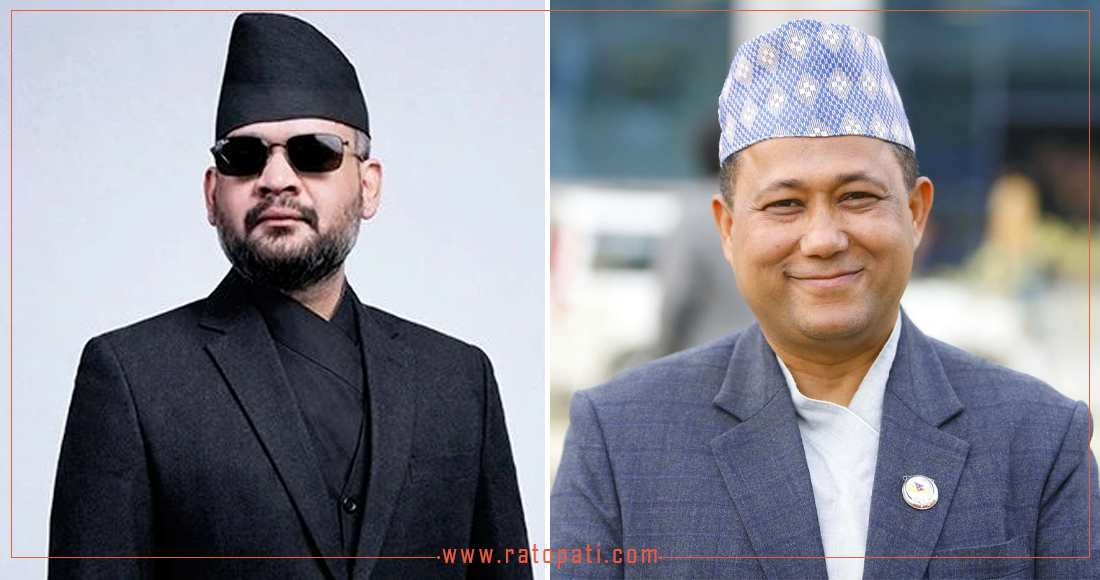
43 individuals debated for 9 days on Prachanda's 10-page report regarding the election review. In the meeting, former Prime Minister and senior leader Jhalanath Khanal criticized the leadership for taking a stance in favor of the elections despite unfavorable conditions due to the Janji movement. Khanal expressed dissatisfaction with the leaders' division of responsibilities. Senior leader Bamdev Gautam, supporting Khanal, also expressed dissatisfaction with the division of responsibilities, stating that assigning responsibilities without defining work areas was illogical.
Khanal had requested the position of Head of the Foreign Department, and Gautam had requested the position of Head of the Organization Department. However, the meeting assigned the responsibility of Head of the Foreign Department to Pramesh Hamal and Head of the Organization Department to Barshaman Pun. Khanal was given the responsibility of Head of the Policy Research Institute, and Gautam was assigned the role of Head of the Production Department.
Bhim Rawal did not attend the meeting after not being given the sixth priority in the party. Rawal has been given the responsibility of the Far-Western region, but he has refused to accept the responsibility of the in-charge, expressing dissatisfaction with the geographical responsibility being assigned without consulting him.
_sfLOMd8H80.jpg)
To avoid disputes regarding seniority, the seniority of five individuals has been determined, and other leaders have been listed alphabetically. Another leader, Hitman Shakya, expressed dissatisfaction that the division of responsibilities went against the commitment not to assign in-charge responsibilities to leaders of the coordination committee. 'Let's proceed with a uniform standard for assigning responsibilities. If leaders in the coordination committee are to be given departmental responsibilities, the in-charge roles can be given to the youth. Let's maintain uniformity in assigning responsibilities,' Shakya said.
Leader Chakrapani Khanal suggested dissolving the existing committee and forming an organizing committee, rather than assigning various responsibilities, given that the schedule for the general convention had already been announced. Young leaders of the party concluded that the leftist movement could not progress in the current situation and pressured for leadership to be handed over to the younger generation.

The youth are divided into two factions regarding leadership transfer. Leaders such as Saral Sahayatri, Bagmati Province coordinator, Central Committee member Madhav Sapkota, and Chief Whip of the parliamentary party Yuvraj Dulal, appear to be in favor of transferring leadership through rules and regulations established at the general convention. Former Chairman of All Nepal National Free Student Union Lekhnath Neupane, Ranjit Tamang, Yuvraj Chaulagain, DP Dhakal, and other leaders are in favor of immediate leadership transfer. They have expressed dissatisfaction with the lack of youth representation in the coordination committee.
However, spokesperson and Head of the Publicity Department Prakash Jwala claimed that the party has resolved to ensure at least 50 percent youth representation at all levels, from ward to central committees. 'The party has resolved to reorganize the committee in a way that balances different age groups, ensuring at least 50 percent representation for youth and new youth, and representation for other age groups based on experience and sacrifice,' he said.
Jwala asserted that the party would be reorganized in terms of ideology, principles, organization, and working style, with elected committees formed at all levels from ward to central. He clarified that the schedule for completing the unification and adjustment work by the end of Jestha and holding the general convention between November 27 and December 11 has already been set.
Jwala claimed that the CPN would lead the overall communist movement's reorganization. He stated that the unified Communist Party can advance the flag of socialism, and the party has called upon all leftist forces to unite, cooperate, and polarize.
Following the shameful defeat in the elections, the younger generation raised the demand for coordinator Prachanda and co-coordinator Madhav to resign on moral grounds to reorganize the leftist movement. However, citing the special circumstances of the Janji movement as the reason for the party's defeat, Prachanda and Madhav expanded the central coordination committee. Except for Ranjita Shrestha, all members of the 45-member coordination committee are in the 50-year age group.
Coordinator Prachanda is 72 years old, co-coordinator Madhav Kumar Nepal is 74, senior leaders Jhalanath Khanal is 77, Bamdev Gautam is 78, and Narayan Kaji Shrestha is 67.
Similarly, Agni Prasad Sapkota is 67, Krishna Bahadur Mahara is 68, Ganganarayan Shrestha is 57, Dr. Gangalal Tuladhar is 65, Girirajmani Pokharel is 69, and Gopal Kirati is 61 years old.
Other leaders include Chakrapani Khanal 'Baldev' at 61, Chet Bahadur Pun at 51, Jagannath Khatiwada at 64, Jayanti Devi Rai at 58, Dilram Acharya at 64, Dinanath Sharma at 80, and Devprasad Gurung at 68 years old.
Similarly, Devendra Poudel is 62, Nand Bahadur Pun is 61, Pampha Bhusal is 64, Prakash Jwala is 60, Pramesh Kumar Hamal is 71, Prem Bahadur Singh is 73, Dr. Beduram Bhusal is 72, Bhanubhakta Joshi is 57, and Dr. Bhim Bahadur Rawal is 70 years old.
Madan Kumari (Garima) Shah is 57, Mahindra Ray Yadav is 72, Matrika Prasad Yadav is 68, Metmani Chaudhary is 54, Ranjita Shrestha is 44, Rajendra Kumar Rai is 56, and Rajendra Prasad Shrestha is 67 years old.
Similarly, Rajendra Prasad Pandey is 70, Ramkumar Bhattarai is 63, Ramchandra Jha is 73, Leelamani Pokharel is 76, Barshaman Pun is 55, Shakti Bahadur Basnet is 57, Shriram Dhakal is 62, Sunil Kumar Manandhar is 60, Subashraj Kafle is 54, Hitman Shakya is 66, and Hitraj Pandey is 72 years old.
CPN's 'Reverse Gear' in Parliamentary Politics
The number of seats the CPN won in the House of Representatives elections held in February is comparable to the seats won by the Nepal Sadbhavana Party in 2048 BS. At that time, the United People's Front, the open front of the then CPN (Unity Centre), became the third largest party by winning 9 seats. The Sadbhavana Party, which was in fourth place, had won 6 seats.
In 2051 BS, after Prime Minister Girija Prasad Koirala dissolved parliament and announced mid-term elections, the Unity Centre boycotted the elections. The party split due to internal disputes over whether to pursue peaceful protests or prepare for a protracted people's war. Prachanda reorganized the party and announced an armed struggle on February 1, 2052, under the name CPN (Maoist).

After the 12-point agreement with parliamentary political parties in 2062 BS, the Maoists returned to peaceful politics. In 2062-63 BS, the people's movement overthrew the autocratic monarchy and established a federal democratic republic. In the Constituent Assembly elections held in 2064 BS, the Maoists defeated the old parties Congress and UML to become the largest party. In the 20 years since the establishment of the republic, although the Maoists had multiple opportunities for a journey in power, the party could not be re-established. From 2070 BS onwards, the Maoists have been shrinking in every election.
To such an extent that in 2074 BS, even when going into elections in an alliance with the large leftist party UML, the Maoists could not become the second largest party. In 2075 BS, respecting the nearly two-thirds mandate received by the left alliance, the party unified, but the party split due to the power struggle between chairmen KP Sharma Oli and Prachanda.
During this period, although Oli and Prachanda succeeded in becoming Prime Minister repeatedly, extreme public disappointment grew due to their inability to work according to public expectations. That disappointment culminated in the Janji movement of Bhadra 23 and 24.
Due to the Janji movement, Prime Minister Oli had to flee from power. Top leaders from communist parties, including Prime Ministers Prachanda, Madhav Nepal, Jhalanath Khanal, and Baburam Bhattarai, survived under the security cordon of the Nepali Army. In the elections held on the strength of the Janji movement, the leftist movement reached its weakest point in history. Due to the weaknesses of these old left-democratic forces, the recently formed Rastriya Swatantra Party secured a large majority. While the RSP formed a government with a single majority in republican Nepal and the government is working rapidly according to its electoral promises, UML and CPN appear helpless. Having lost power, they are currently struggling to maintain their existence on both parliamentary and street fronts.
This specific news has been automatically translated by AI. As a result, there may be some inaccuracies or language errors.
-(2)_QJLjKxR87n.jpg)