Government Prepares to Restructure Nepal Electricity Authority, Separate Production and Transmission Lines, and Grant Autonomy to Electricity Regulatory Commission
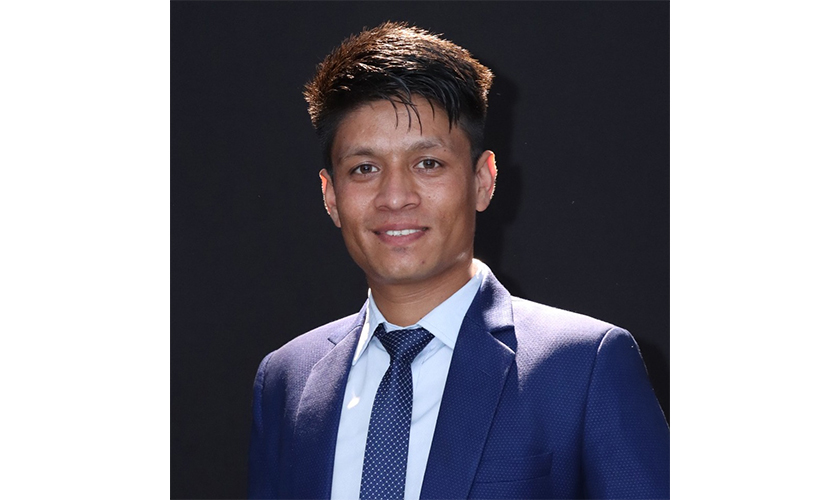

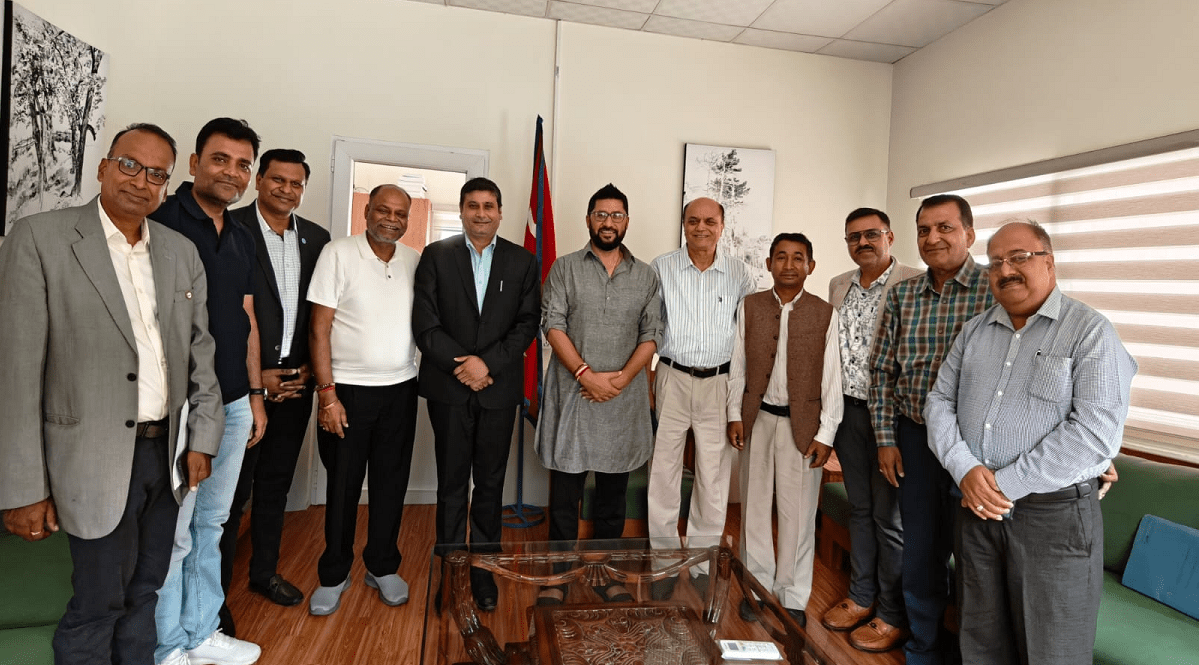
Kathmandu. The government is preparing to restructure the Nepal Electricity Authority by separating production and transmission lines and to make the Electricity Regulatory Commission autonomous. The Ministry of Energy, Water Resources and Irrigation has prepared to amend the law to separate production, transmission, and distribution of the Electricity Authority. Energy, Water Resources and Irrigation Minister Biraj Bhakta Shrestha gave this information on Thursday during a meeting with journalists covering the energy sector at the ministry. Minister Shrestha stated that the restructuring (unbundling) of the Nepal Electricity Authority is being prepared to break the monopoly in the energy sector. He clarified that the monopoly-oriented structure of the authority would be classified through legal amendments, making the Electricity Regulatory Commission fully autonomous. Minister Shrestha admitted that the 'unbundling' policy for production, transmission, and distribution to regulate the private sector has been delayed due to legal complications and weak laws. He stated that this process would be finalized by improving the law itself. Minister Shrestha informed that the ministry has moved forward with the 'unbundling' of the authority, i.e., taking the production, transmission, and distribution systems into separate structures, a topic that has been debated for a long time but has not been implemented. 'We are preparing for the unbundling of the authority,' said Minister Shrestha. 'The private sector is making such a significant contribution to energy, but there is still a conservative mindset in state bodies. That needs to change now.' Minister Shrestha said that the Electricity Regulatory Commission would be allowed to work independently and effectively. He hinted that the commission has not been able to work effectively so far. He claimed that if the commission works within its jurisdiction, half of the problems in the energy sector would be resolved on their own. Minister Shrestha stated that the Water and Energy Commission Secretariat should be developed as the 'think tank' and Saraswati of Nepal's water resources. 'If the regulatory commission works well, half of our problems will be solved there,' said Minister Shrestha. 'We have told you that you are autonomous. Work within your autonomy. Let's not bring issues like electricity purchase agreements into the ministry. If you do your work, no one will stop you from working within your rights.' He also stated that the Water and Energy Commission Secretariat should be developed as the 'think tank' and Saraswati of Nepal's water resources. He mentioned that the Alternative Energy Promotion Center would be revitalized for rural energy and social justice. Minister Shrestha informed that the ministry has adopted a policy of electrifying about 16 local levels without national transmission lines through micro-hydro and solar power to make the locals self-reliant, and then connecting them to the grid later. *'The private sector is not a stakeholder, but a partner of the government'* The private sector has traveled from producing about 700 megawatts to 2,300 megawatts of energy today. Minister Shrestha said that the government's perspective towards the private sector would be changed. He mentioned that the system is being developed to recognize energy producers as partners of the state rather than just ordinary stakeholders. 'We are trying to recognize their representation in policy-making and boards as partners,' he said. Minister Shrestha expressed serious concern that the investment of the general public in the hydropower sector is becoming insecure. Minister Shrestha complained that although a regulation was being made to allow the private sector to enter electricity trading, it was being stopped in court due to legal obstacles. 'If we rely on a weak branch, it will hit the act itself in court tomorrow, and the private sector will face more difficulties,' said Minister Shrestha. 'Therefore, we are practicing opening this sector by relying on strong laws.' He stated that there is no alternative to structural reform to make the electricity system competitive and transparent, and he has prioritized institutional reform of energy sector bodies during his tenure. *'There is no courage to announce new projects'* Minister Shrestha expressed serious concern that the investment of the general public in the hydropower sector is becoming insecure. Seeing the abandoned state of old projects and the burden of accumulated liabilities on the government, he clarified that he does not have the courage to announce new projects for cheap popularity. Minister Shrestha stated that it is the responsibility of the current government to manage the irregularities seen in hydropower projects. 'We all must be responsible for this. Thinking neutrally, the money of innocent people has been trapped and lost in hydropower,' said Minister Shrestha. He hinted that the investment made by the general public considering hydropower as an attractive sector is at risk due to the mismanagement and delays in some projects. Minister Shrestha said that the tendency to announce projects without preparation in the past and then not work on them for years would not be repeated. He clarified that the ministry is focused on prioritizing and completing existing projects and resolving their problems rather than laying the foundation stone for new projects based on whims. *Asset Management of BOOT Projects* Minister Shrestha stated that there will be policy-level management regarding the transfer of projects built by the private sector under the Build, Own, Operate, and Transfer (BOOT) model to the government after 25 or 30 years. He said that a policy would be made on who and how to manage it. 'After the project comes under the government's responsibility, who will maintain and operate it? Where is the specific law for that? It's difficult to add one manpower, so how will that asset be managed tomorrow?' he questioned. The government is working through a study task force to make the overall PPA system transparent and practical, according to Minister Shrestha. Minister Shrestha stated that clear legal and managerial frameworks would be prepared in time for the protection and operation of those projects, as they are national assets. He said that a major challenge is arising due to the lack of a clear model for managing them after their term expires and they become state property. 'What we are holding is how to look at projects completed through BOOT from an asset management perspective,' said Minister Shrestha. 'If the government takes it and cannot operate and manage it, it will be ruined again.' Minister Shrestha mentioned that political interference and appointments to the board of directors could become problems once the projects come under government ownership. He said, 'If one is added (to the board of directors), there is a fear that there will be a fight tomorrow. What is added is gone forever.' *PPA and Modalities of Large Projects* The government is working through a study task force to make the overall PPA system transparent and practical, according to Minister Shrestha. 'The investment of innocent citizens is trapped and lost in the current PPA system. We all need to be responsible and make decisions based on common sense,' he said. He stated that instead of rushing into new technologies like hydrogen energy, it would be advanced only after a realistic study of its financial feasibility and construction costs. He said that discussions are underway to change the structure so that large projects like Budhigandaki become financially viable only when they are developed as multipurpose models, not just hydropower. Minister Shrestha stated that the policy ambiguity between 'take or pay' and 'take and pay' in Power Purchase Agreements (PPAs), which is a major concern for hydropower developers, will be clarified in the upcoming budget. Minister Shrestha said that the tendency of misalignment between past policies, programs, and budgets would be ended, and the practice of allocating budgets to small and scattered projects like sprinkling seeds would be discouraged. 'Earlier, the thinking was that energy is just for lighting and development, but now we have moved to the concept of energy security as a basic need and an indicator of growth,' he said. *Ambiguity of 'Take or Pay' and 'Take and Pay' to be Resolved* Minister Shrestha stated that the policy ambiguity between 'take or pay' and 'take and pay' in Power Purchase Agreements (PPAs), which is a major concern for hydropower developers, will be clarified in the upcoming budget. He recalled that the then Finance Minister's statement in the budget speech on this issue had created significant policy complications. 'This has created confusion among investors, so this time we will address it in a relative and practical manner and bring it to a conclusion,' he said. *Transmission Line Hassles and Action-Oriented Steps* Minister Shrestha said that donor agencies have been complaining about the delays in transmission line construction caused by government mechanisms. He claimed that such delays would be immediately ended. He asserted that the construction of the Hetauda transmission line, which has been stalled for years, has started after 12 years, and informed that contractors and projects that do not work are being brought under the purview of action. He mentioned that the contract for a GIS substation, where 80,000 units of electricity were being wasted daily, which had been stalled for a long time, was recently terminated. He made it clear that those who do not perform will not be supported. *Multipurpose Irrigation and Autonomous Citizen Fund* Minister Shrestha said that the large budget allocated for irrigation will now be transformed into multipurpose (irrigation and electricity) projects. He said that a clear procedure is being developed regarding the ownership of electricity produced from such projects. He informed that the ministry is also working on the concept of creating an autonomous citizen fund operated by citizens' investment. He said that plans are being made for the general public to directly receive returns through the creation of the fund.
This specific news has been automatically translated by AI. As a result, there may be some inaccuracies or language errors.