137th International Labour Day Celebrated in Nepal with Rallies and Discussions

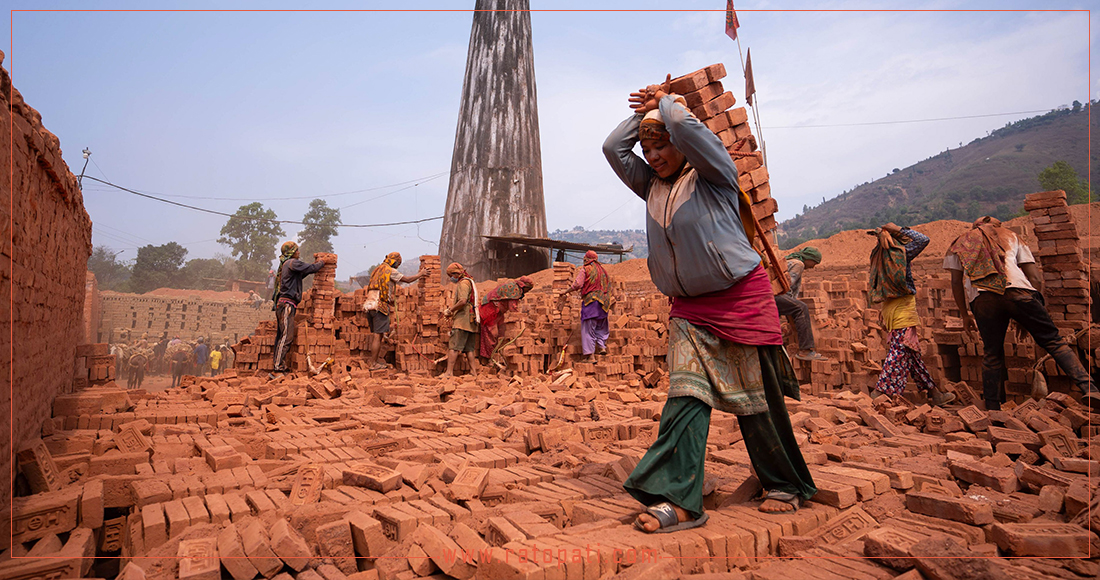
As usual, this year too, the 137th International Labour Day (May Day) is being celebrated with great fanfare in Nepal and around the world with various programs. Various trade unions, labour organizations, and professional organizations in Nepal organize rallies, assemblies, seminars, and intellectual discussions, celebrating this historic day as a day of celebration and resolution.
The Government of Nepal, recognizing the importance of this day, declares a public holiday across the country. This day is not just a celebration but also a glorious day to remember the immense courage and sacrifice of workers worldwide in their struggle for rights, justice, and dignity. Celebrated with the timeless slogan 'Workers of the world, unite!', this day has been continuously advocating for the respect of labour, the security of workers, and universal social justice.
The historical background of this day is linked to the peaceful labour movement in Chicago, USA, on May 4, 1886. The state power brutally suppressed the movement demanding eight hours of work, eight hours of rest, and eight hours of recreation. Many innocent workers lost their lives due to bomb explosions and police gunfire.
However, that bloody suppression could not stop the labour movement; instead, it inspired workers worldwide to become more organized and empowered. Due to that sacrifice and continuous pressure, the International Labour Conference held in Paris, France, in 1889, made the historic decision to celebrate May 1st as International Labour Day worldwide, the continuity of which remains to this day.
In the context of Nepal, the discussion of Labour Day and the labour movement is considered to have started in 2003 BS. The foundation of labour consciousness in Nepal was laid by the historic labour strike at the Biratnagar Jute Mill. That movement not only raised the issue of labour rights but also sowed the seeds of the democratic movement against autocracy. The leadership of that historic movement was provided by prominent Nepali politicians Girija Prasad Koirala and Manmohan Adhikari.
The period from 2003 BS to 2046 BS was marked by instability and the autocratic Panchayat rule in Nepal's political history. During that time, political parties and labour organizations like trade unions did not have the opportunity to openly conduct their activities. However, even in underground forms, workers' participation and sacrifice were always at the forefront of professional organizations and the democratic political movement.
The government's attack on the 'right to organize', unconditionally guaranteed by constitutional provisions, labour laws, trade union laws, and international conventions, is a very painful and condemnable situation for the general workers, based on arbitrariness and cheap popularity.
After the historic People's Movement of 2046 BS and the restoration of democracy, Nepal's labour movement found open skies. Trade unions rapidly expanded their organizations and succeeded in playing an interventionist and meaningful role at the policy-making level.
As a result of these struggles, Nepal has so far ratified 11 important conventions of the International Labour Organization (ILO). In addition, serious discussions are underway for the ratification of other important conventions such as occupational safety and health and freedom of association.
After the restoration of democracy, the state made very important legal arrangements such as the Labour Act, Labour Regulations, establishment of the Contribution-based Social Security Fund, declaration of a national holiday on May Day, and the Trade Union Act to make Nepal's labour sector organized, transparent, and dignified.
The current constitution of Nepal has recognized the right to labour as a fundamental right of citizens. To implement the rights and interests of workers, labourers, and employees across the country and to organize them and ensure the proper implementation of national and international laws, about 19 trade union federations, 450 national-level trade unions, and thousands of establishment-level unions are active in Nepal today.
Today, millions of workers and labourers are toiling day and night in government, semi-government, private, and informal sectors in Nepal. While there is some level of respectable service, facilities, and job security in government bodies and public institutions, the condition of workers in private establishments is extremely dire and deplorable.
Looking at it this way, the labour sector in Nepal appears quite secure and strong in terms of constitutional guarantee of labour rights, formulation of labour-friendly laws, and ratification of international conventions.
However, it is a tragedy! In practice, the attitude of the state and the government towards workers is still not fully labour-friendly. Moreover, the newly formed government is bringing out statements and decisions aimed at abolishing or curtailing trade unions. This has created deep ripples, suspicion, and uncertainty among the general Nepali workers and trade union organizations.
The government's attack on the 'right to organize', unconditionally guaranteed by constitutional provisions, labour laws, trade union laws, and international conventions, is a very painful and condemnable situation for the general workers, based on arbitrariness and cheap popularity.
Today, millions of workers and labourers are toiling day and night in government, semi-government, private, and informal sectors in Nepal. While there is some level of respectable service, facilities, and job security in government bodies and public institutions, the condition of workers in private establishments is extremely dire and deplorable.
In most private establishments, employees are hired on contract or daily wages for years, even for permanent nature of work, are not paid even the minimum wage set by the government, and are deprived of social security.
What is even more frightening is that if workers try to organize or form a union for their rights, their contracts are not renewed, departments of the establishment are outsourced, and employees are fired without reason – such anti-labour practices are taking place openly.
When the management learns that workers have applied for union registration at the labour office, they are harassed, and large numbers of workers are forcibly taken to the labour office to sign statements against the union – such extremely inhumane and illegal acts are happening openly.
Especially, nurses and other workers in the private health sector, teachers in private schools, lower-level employees of private banks and financial institutions, and working journalists are currently victims of severe labour exploitation.
Taking advantage of the extreme unemployment and weak economic condition in the country, the operators of establishments who exploit labour without providing minimum wages and appointment letters are not effectively monitored and punished by the state's regulatory bodies.
Due to the fear of losing their jobs even when demanding their legal rights, most workers and labourers are forced to work by enduring their labour exploitation, injustice, and humiliation. The main reason why millions of energetic Nepali youths are forced to sell their labour cheaply in foreign lands like the Gulf and Malaysia is the failure of the state and employers to respect labour and provide fair compensation.
The current government and its mechanisms should not go against the working class, which is the main backbone of the country's economy, by only chasing after a few wealthy, nouveau riche, and comprador capitalist classes. It is imperative for the government to focus on the ground reality and how to work for the benefit of the marginalized and lower-class working people of the country.
Looking at the recent activities and statements of the current government, it seems as if this government has neither any information nor any interest in the real definition of a worker, the value of sweat, and the historic struggle that the working class has undertaken for democracy and rights in the past.
On the other hand, some trade union federations, unions, and organizations formed to end this dire labour exploitation of workers and to amplify their voices have also become helpless, like 'a pigeon that has eaten salt', by staying close to power and authority. It is extremely sad and disappointing for the general working class that such glorious organizations, which were at the forefront even during the terrifying times of autocracy, are now silent or inactive on workers' issues.
Today, the state considers trade unions as the root of all economic and administrative problems. What could be more ironic than this on Labour Day? The day is fast approaching when all workers, labourers, employees, and their representative organizations (trade unions) will have to fight a strong legal and practical battle once again to dispel this mistaken notion of the government and employers and to establish the rights of workers that are being lost.
The current government and its mechanisms should not go against the working class, which is the main backbone of the country's economy, by only chasing after a few wealthy, nouveau riche, and comprador capitalist classes. It is imperative for the government to focus on the ground reality and how to work for the benefit of the marginalized and lower-class working people of the country.
In addition, trade unionists must now conduct a ruthless self-reflection and identification of their past weaknesses. Instead of making organizations mere stepping stones to power, it is an essential need of the hour to move forward by building new paths of struggle, cooperation, and agreement with the government and employers to ensure the identity of real workers, guarantee of adequate work, and sufficient salary and facilities for a full meal and dignified life.
Let us all embrace the core message of May Day that no right is obtained without struggle, and no obtained right can be protected without it. Hearty best wishes to all the working class on the occasion of the 137th International Labour Day!
(The author Pokharel is the Vice-President of the National Independent Health Workers Union.)
This specific news has been automatically translated by AI. As a result, there may be some inaccuracies or language errors.