Madhesh Province Budget: Unmet Promises and Lingering Questions
The story of Madhesh Province is not just about an ordinary budget. It is a story of the silent tears of its people, unfulfilled dreams, and the deep socio-economic reality of lives that have remained unchanged despite years of desire for transformation. On paper, it appears that approximately 350 to 450 billion rupees have been spent in this province over the last 10 years.
Each year, about 40 to 50 billion rupees are allocated in the name of development. This amount sounds substantial and looks impressive in statistics. However, behind this large sum, a question repeatedly pricks the mind – why is light still far from the lives of the people despite so much money being spent?
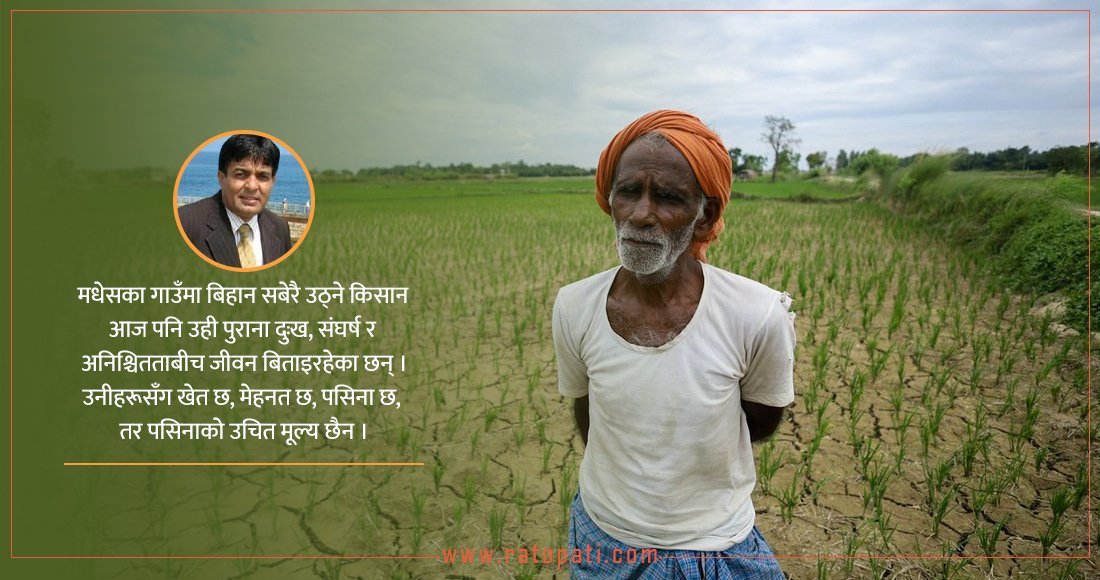
Farmers in Madhesh villages, waking up early in the morning, are still living amidst the same old hardships, struggles, and uncertainties. They have land, they have hard work, they have sweat, but their sweat does not fetch a fair price. Lack of irrigation, scarcity of fertilizer, injustice in the market, or pressure from middlemen weakens their dreams year after year.
Budget documents state that agriculture is prioritized, plans are made, speeches are given, inaugurations are held, but in real life, farmers receive very little lasting benefit. They feel that development is confined to paper, which has not yet reached the fields.
In those same villages, there is also a young generation that has stopped seeing a future in their own villages. The unemployment figure of about 10 to 13 percent is merely a formal number; the real story is their life. Every day, they see their age increasing, responsibilities growing, but opportunities diminishing.
Budget mentions the health sector, there are hospital buildings, health posts, policies, and plans, but for those mothers, these have all become mere words.
The dream of getting a passport, contact with agents, tickets to go abroad, and finally, the hidden tears in the eyes of parents – their future revolves around these. Development plans were made, budgets came, programs were conducted, but their dreams could not sustain themselves in their own country. They love their soil, but opportunities are beginning to appear abroad.
There is a mother standing at the hospital door, with a sick child in her arms. Her eyes hold fear, fatigue, and uncertainty. Her mind is filled with thousands of questions. Will she get treatment today or not? Will she find a doctor or not? Will medicine be available or not?
Budget mentions the health sector, there are hospital buildings, health posts, policies, and plans, but for those mothers, these have all become mere words.
When their child writhes in pain, the development written on paper cannot alleviate their suffering. In many cases, lack of time, shortage of services, and distance to facilities force them to give up, and that defeat is never recorded in any report.
There is a small boy in the school classroom who dreams big dreams. He wants to become a doctor, an engineer, a teacher. But his school lacks resources. There are few teachers, few books, no laboratory, and digital education is even further away. He dreams of a world of mobile phones and the internet, but his real world is limited to chalk, duster, and old benches.
He believes that education is the foundation for building the future, but the system around him repeatedly reminds him that dreaming is easy, but fulfilling those dreams is difficult.
Meanwhile, Nepal's literacy situation also reflects a deep social divide. In urban areas like Kathmandu, Lalitpur, and Bhaktapur, the literacy rate is above 80 to 85 percent. Children there are close to books, the internet, training, and opportunities.
But in Rautahat in Madhesh, the literacy rate is around 58 to 60 percent, in Mahottari 60 to 62 percent, and in Siraha and Saptari, it is around 61 to 66 percent. This gap is not just a statistical difference; it is a gap in opportunity, a gap in the future.
But the main question remains the same, why have the expected results not been seen after so much expenditure?
Where literacy is low, the light of development reaches late. People cannot understand policies, cannot recognize their rights, and access to services is difficult. Where literacy is high, plans are understood quickly, services are easily obtained, opportunities are seized faster, and the pace of life accelerates. Thus, two different realities have been created within the same country. On one hand, the experience of rapid development, and on the other, the continuation of struggle.
In the last 10 years, a large budget was spent in Madhesh Province – approximately 350 to 450 billion rupees. On average, a budget of 40 to 50 billion rupees was allocated each year. Of this, about 50 to 60 percent was spent on roads, bridges, buildings, and physical infrastructure. 15 to 18 percent on education, 10 to 12 percent on health, and the rest on agriculture, administration, and other sectors. But the main question remains the same, why have the expected results not been seen after so much expenditure?
Because development is not just a game of money. Development is a matter of implementation capacity, monitoring systems, and access to services. Building buildings does not change lives. Building roads does not automatically create opportunities. Building hospitals does not make services effective. Even today, many villages remain in darkness. Although the glow of development appears very bright on paper, the life in the villages becomes silent after sunset. Within that silence, a question arises – where are we? Where is our development?
The answer to these questions is not easy, but it is clear. Development is not just money – it is capacity, access, service, and most importantly, trust.
This story of failure is not just the government's, but the story of the entire system. Plans were made, but implementation remained weak. Budgets came, but results were not evaluated. Money was spent, but impact was not seen. Development was written, but lives did not change. Sometimes, this is the greatest sorrow of development. Everything happens, but not for everyone.
Experiences from around the world show that where education and literacy have increased, the pace of development has automatically accelerated. In some states of India, significant improvements in roads, employment, and health services were observed after literacy increased. Developed nations consider education as the main basis for development.
But in Madhesh today, the question remains the same – despite spending so much budget, why have mothers' tears not stopped? Why are youth forced to go abroad? Why is the farmer's sweat still worthless? Why are children's dreams unfulfilled?
The answer to these questions is not easy, but it is clear. Development is not just money – it is capacity, access, service, and most importantly, trust. The future of Madhesh Province is not over. But to change it, merely increasing the budget is not enough.
It is necessary that the budget changes the lives of farmers, provides opportunities for youth in their own country, gives mothers trust instead of fear in hospitals, and empowers children to see a future in their own villages. When that day comes, development will truly stop tears. And on that day, the story of Madhesh will not just be a story of suffering, but will become a new history of success, self-respect, opportunity, and light.
This specific news has been automatically translated by AI. As a result, there may be some inaccuracies or language errors.