Supreme Court challenged over customs duty on goods from India border

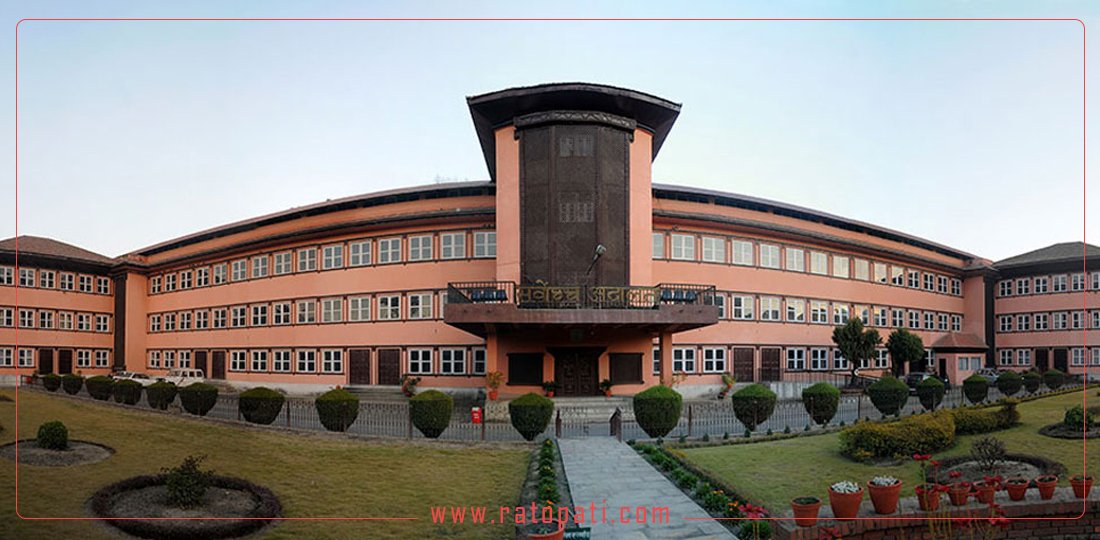
Kathmandu. A writ petition has been filed in the Supreme Court against the government's decision to impose customs duty on goods worth more than one hundred rupees brought from the Nepal-India border for household use.
Lawyers Amitesh Pandit, Akash Mahato, Suyogya Singh, and Prashant Bikram Shah filed the writ on Monday demanding the cancellation of the decision.
It is argued that the customs exemption limit for passengers coming from the Nepal-China border or Tribhuvan International Airport is higher, while setting a limit of only 100 rupees on the open border with India constitutes geographical and class discrimination against the citizens of the Madhesh and Terai regions.
It is stated that in today's era of inflation, no daily consumable item can be brought for 100 rupees, and this limit has been called 'impractical and illogical'. Due to this, ordinary people in the border areas are harassed by customs officials and security personnel even when bringing daily necessities (vegetables, medicines, clothes).
The petitioners have sought an order of 'mandamus' to cancel the customs-related notice published by the Ministry of Finance on Jestha 15, 2080 BS and Jestha 15, 2082 BS.
Furthermore, they have also demanded an 'interim order' not to obstruct or collect customs duty on daily necessities and goods brought for marriages or social ceremonies for the citizens in the border areas until the final verdict of the case is reached.
It is mentioned in the writ that the provisions of the Nepal-India Treaty of Trade, 1960, stipulate the smooth flow of goods between the two countries, and this decision challenges that treaty.
The Prime Minister's Office, the Ministry of Finance, the Ministry of Home Affairs, and the Department of Customs have been named as defendants in the writ. After the preliminary hearing on this writ, the Supreme Court will decide whether to seek a response from the government or issue an interim order.
The writ petitioners have claimed that this move by the government is a direct violation of the fundamental rights of equality and freedom guaranteed by the Constitution of Nepal.
This specific news has been automatically translated by AI. As a result, there may be some inaccuracies or language errors.