
The Echo of the Siren: Reviving Nepal's Industrial Heartbeat

In the month of Magh, 2046 BS, in that small room in Birgunj, with the fog-covered dusty road outside the window and the vast sky, we three village youths, staying in a rented room while taking our SLC exams, were trying to grasp the new rhythm of the city. But the soul of Birgunj city was not in its buildings or crowds; it was solely in the siren of the sugar factory. When that siren roared at 5 AM, it was not just a sound. As described in the Russian novel 'Mother', it was a collective call to labor and consciousness that bound the entire city in a single heartbeat.
That siren shook not only the window panes but also people's hearts. Whether farmers, laborers, or traders, it taught everyone to move to the same rhythm of time. Holding our breath, with dreams in our eyes, we would run to the window to see what was making that sound. In Birgunj, that siren did not just signal the start of the day; it announced that a civilization had awakened and whispered from within, 'Wake up, boys, you too are part of this journey.'
The siren of the Birgunj Sugar Factory was no ordinary sound; it was the heartbeat of the city. Before 5 AM, that thunderous noise would jolt the entire town, as if touched by a magic wand. It gave energy and taught discipline to the workers waking up rubbing their sleepy eyes, children rushing to school, traders opening their shop curtains, and youths chatting at tea stalls.
Most importantly, that siren brought smiles to the faces of sugarcane farmers. The siren meant production was happening, economic activity was underway, and one day the farmers would receive their payments. In fact, the Birgunj Sugar Factory kept an entire ecosystem alive. Farmers were debt-free, traders' businesses flourished, and laborers found employment. That siren gave some peace of mind and showed others dreams.
But unfortunately, that siren has been silent for years. The city's heart has stopped beating. Farmers are in confusion, laborers are unemployed, and that enthusiasm, joy, and brilliance are now limited to nostalgic memories. Yet, there is talk that the new government is planning to operate the factory.
If this is true, best wishes to the government. May the New Year 2083 bring that invaluable gift to our country.
In truth, in Nepal's industrial history, some industries were not just centers of production; they were symbols of national pride. Industries like Hetauda Cement, Bhrikuti Paper, Janakpur Cigarette, Hetauda Textile, Bansbari Leather and Shoe, Gorakhkali Rubber, Birgunj Sugar Factory, and Agricultural Tools Factory provided employment to thousands of workers. They kept the local economy dynamic and steered the country toward self-reliance.
A powerful chain of production, distribution, and consumption was built from villages to cities, which spread economic activity widely. Those industries were not just factories; they were living expressions of Nepali labor, skill, and potential.
However, due to the vicious cycle of bad governance, those foundations of pride gradually weakened, and eventually, most industries closed down. Today, only their buildings remain, constantly reminding us of past mismanagement and present incompetence. Billions of rupees of investment became inactive, thousands of workers lost their jobs, and the local economy lost its dynamism. The very foundation of inclusive economic development collapsed.
In fact, despite repeated rhetoric about economic and inclusive development, a serious question always arises in the context of closed factories and the government's lack of priority in operating them: Are public industries inherently failed structures? Or was privatization the only solution to the problem?
World experience and historical facts show that the problem lies in management, policy clarity, and implementation rather than the model or public structure. The privatization implemented in Nepal, which changed the nature, ownership, and direction of national assets, was not just a process of economic reform; it was a cunning move to hand over sources of national income to crony capitalists and turn the country into a playground for multinational companies.
- Socialism: In Slogans or Economic Justice?
Socialism is often understood merely as political rhetoric or election slogans, but its real meaning is deeper. Socialism is an economic and social philosophy. Its main objective is to ensure equitable access to the means of production, opportunities, and wealth for all. It has three fundamental goals at its core.
First, to establish collective access and ownership over capital and sources of production. Second, to maintain economic equality in society. And third, to guarantee education, health, employment, and basic services to every citizen. Socialism does not mean the government seizes all property; it means creating a system where economic benefits within the country are not limited to a few individuals but can be shared by the entire society.
Many successful countries in the world have used socialist or mixed socialist models in their own ways. The strongest example is China. China has adopted a mixed ownership policy by combining state ownership, private sector efficiency, and cooperative models in its economy. As a result, state-owned enterprises like the State Grid Corporation of China, China National Petroleum, and China Railways have turned into the world's largest and most profitable organizations.
Similarly, Vietnam has rapidly reduced rural poverty by adopting cooperative and state-private partnership models in agriculture and small industries. Norway has also kept its oil and natural resource income under state ownership and invested in education, health, and social security through a public fund. These examples show that with proper management, transparency, and accountability, the socialist model can be extremely successful.
This model is even more relevant for Nepal because the majority of its population lives in rural areas and depends on agriculture, animal husbandry, small industries, and local markets. If the state invests in cooperatives, community industries, agricultural processing centers, irrigation, storage, and market infrastructure, economic activity will not remain limited to Kathmandu and a few cities but will spread to every village.
If this happens, farmers can get fair prices for their produce, village youths can find employment in their own regions, and the local economy can become dynamic. The essence of socialism is to use the nation's wealth and opportunities as a means to uplift the living standards of all citizens, not just a limited group.
- Neoliberalism: Attraction and Reality
Neoliberalism is an economic philosophy that advocates for maximum market freedom, minimal state role, and positioning the private sector as the main driving force. Its key tools are privatization, liberalization, and globalization.
In theory, it is believed that this increases competition, improves efficiency, and accelerates economic growth. But for such policies to succeed, strong institutional structures, transparency, regulatory capacity, and a productive economy are required, which are not sufficiently prepared in Nepal.
Neoliberal policies were implemented in Nepal in a hasty and unbalanced manner. The state withdrew from its industries, but no clear policy was formed to compel the private sector toward long-term investment, technological modernization, and production expansion. As a result, many national industries reached the hands of the private sector at cheap prices but could not be revived. Lacking technology, capital, and government protection, domestic industries reached a state where they could not compete with foreign rivals.
In Nepal, instead of creating expected competition, neoliberalism created unequal competition. This forced many Nepali industries to close, and the country was pushed toward an import-oriented economy. In this process, policy weaknesses and lack of regulation increased corruption. With no transparency in the valuation, sale process, and investment commitments of industries, a situation was created where a few limited groups benefited. As the state weakened, accountability decreased, and the results were different from the objectives of privatization.
Consequently, Nepal lost industries, employment, production capacity, self-reliance, and economic dignity, becoming a subject of pity for foreign donor nations. Learning from the failed blow of privatization, the path for future reform is for the state to play an active role in strategic sectors, protect and promote domestic industries, and move forward by adopting a balanced policy that keeps the private sector within clear rules, accountability, and a long-term perspective.
- How Did Neoliberalism Destroy the Village Economy?
At one time, the villages around Birgunj were not just settlements; they were living economies. Farmers of Sakhuwa Prasouni would irrigate their fields with sweat in the morning, and when they returned home in the evening, their labor carried the assurance of tomorrow. For farmers with three to four bighas of land, life was balanced. They would grow enough grain, pulses, and vegetables for their own annual consumption on one part of the land and plant sugarcane on the other to earn cash income.
That sugarcane would go directly to the Birgunj Sugar Factory, and the money returned from there became the lifeline of the village. With that same money, children were educated, medicine was bought for the house, weddings were conducted, and cattle were purchased. Money circulated in the village, work was created, and farmers lived with self-respect. Farmers did not need anyone's job; they were an economy in themselves.
But when policies changed in the name of neoliberalism, that living cycle stopped abruptly. The Birgunj Sugar Factory closed, and with it, the future of thousands of farmers also ended. For a few years, sugarcane started drying in the fields because there was no one to buy it; gradually, after the industry closed, there was no question of farmers planting sugarcane. Foreign sugar started entering the Nepali market without restriction, but that sugar could not buy the farmers' sweat. Local industries closed one after another, and the village's money started going not just to the city but directly out of the country.
Those fields, which always looked green and were sources of thousands in cash earnings, are barren, and the children of those farmers, who were always their own masters and participants in production, are today helpless laborers abroad. This is not just economic decline; it is the reality of the disintegration of a self-reliant society where the dreams of an entire generation were shattered due to the state's wrong policies.
Due to the neoliberal economic policy adopted by the Nepali Congress and silently supported by the communists, all villages in Nepal today are limited to being places that supply labor instead of production centers. Due to the lack of opportunities in the village, youths are migrating abroad, and the village economy is becoming dependent on remittances. The productive fields that were the backbone of the Nepali economy are barren, traditional skills are disappearing, local markets are becoming inactive, and the economy itself has become dependent.
The current dependent economic system, which does not increase production capacity and only increases consumption, is not sustainable in the long run. Therefore, if rural productivity is not revived, there is a clear danger that Nepal's overall economic base will become even weaker.
- The Impact of Indian Agricultural Production
Nepal's agricultural sector stands today not only in complex competition but also burdened by weak policies. The growing influence of Indian agricultural products in the market is not just a result of geographical proximity; it is clearly a result of Nepal's policy failure. In India, farmers receive strong support and assistance from the state in fertilizers, seeds, irrigation, minimum support prices, storage, and market management, which has made their production cheap, stable, and competitive. But in Nepal, farmers are struggling alone amidst high production costs, uncertain markets, and weak infrastructure.
More seriously, the government has no clear agricultural priority, nor a long-term strong and practical policy; even existing policies are not effectively implemented, and the state appears almost absent in market management. This void has given Indian products not only free entry into the Nepali market but also an opportunity to establish effective dominance. As a result, domestic production has been pushed out of competition, farmers have not received fair prices, which has increased frustration toward agriculture. Therefore, it can be said that the growing agricultural dependency is not the farmers' weakness but a direct result of the state's weak vision, impractical policies, and irresponsible implementation.
- Why Are Nepali Fields Becoming Barren?
The fact that a large amount of fertile land is seen as barren in rural areas of Nepal today is not just due to natural or individual reasons; it is a result of the government's wrong policies and structural economic problems. Farmers not getting fair prices for their produce, the lack of guaranteed return on investment, and the agricultural profession not appearing socially and economically attractive are the main reasons for this.
When a situation is created where there is no income despite hard work, agriculture is limited to an option for subsistence, and gradually people move away from it. Another reason deepening this problem is the rapid migration of the labor force due to the lack of employment. Once village youths start going to cities or abroad in search of employment and better income, the manpower to do farming decreases.
On top of that, the continuously rising costs of fertilizer, seeds, irrigation, and labor have made production costs even more expensive. When production is expensive but the selling price is uncertain, farmers do not want to take risks; therefore, the process of arable land becoming unused has accelerated. Besides this, market insecurity and the lack of a long-term agricultural policy have made this crisis even more serious. Even if farmers produce, there is no guarantee of its sale, and there is no guarantee of price stability.
In such a situation, the agricultural profession has become uncertain and risky, as a result of which fields are barren in many places across the country, but the market is filled with foreign, especially imported, agricultural products. This imbalance is weakening Nepal's agricultural self-reliance.
- Does Privatization Make a Nation Strong?
Privatization itself is a tool of economic policy. If implemented correctly, it can increase efficiency, competition, and production. But in Nepal, its implementation was structurally weak, opaque, and without a long-term strategy. Because many public industries were handed over to the private sector at prices lower than their actual valuation, the real economic value of national assets was weakened. In this process, the lack of transparency and accountability encouraged self-centered decisions rather than policy-making.
After privatization, industries could not be restructured and modernized as expected. Instead of new investment, technology improvement, and market expansion, many industries gradually reached a closed or inactive state. Because the direct impact of this fell on employment, thousands of workers lost their jobs, and their skills and experience became useless. As industrial production declined, the country's internal production capacity weakened. This turned the economy from production-oriented to consumption-oriented.
For example, when the Bhrikuti Paper Factory in Gaindakot was in operation, besides direct employment, farmers from the eastern to western Terai were able to sell straw that would otherwise go to waste in the fields at a high price. Even wild grasses like Kans and Siru, and Babiyo from the hills found a market, and the foundations for people's livelihoods were expanded at the local level. The long-term result of the privatization process is even more serious.
After the industrial base weakened, the country became dependent on imports, which increased the trade deficit and deepened dependence on foreign products. The structure today is such that Nepal is more dependent on consumption than on expanding its own production capacity. Such an economy is unbalanced in the long run because it reduces self-reliance and increases risks in external markets and supply. Therefore, it is clear that the unbalanced implementation of privatization has weakened both the nation's economic sovereignty and its productive base.
- Why the Socialist Model?
If Nepal can adopt a balanced and practical socialist model, there is a great possibility of reviving the village economy. The main objective of this model is to connect the state, community, and cooperatives in a single structure to strengthen production, processing, and the market at the local level. This expands economic activity not just to the city but to every village, strengthening employment, income, and self-reliance.
Since Nepal's real strength lies in rural areas, investing and developing infrastructure there is the long-term solution. The first important measure is a cooperative, public company, or community-based agricultural system. Instead of leaving farmers in weak competition individually, production can be increased by organizing them into groups. For example, if farmers of the same village join together to form a cooperative or public limited company, the costs of seeds, fertilizer, irrigation, and equipment decrease, and both the quantity and quality of production increase.
As some cooperatives in Nepal have shown in the milk production system, the cooperative or public limited company model can connect farmers directly to the market and reduce the influence of middlemen. Second, the development of local processing industries is extremely important. If farmers sell only by producing raw materials, they get the minimum price, but if processing centers are established in the village itself, the value addition happens right there.
For example, instead of selling paddy only as grain, if a rice mill or packaging industry is established in the village, the farmers' income can increase significantly. This also creates employment in the village and reduces youth migration.
Third, public-private-cooperative partnerships can integrate resources and efficiency. The state provides policy and infrastructure, the private sector brings technology and management capacity, and cooperatives can ensure community participation. The minimum support price system set by the state reduces market uncertainty by giving farmers a guaranteed price for their produce. For example, if a fixed price is set for paddy or milk, farmers can increase production without the fear of loss.
Ultimately, government investment in irrigation, roads, storage, and market infrastructure transforms the village into a production center, making the overall economy balanced and self-reliant.
- Solution: A Balanced Path
Nepal's economic structure has become unbalanced today as a result of one-sided policies. Both full socialism and full privatization are extremist views, and such extremism cannot provide long-term stability. Therefore, the most suitable option for Nepal is a balanced mixed economic model where the roles of the state, private sector, and community are clearly defined. Only such a model can help expand production, distribution, and opportunities in a balanced way.
The first foundation of this model is the revival of public industries. It is necessary to reactivate industries that were established earlier but are now inactive because the infrastructure, experience, and potential are already available in those industries. If those public industries can be restructured through modern management, technology improvement, and transparent operating systems, they can again become an important foundation of the economy.
The second important aspect is the strengthening of the cooperative system. A cooperative should not just be a savings and credit institution; it is and must be an effective medium for production and market management. Organizing agriculture, animal husbandry, and small industries through cooperatives reduces costs and increases farmers' market access. This gives stability to the rural economy and reduces the influence of middlemen.
Third, ensuring the responsible role of the private sector is extremely necessary. Investment can be promoted by collecting capital by organizing group members in the private sector and forming public limited companies, and if the private sector is given freedom by making policies to protect national capitalists, and kept within clear rules, social responsibility, and transparency, economic development becomes inclusive. The state must strengthen its regulatory role so that private investment aligns with national interests.
Fourth, no economic model can succeed without transparent and long-term policy-making. Frequently changing policies reduce investor confidence and weaken the production system. Therefore, a stable strategy is needed for agriculture, industry, trade, and rural development, which can provide a clear direction to all parties.
Ultimately, political will is the most important element at the center of all these reforms. Without willpower, any policy remains limited to paper. When the state makes decisions by prioritizing national interest, only then can a balanced economic system be transformed into practice. If a national roadmap can be prepared with the participation of all political parties under the leadership of the current government, including the determination of the state's main priorities, there can be policy stability. Opposition parties must also show the courage to support the government's desire to move forward on the path of country development unconditionally.
- Conclusion: The Path Ahead
Nepal stands at a decisive turning point today, where there is a need to learn from past mistakes and determine the direction of the future. Our country has important foundations like natural resources, labor force, fertile land, water, and skills, but all these resources have not been fully utilized due to the lack of effective policy and management.
Although privatization and open market policies have given positive results in some sectors, they could not make the overall economy balanced, self-reliant, and inclusive. As a result, production capacity weakened and import dependency increased. This has increased economic instability and dependency in the long run.
If we cannot revive the village economy, the dream of a prosperous Nepal will remain limited to slogans. No economic reform can be sustainable without keeping rural production, agriculture, and small industries at the center. Now the time has come to revive inactive industries, adopt clear policies, prioritize local production, and build the foundation of a productive economy by ensuring respectable income for farmers.
Only such steps taken by the government now can prepare the foundation for a self-reliant economy. Ultimately, the real journey of Nepal's prosperity starts from the village. Only if the village is strong will the city be strong, and only if the city is strong will the nation be strong. This balance is the foundation of Nepal's sustainable development and economic justice.
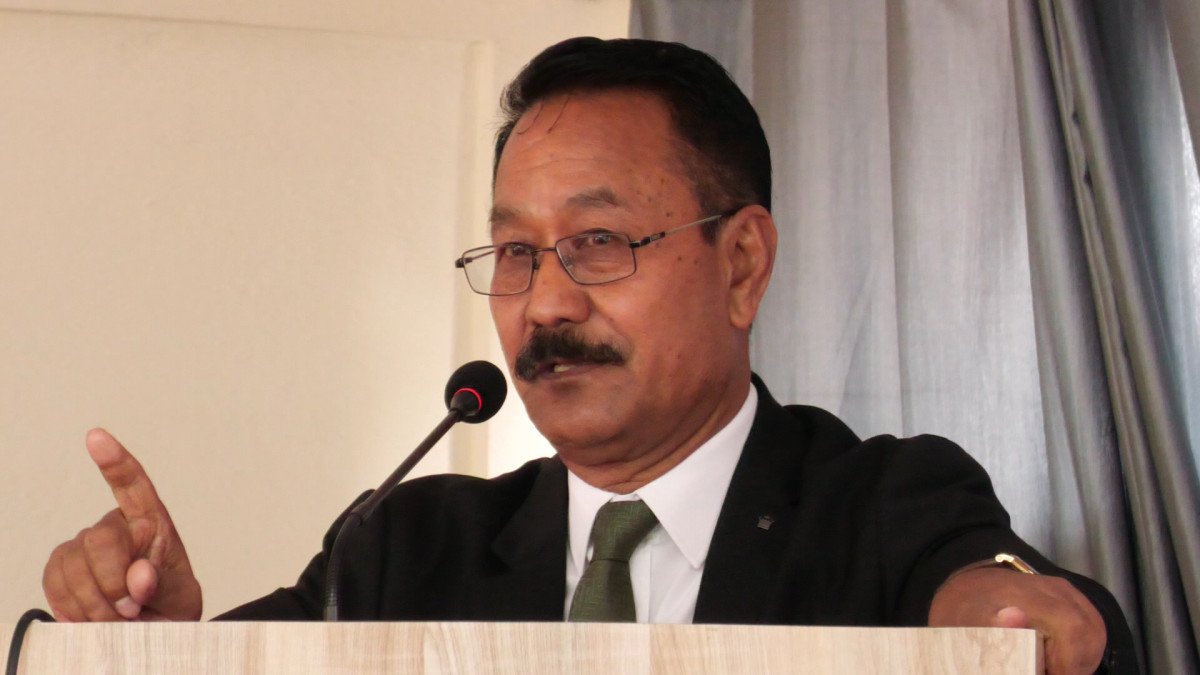
(The author is the Principal of Nirvana College.)
This specific news has been automatically translated by AI. As a result, there may be some inaccuracies or language errors.


-(2)_QJLjKxR87n.jpg)