Kathmandu's Squatter Settlements Face Eviction Amidst Controversy Over Land Ownership

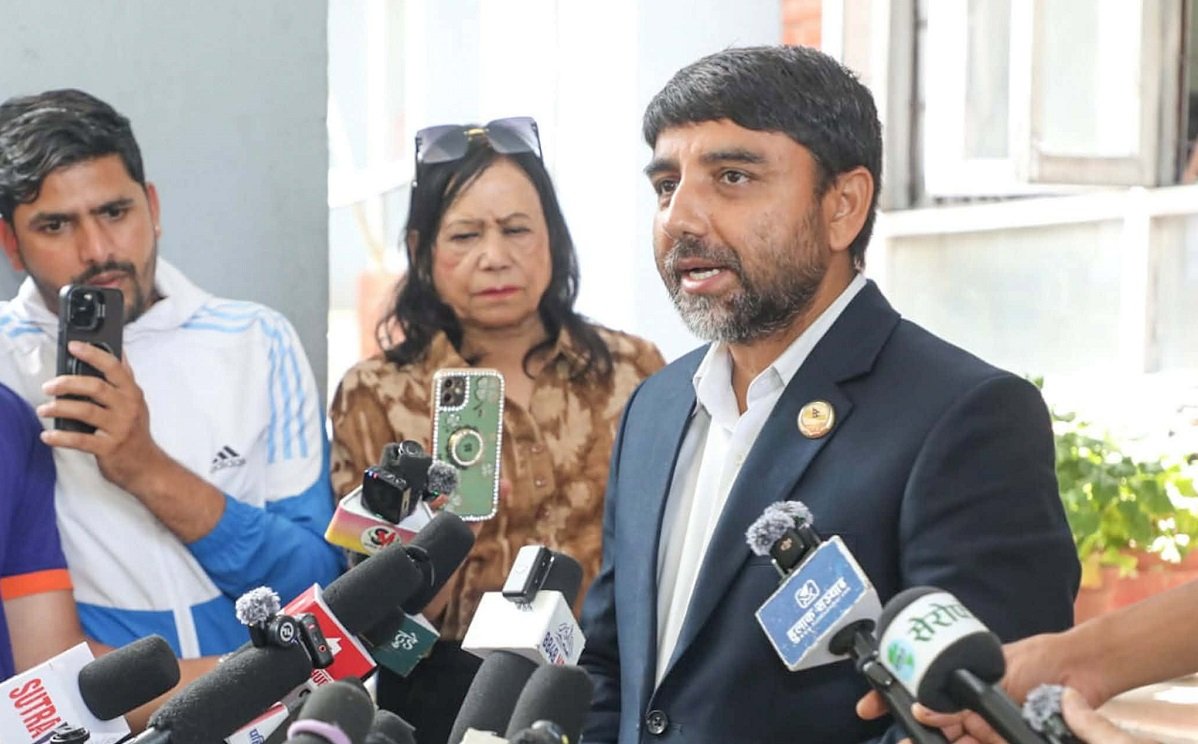
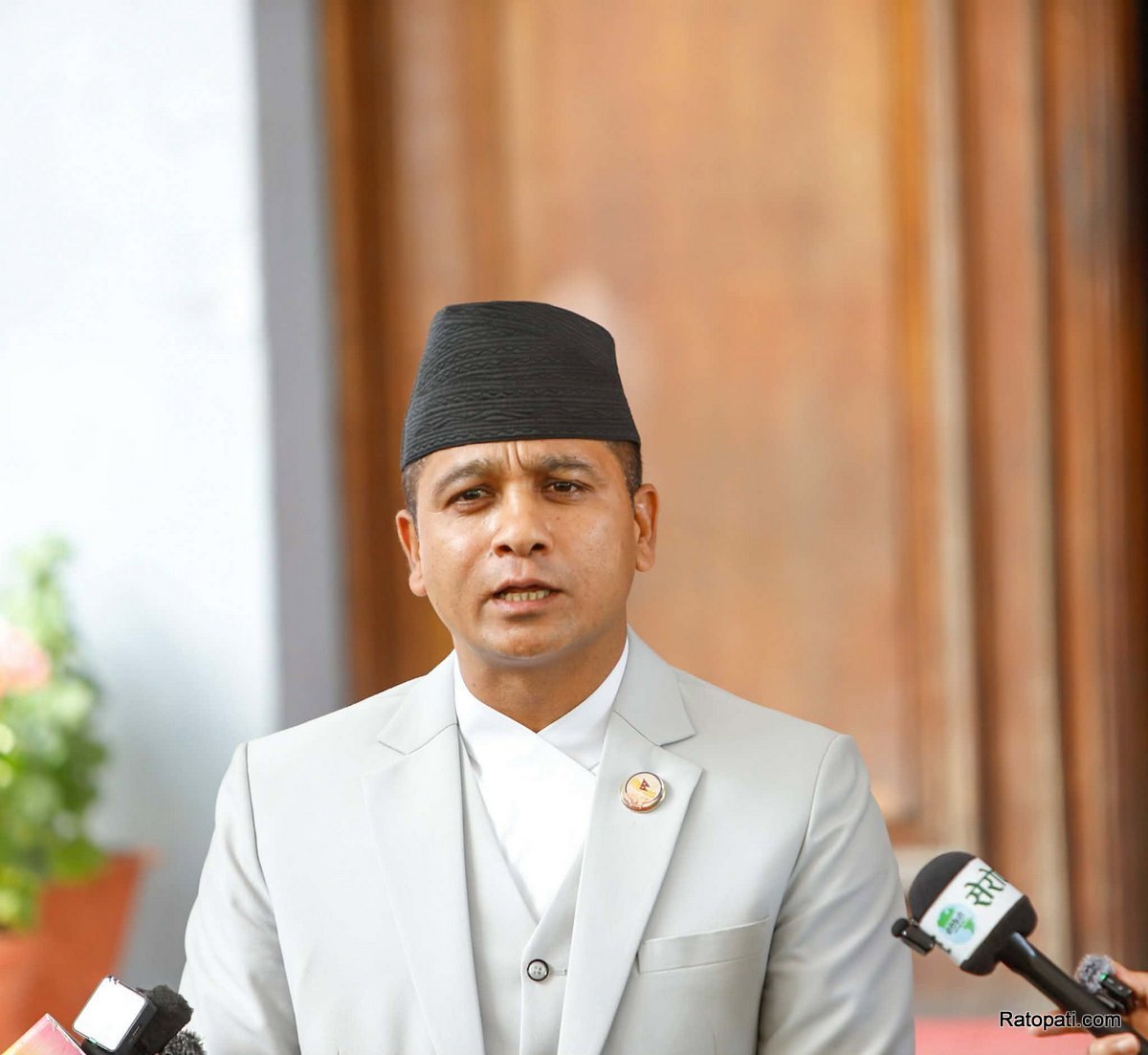
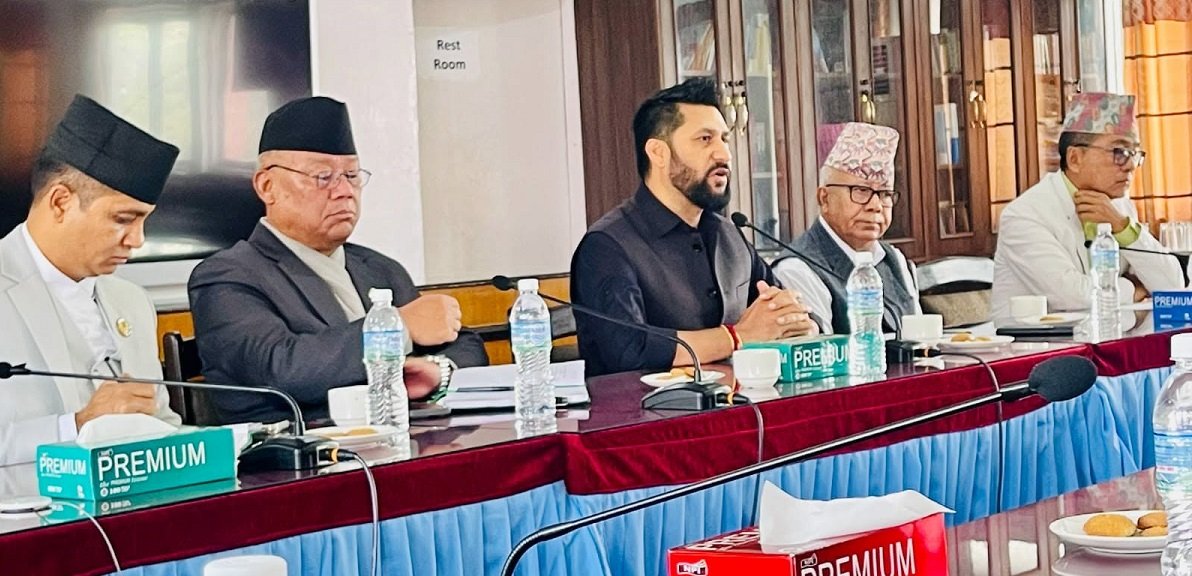
Kathmandu. The squatter settlements of Kathmandu have once again become a subject of intense debate. Prime Minister Balendra (Balen) Shah, who also holds the responsibility of Home Minister, instructed security agency chiefs on Wednesday to clear the squatter settlements by Sunday, sparking discussions from various perspectives.
Following this government move, the squatters are discussing new strategies. On Thursday afternoon, they held a meeting to deliberate on their next steps.
The main concern is how to manage squatters not only along the Bagmati riverbanks but across the entire country. Although Land Commissions have been formed multiple times for this purpose, the problem remains unresolved.
While there is a consensus among political parties that land should be provided to landless squatters nationwide, there is an argument that those who do not fall under specific criteria should be managed elsewhere.
The Land Act 2020 and the National Land Commission's procedures stipulate that land cannot be provided in areas such as riverbanks, road rights-of-way, forest areas, sites of archaeological or religious importance, areas under high-tension lines, and locations prone to natural disasters.
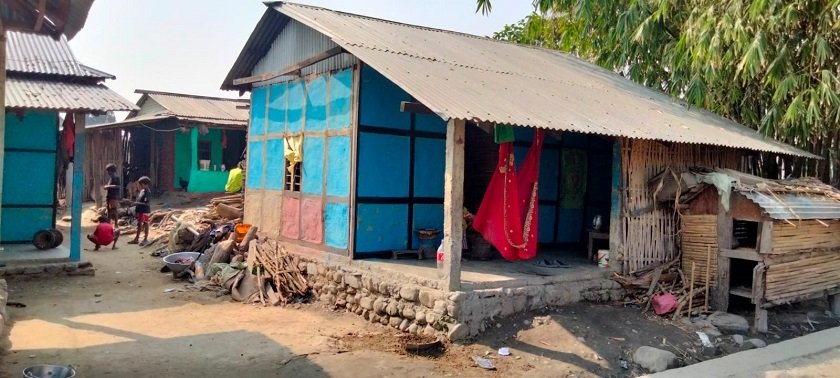
If any landless squatters are residing in such high-risk or legally prohibited areas, there is a standard procedure to relocate them to safer locations.
For squatters living on safe public land not prohibited by law, there is a legal provision to provide equivalent land in the respective area free of cost. Under this, there is a legal provision to provide free land for housing in urban areas, not exceeding 130 square meters (approximately four aana).
Similarly, in rural areas, there is a provision to provide up to 340 square meters (approximately 1 kattha or 10 aana 3 paisa) of land per family for housing purposes. If a squatter family needs land for agricultural purposes instead of housing, there is a provision to provide up to 2,000 square meters (approximately 6 kattha) in the Terai and Inner Madhesh regions, and up to 3,000 square meters (approximately 6 ropani) in the hilly and Himalayan regions free of cost.
Currently, the government has adopted a policy of displacing squatters from areas like Thapathali and Sinamangal, arguing that these areas fall within the riverbank criteria and cannot be allocated.
This policy is not new. When Baburam Bhattarai was Prime Minister in 2069/070 BS, an attempt was made to relocate Thapathali squatters to Ichangu Narayan. Permanent apartments were even built there for their management.
Although the construction of these apartments through the Department of Urban Development and Building Construction was completed in 2073 BS, no one agreed to move in. The apartments still exist today. Built at a cost of nearly 140 million, the 4 large apartment buildings contain flats capable of housing 233 families.
Difficulty in Identifying Squatters
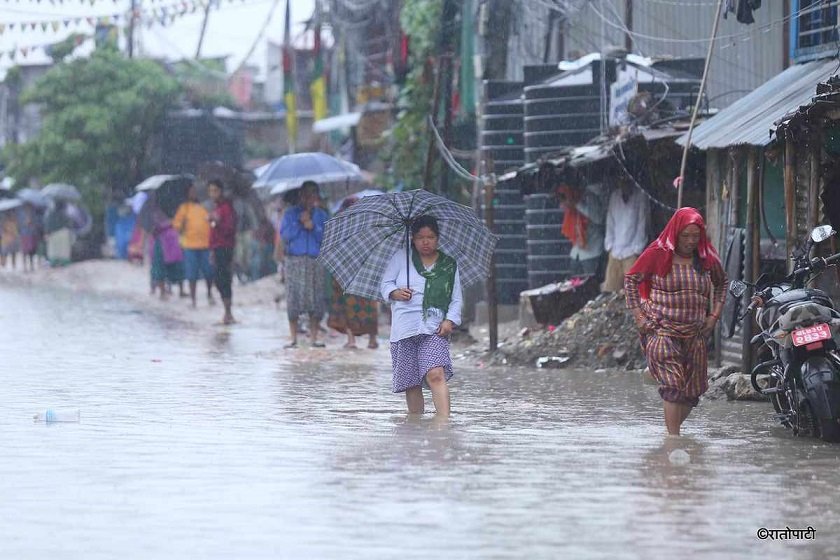
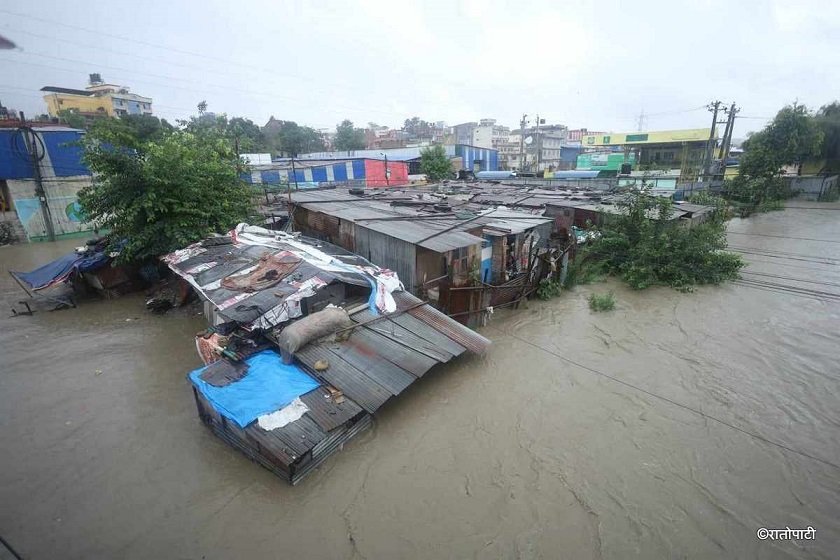
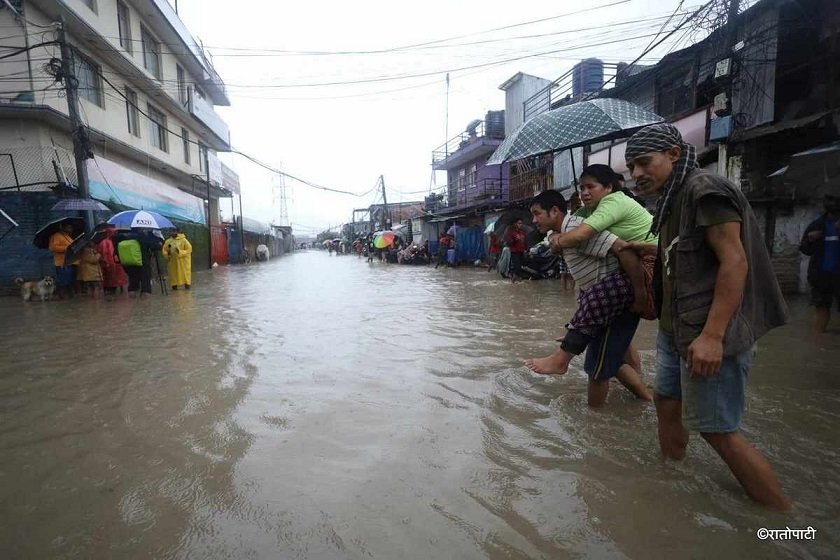
Determining who is a squatter and who is not has proven to be very complex. This issue has become particularly prominent regarding the Thapathali squatters.
A survey was conducted in 2078 BS regarding the Thapathali squatters, which recorded 238 individuals. In another survey conducted by the Kathmandu Valley Development Authority (KVDA) in 2081 BS, this number increased to 391.
After obtaining these figures, the authority checked whether these squatters owned land elsewhere. An official from the Kathmandu Valley Development Authority states that based on the citizenship numbers of the heads of households in the squatter settlements, it was found that more than 90 percent of the individuals owned land elsewhere.
'When we collected the records of the squatters living there, we identified 391 people. We only had the details including the citizenship numbers of the heads of households,' said an official from the authority, 'When we cross-referenced those citizenship numbers with the Land Service Center's database, we found that more than half of the individuals owned land in their names.'
The official notes that even though only half were found to have land elsewhere in this data, there is a possibility that the others might also own land.
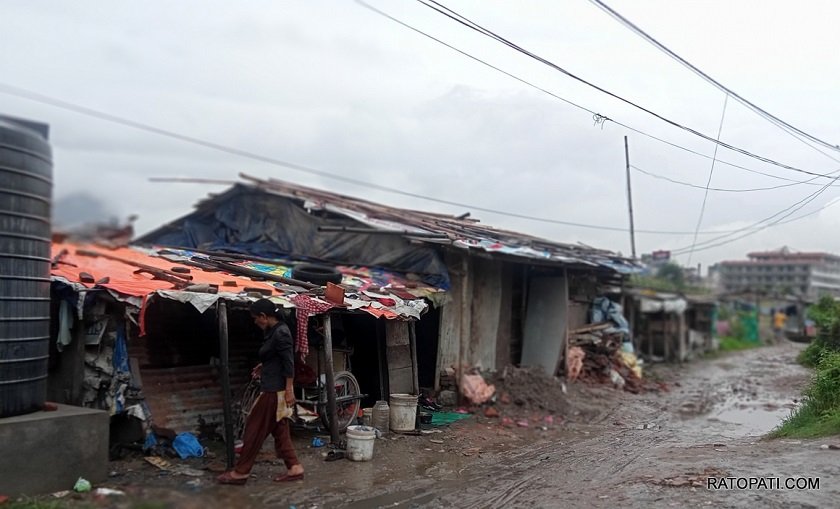
He said, 'We checked the details of those whose citizenship numbers we obtained. Land purchased in the names of their wives, children, or other immediate family members does not appear in this data. If we look at it that way, our estimate is that only 5 to 7 percent are genuine squatters.'
Who Owns How Much Land?
According to the data obtained by the authority, Dineshman Shrestha, among the Thapathali squatters, was found to own the most land. With a permanent address in Panchkhal, Kavre, he appears to own nearly 13,000 square meters, or about 25 ropani of land. The authority stated that looking at his transaction details, he appears to be a real estate dealer.
He owns 23 ropani 3 aana in Hattikharka, Dhankuta, 1 ropani 14 aana in Handikhola, Makwanpur, and 8 aana in Bhainse, Makwanpur.
Similarly, Chandra Bahadur Yonjan, with a permanent address in Dhiyal, Makwanpur, appears to own 11,936 square meters, or nearly 23 ropani of land. The authority stated that he owns 9 ropani 3 aana in Kapilkot, Sindhuli, 11 ropani 7 aana in Mahendra Jhyadi, Sindhuli, and 2 aana 12 paisa in Ichangu Narayan, Kathmandu.
Padamraj Khadka from Madhya Nepal Municipality, Lamjung, appears to own nearly 11,000 square meters, or 21 ropani 11 aana of land in 7 plots in Bange, Lamjung.
Similarly, Tek Bahadur Darji, whose permanent home is in Matim-8, Khotang, owns 9,359 square meters, or 18 ropani 6 aana of land in the same location.
Budhe Tamang, whose permanent home is in Belkot-8, Nuwakot, was found to own 7,176 square meters, or 14 ropani 1 aana of land in the same location.
Samarsingh Praja, whose permanent home is in Mahadevasthan, Dhading, was found to own a total of 10 ropani 11 aana of land in five plots in the same location. This is the land established after the partition of the family property.
Dilmaya Khatri KC, whose permanent home is in Mati, Dolakha, was found to own 3,150 square meters, or 6 ropani 3 aana of land in the same location.
Rupmuni Dhungana, who listed his permanent address as Kathmandu-11, was found to own more than 20 ropani of land, totaling 10,210 square meters. He owns 18 ropani in Bhulwajor, Ramechhap, and 1 ropani 9 aana in Champi, Lalitpur. Records show that his land in Nallu, Lalitpur, has already been sold.
Karna Bahadur Rai, whose permanent home is in Solukhumbu, was found to own more than 1,920 square meters, or 3 ropani 12 aana of land in Nechabetghari in the same district.
Dil B. Tamang, whose permanent home is in Chandranigahapur-4, Rautahat, was found to own 1,780 square meters, or 3 ropani 8 aana of land in the same location. Records show that the land in Judbela, Rautahat, had already been sold.
Shyam Pariyar, whose permanent home is in Phakhel-5, Makwanpur, was found to own 1,718 square meters, or 3 ropani 6 aana of land in Chitlang in the same district.
Bishnu Upreti, whose permanent home is in Badthali, Kavre, was found to own 1,685 square meters, or 3 ropani 5 aana of land in the same location. This land is jointly owned by his three brothers.
Pabitra Maya Magarni, whose permanent home is in Kathmandu-11, owns 983 square meters, or about 1 ropani 14 aana of land. She was found to own 1 ropani in Tistung, Makwanpur, and about 14 aana in Chitlang.
Kedar Mahato Nuniya, whose permanent home is in Parsa Dewad-4, Mahottari, was found to own 795 square meters, or 2 kattha 7 dhur of land in Sonma in the same district.
Bhagwat Ram, whose permanent home is in Bisahariya-7, Saptari, was found to own 646 square meters, or 1 kattha 18 dhur of land in the same location.
Surya Bahadur Silwal, whose permanent home is in Lalitpur Sub-Metropolitan City-3, was found to own 794.76 square meters, or 1 ropani 8 aana of land in Lele in the same district. This land was found to be jointly owned by Surya Bahadur, Banshalal Maharjan, and Tejanarsingh Prajapati.
Sita Chalise, whose permanent home is in Kopan-1, Kathmandu, owns more than 328 square meters, or 10 aana of land. She was found to own more than 6 aana in Tikathali, Lalitpur, and more than 3 aana in Sipadol, Bhaktapur.
Min Rana Magar, whose permanent home is in Dhiyal-7, Makwanpur, was found to own 270 square meters, or 8 aana 2 paisa of land in Kushadevi, Kavre.
Durga Khadka, whose permanent home is in Chainpur-4, Chitwan, was found to own 222 square meters, or 7 aana of land in Jyamire, Makwanpur.
Krishna Pyari Tandukar, whose permanent home is in Lalitpur-13, was found to own 198 square meters, or 6 aana 1 paisa of land in Bhimdhunga, Kathmandu.
Sita Paudel Chhetri, whose permanent home is in Kathmandu Metropolitan City-11, was found to own 107.30 square meters, or 3 aana 5 paisa of land in Lamatar, Lalitpur.
Kailash Khadka, whose permanent address is Chabahil, Kathmandu, was found to own 169 square meters, or 5 aana 1 paisa of land in Ratanpur, Chitwan. Records show that he had already sold the land he owned in Kathmandu.
Raj Khulal, whose permanent address is not disclosed, was found to own 169 square meters, or 5 aana 1 paisa of land in Padampokhari, Makwanpur.
Lalimaya Shrestha, whose permanent home is in Gagal-6, Ramechhap, was found to own 145 square meters, or 4 aana 2 paisa of land in the same location.
Suntali Rai, whose permanent home is in Haldekalika-4, Nuwakot, was found to own 143 square meters, or 4 aana 2 paisa of land in Bhairabi in the same district.
Jhagendra Bahadur Budha, whose permanent home is in Dhanwang-4, Salyan, was found to own 139 square meters, or 4 aana 1 paisa of land in Dadhikot, Bhaktapur.
Hira Thapa, whose permanent home is in Syangwa-4, Tanahun, was found to own 137 square meters, or 4 aana 1 paisa of land in Saja in the same district.
Kailashwati Devi, whose permanent home is in Dharmapur-6, Rautahat, was found to own 135 square meters, or 8 dhur of land in Chandranigahapur in the same district.
Kanchhi Maya Gurung, whose permanent home is in Dadagaun-3, Rasuwa, was found to own 130 square meters, or 4 aana of land in Panchakanya, Chitwan.
Chetmaya Shrestha, who listed her permanent home as Kalanki, Kathmandu, was found to own 84 square meters, or 2 aana 2 paisa of land in Mangalpur, Chitwan.
Shakuntala Bharati, whose permanent home is in Todeni, Lamjung, was found to own 79 square meters, or 2 aana 2 paisa of land in Saukhel, Kathmandu.
Dambar Bahadur Rumjan, whose permanent home is in Kamalamai-2, Sindhuli, was found to own 74 square meters, or 2 aana 1 paisa of land in Bajrabarahi, Kathmandu.
Saraswati Basnet, whose permanent home is in Dhuskun, Sindhupalchok, was found to own about 30 square meters, or 3 paisa 3 dam of land in Budhanilkantha, Kathmandu.
Apart from these, records show that Narayan B. Magar from Budhakhani, Kavre, Maila Tamang from Thakre, Dhading, and Mina Koirala from Ganeshsthan, Kavre, previously owned land but sold it at different times. Magar had more than 5 ropani in Sanga, Kavre, and more than 2 ropani in Budhakhani.
This specific news has been automatically translated by AI. As a result, there may be some inaccuracies or language errors.