Nepali Congress to Elect Parliamentary Party Leader Amid Internal Factionalism
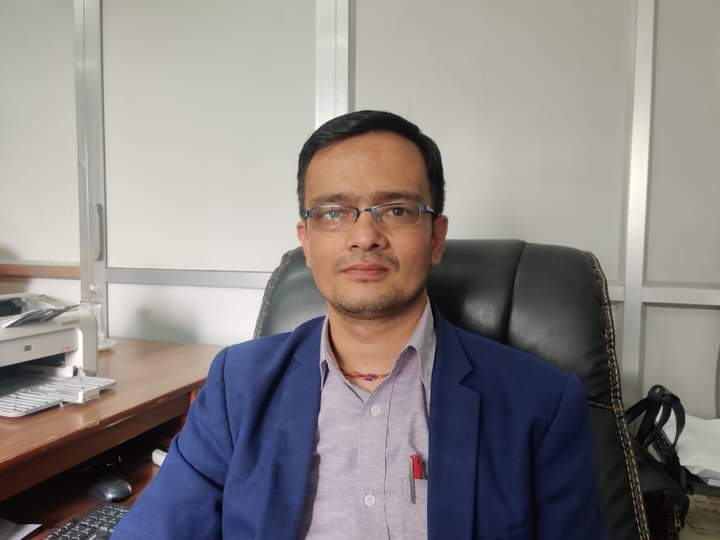

Kathmandu. The main opposition party, Nepali Congress, is set to hold an election on Friday to select its parliamentary party leader. According to the 'election program' published on Baisakh 7 by the election committee formed under the coordination of party joint general secretary Prakash Snehi Rasaili, the voter list was published on Thursday. The committee includes central member Muna Bhusal and advocate Raju Katwal as members.
The registration of candidacy and the election for the party leader are scheduled for Friday. The time for candidacy registration has been set for 3 PM on Friday, while the election is scheduled for 5 PM on Friday.
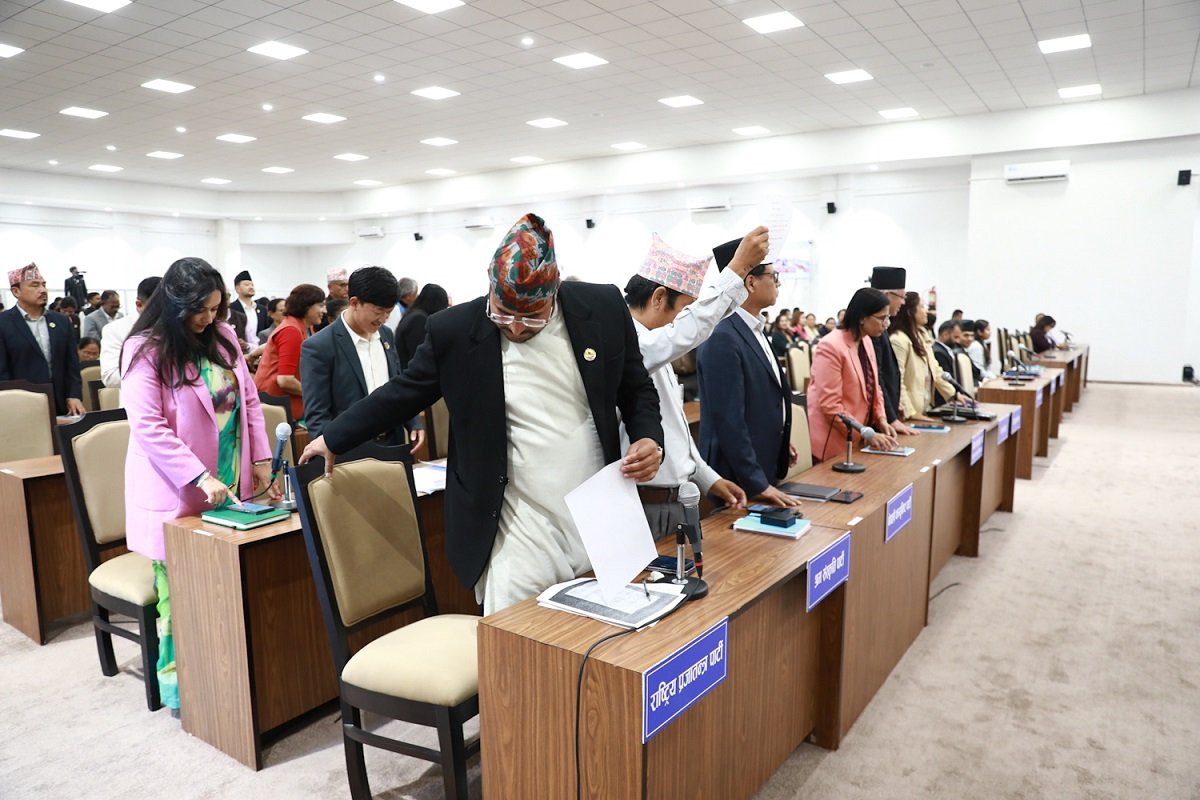
The Nepali Congress has 38 members in the House of Representatives, with 18 elected through the first-past-the-post system and 20 through the proportional representation system.
Since the leader of the main opposition party also becomes a member of the Constitutional Council, there are many aspirants for the position of parliamentary party leader. Congress leaders state that there are currently three aspirants for the leadership.
Bhishmaraj Aangdembe, Arjun Narsingh KC, and Mohan Acharya are presenting their claims and trying to build support for themselves.
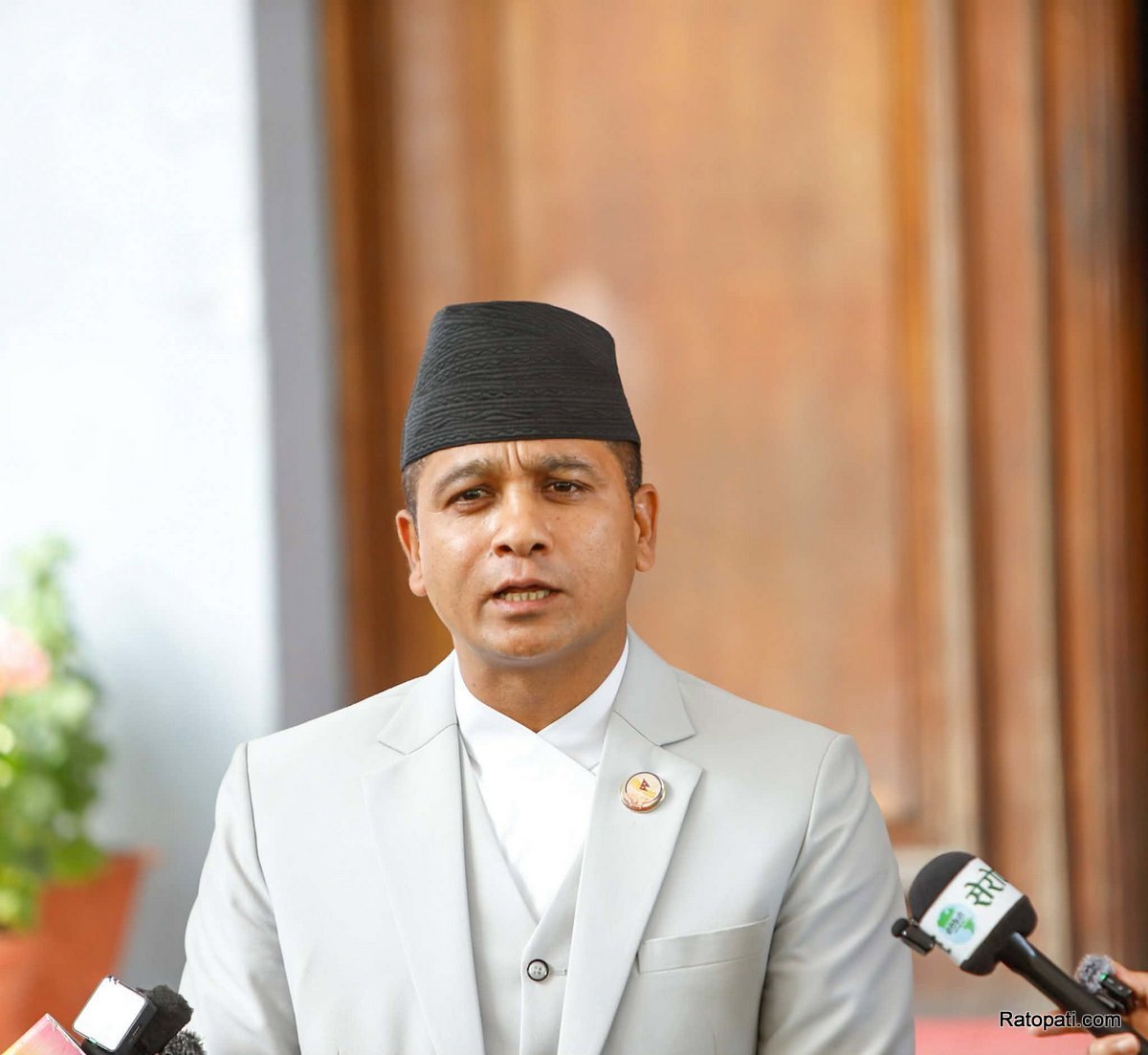
In the Congress, which is currently divided into two factions—those supporting a special general convention and those supporting a regular general convention—KC and Acharya are supporters of the special general convention (the current establishment), while Aangdembe is a supporter of the regular general convention. Among the claimants, Acharya won the direct election from Rasuwa, while Aangdembe and KC became members of parliament through the proportional representation system.
KC and Aangdembe are also former joint general secretaries of the Congress. KC is the most experienced MP of the Congress. Aangdembe was a member of the Constituent Assembly during the second Constituent Assembly election.

In the party's 14th general convention, KC was elected as a central member from the Dr. Shekhar Koirala group, and Aangdembe was elected as a joint general secretary from the Sher Bahadur Deuba group.
Acharya was elected as a central member from the 14th general convention. He is currently a central member from the special general convention as well.
According to the official, KC has taken a stand that if he is not chosen, Acharya should be made the parliamentary party leader.
Aangdembe is supported by current vice-president Bishwa Prakash Sharma, the outgoing president Sher Bahadur Deuba's group, and the Dr. Shekhar Koirala group for the position of parliamentary party leader. Since vice-president Sharma has sided with Aangdembe, his close MPs, including Nishkal Rai, are also in favor of Aangdembe.
Office bearers other than president Gagan Thapa and vice-president Sharma are in favor of KC. KC is the father-in-law of Congress president Thapa. President Thapa is telling the office bearers that he might be accused of nepotism if he makes KC the party leader. Thapa wishes KC would not aspire for the position. An office bearer mentioned that the problem has escalated because KC insists that he should be the leader, or if not him, then someone of his choosing.
'The president is in trouble right now,' an office bearer told Ratopati, 'KC is adamant that if he is not the one, then his chosen person must be the leader under any circumstances. This has made it difficult for the president.'
According to the official, KC has taken a stand that if he is not chosen, Acharya should be made the parliamentary party leader. 'The president is also being forced to say Acharya for now,' he said.
Sources indicate that Thapa is telling leaders and MPs close to him that if he makes Acharya a candidate, KC will not be angry, and he will not be accused of promoting his father-in-law. However, since vice-president Sharma is on Aangdembe's side, there is no possibility of a consensus within the establishment.
Congress general secretary Pradeep Paudel stated that although he tried for a long time to make the parliamentary party leader unanimous, it has not been successful yet. 'We waited for a long time and held discussions to reach a consensus,' general secretary Paudel told Ratopati, 'Efforts for consensus are still ongoing. If it does not happen, it will go through the process. The election committee has already set the election program.'
According to the leaders striving for consensus, there is no possibility of anyone withdrawing their claim so far.
Election committee member Bhusal informed that the process and efforts for consensus are moving forward simultaneously. 'Efforts for consensus are being made, and we have also moved the process forward by publishing the voter list from the election committee,' she told Ratopati.
According to the leaders striving for consensus, there is no possibility of anyone withdrawing their claim so far. Nevertheless, leaders have said that efforts for consensus will continue throughout the night.
In the parliamentary history of the Congress, the party leader has been chosen through elections since the 2064 election. Now that the Supreme Court has granted legitimacy to the leadership chosen from the special general convention, internal factionalism has reached its peak. Therefore, the possibility of selecting the party leader through voting is strong.
After the Supreme Court granted legitimacy to the leadership from the special general convention, the Dr. Shekhar Koirala group is stating that it will operate its own ideological group by separating from the Sher Bahadur Deuba group. However, leaders of the Koirala group say they will support the Deuba group for the party leader. 'There will be support for the Deuba group's candidate for the party leader,' the leader told Ratopati on Thursday.
12 MPs elected through the direct system and four through the proportional system are on the establishment side.
If the Deuba and Dr. Koirala groups come together, they will have an easy majority for the party leader. Among the MPs who came from the House of Representatives election held on Falgun 21, there are more establishment MPs in the direct system and more non-establishment MPs in the proportional system.
There are 16 establishment-aligned MPs and 22 non-establishment MPs in total, including both direct and proportional systems. Out of the 22 non-establishment members, 15 are close to outgoing president Deuba and seven are close to Koirala.
12 MPs elected through the direct system and four through the proportional system are on the establishment side.
The establishment-aligned winners in the direct system are Nishkal Rai (Ilam-1), Mo. Firdosh Alam (Rautahat-2), Prakash Singh Karki (Solukhumbu), Abhishek Pratap Shah (Kapilvastu-3), Narendra Kumar Kerung (Paanchthar), Santosh Subba (Terhathum), Mohan Acharya (Rasuwa), Khadga Shahi (Mugu), Basana Thapa (Dailekh-1), Bharat Kumar Swar (Achham-1), Bharat Bahadur Khadka (Doti), and Janak Raj Giri (Bajura). Arjun Narsingh KC, Renuka Kaucha, Kali Bahadur Sahakari, and Manmaya BK, elected through the proportional system, are on the establishment side.
From the Deuba group, Tek Bahadur Gurung from Manang, Sandeep Rana from Palpa-1, Jayapati Rokaya from Humla, Khadga Bahadur Budha from Jajarkot, and Bishnu Bahadur Khadka from Surkhet-1 won the direct election.
Bhishmaraj Aangdembe, Gita Gurung, Sushila Dhakal Acharya, Ninu Kumari Karna, Shahjahan Khatun, Madan Krishna Shrestha, Ganga Laxmi Awal, Pavitra BK, Sita Thapaliya (Urmila), and Harina Devi Kami, who became MPs through the proportional system, belong to the Deuba group.
From the Koirala group, Yogesh Gauchan Thakali was elected from Mustang in the direct system. Gita Kumari Sendang, Rukmini Devi Koirala, Reena KC (Upreti), Dr. Pramila Kumari Gachhadar, Dr. Chandra Mohan Yadav, and Rekha Kumari Yadav were elected through the proportional system.
This specific news has been automatically translated by AI. As a result, there may be some inaccuracies or language errors.