Nepal's Federal Parliament Budget Session Summoned for Baisakh 17


Kathmandu. President Ramchandra Paudel has summoned the Federal Parliament session. Following the recommendation of Tuesday's Cabinet meeting, President Paudel has called for the session of both houses to commence on Thursday, Baisakh 17, at 2:00 PM.
The previous session of both houses of the Federal Parliament concluded on Chaitra 27. Since then, parliamentary committees were formed and chairpersons were elected, and now the government has called for the summer session, also known as the budget session.
The budget session of the Federal Parliament is set to begin on Baisakh 17. The session will start next Thursday at 2:00 PM, ten days after the conclusion of the winter session.
During the budget session, the government will present the budget for the upcoming fiscal year (2083/084). Following the Cabinet's recommendation and the President's summons, Speaker Dol Prasad Aryal has held discussions regarding the schedule for the budget session.
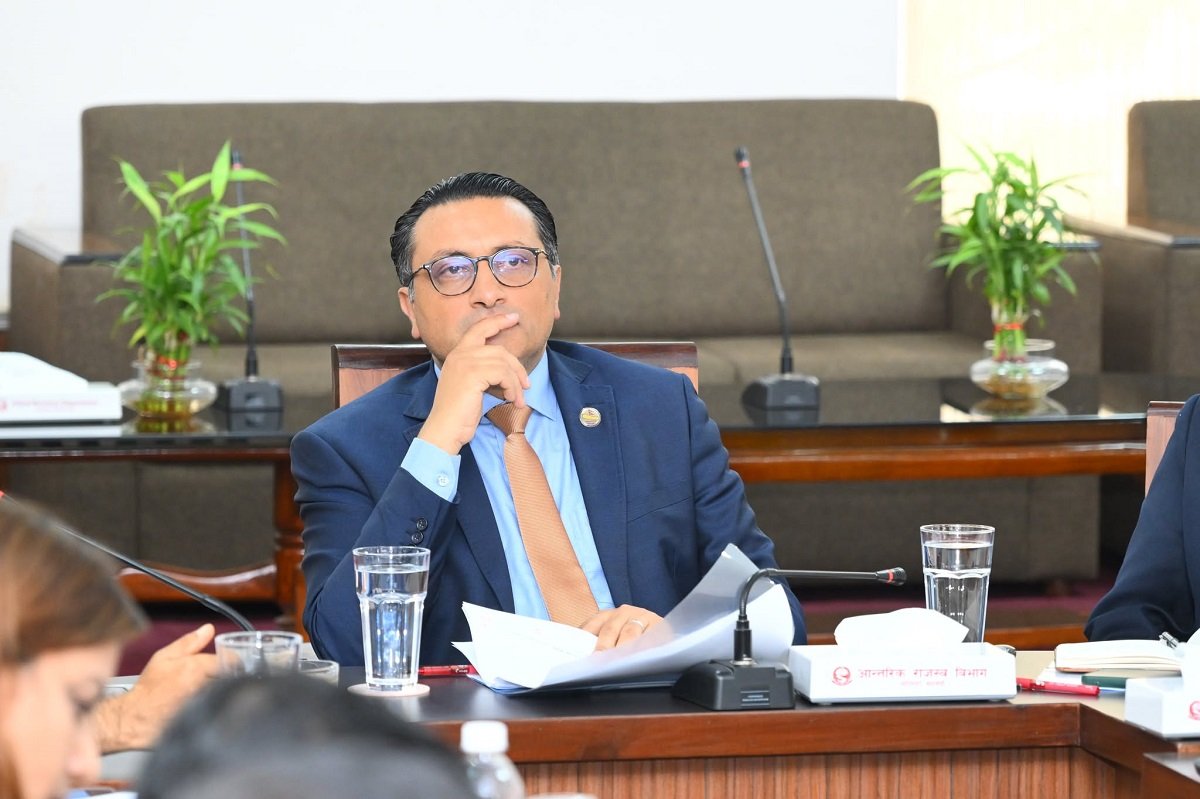
Speaker Aryal discussed the budget calendar with Finance Minister Dr. Swarnim Wagle on Wednesday.
During the discussion, the Speaker consulted on the principles and priorities of the budget (pre-budget discussion) to be introduced by the government for the upcoming fiscal year, the government's policies and programs, and other necessary arrangements related to the budget.
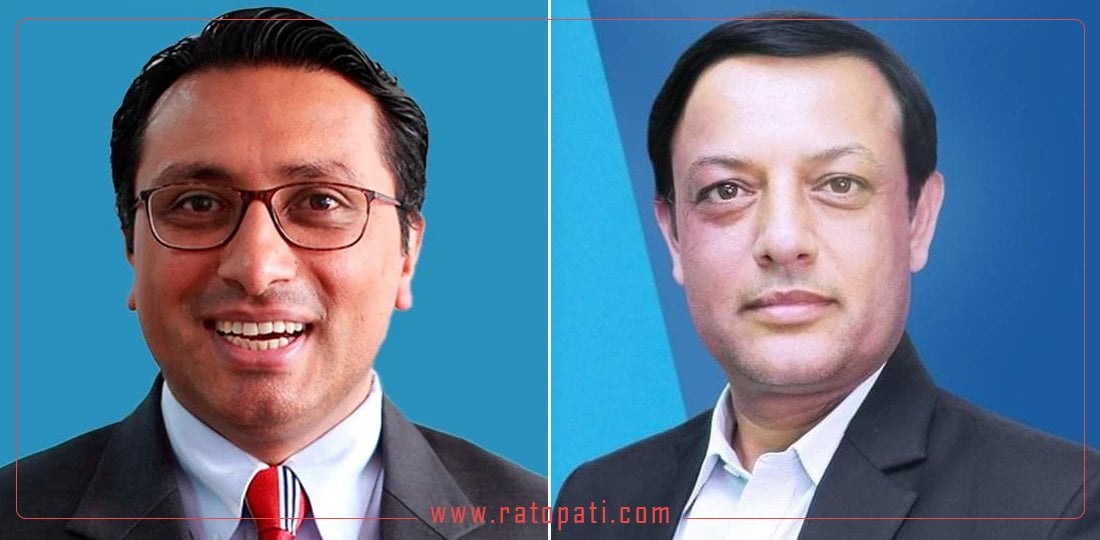
Following the discussion between Speaker Aryal and Finance Minister Wagle, it has been prepared that the principles and priorities of the Appropriation Bill (pre-budget) will be discussed only after the government's annual policies and programs are presented in the upcoming budget session.
Federal Parliament Spokesperson Ekram Giri informed that the calendar for the budget session has been finalized. According to him, it has been decided that the government's policies and programs will be presented first.
He stated that the plan is to hold pre-budget discussions after the government's policies and programs, followed by the presentation of the budget on Jestha 15.
Spokesperson Giri said, 'According to recent practices, policies and programs come first, but we have had both practices of holding pre-budget discussions first and then introducing policies and programs. The current government, following the latest practice, will present policies and programs first, then pre-budget, and finally the budget.'
According to sources, the government is preparing to present its policies and programs in Parliament from Baisakh 20 to 22, as the budget session begins.
The source said, 'There is a plan to have the government's policies and programs presented by the President in a joint session of both houses of Parliament between the 20th and 22nd. A schedule is being prepared to hold discussions on the policies and programs for about five days.'
Similarly, sources mentioned that after the government's policies and programs are passed, Finance Minister Dr. Swarnim Wagle is prepared to present the principles and priorities of the budget (pre-budget) on Baisakh 27 or 28.
After the Finance Minister presents the principles and priorities of the budget in Parliament, the budget for the upcoming fiscal year will be submitted to the joint session on Jestha 15.

The then-government led by Prachanda had amended the provision for pre-budget discussions while introducing the budget for the fiscal year 2081/082. That provision was amended to hold pre-budget discussions within the month of Falgun, before the government's policies and programs.
However, a year later, then-Finance Minister Bishnu Paudel amended the budget calendar through an ordinance to prioritize the presentation of policies and programs. In the past, due to government instability, situations arose where one person held pre-budget discussions, another introduced the budget, and a third government had to implement it.
For the fiscal year 2081/082, the principles and priorities were presented by Dr. Prakash Sharan Mahat, the budget was introduced by Barshaman Pun, and by the time of implementation, Bishnu Prasad Paudel had become the Finance Minister.
In the elections held last Falgun, the Rastriya Swatantra Party secured nearly a two-thirds majority and formed a single-party government. With a single-party government, it is believed that it will remain stable for five years. It appears that the Finance Minister who introduces the budget will also be the one to implement it.
The budget for the fiscal year 2083/084 is being drafted by a five-member team coordinated by Uttar Kumar Khatri, head of the Revenue Management Division. Five officials from the Ministry of Finance have been assigned the responsibility of drafting the budget for the upcoming year.
Heads of various divisions within the Ministry of Finance have been selected as members of the committee. Accordingly, the members of the committee include Dr. Suman Dahal, Head of the Budget and Program Division; Dr. Dhaniram Sharma, Head of the International Economic Relations Division; Mahesh Bhattarai, Head of the Economic Policy Analysis Division; and Sevantak Pokharel, Head of the Financial Federalism Coordination Division.
They are currently working according to the mandate given by the Ministry, holding inter-ministerial discussions for drafting the budget. This five-member committee has been assigned the primary responsibility of preparing the draft of the upcoming fiscal year's budget speech and determining the principles and priorities of the budget.
The drafting of the principles and priorities of the Appropriation Bill is also being carried out by this team. The committee is also tasked with preparing and submitting the final draft of the budget speech to be presented by the Finance Minister in Parliament.
During the budget formulation process, the Finance Minister himself is continuously holding discussions with local levels, provincial governments, and other ministers regarding the budget. Finance Minister Wagle is preparing to make the upcoming fiscal year's budget transformative and balanced.
Last Falgun, the National Resource Estimation Committee gave the Ministry of Finance a budget ceiling of 1.89 trillion for the upcoming fiscal year.
Of that ceiling, the committee estimates that only 367.1 billion will be spent as capital budget, which is 17.87 billion less than the allocation for the current fiscal year.
A limit of 755.24 billion has been set for the current budget, while the budget for the current fiscal year was 733.69 billion. Similarly, a limit of 348 billion has been set for debt principal and interest payments (financial management). A limit of 419.15 billion has been set for financial transfers.
This specific news has been automatically translated by AI. As a result, there may be some inaccuracies or language errors.