Trump Insists on Negotiations with Iran as Tensions Persist

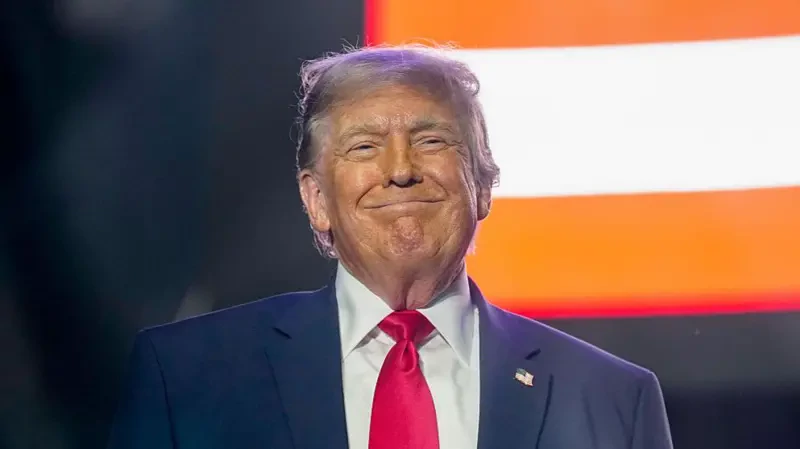
Kathmandu. US President Donald Trump has claimed that Iran has no alternative but to send its team for negotiations. He had previously warned that if talks were not successful, he would 'destroy' Iranian infrastructure.
In an interview with CNBC, Trump expressed hope for a deal with Iran, stating, "I think we will have a very good deal."
He added, "The United States is in a good position to negotiate. We are in a position to control the 'Strait of Hormuz'."
Meanwhile, it remains unclear whether Iran will participate in the proposed talks in Islamabad.
Iranian Parliament Speaker Mohammad Bagher Ghalibaf stated that for the past two weeks, Iran has been preparing to show a new card on the battlefield.
He also asserted that Iran "will not accept negotiations under the shadow of threats."
When asked if the US would extend the ceasefire, President Trump replied, "I don't want to do that." He reiterated that Iran has no option but to negotiate.
President Trump described the naval blockade imposed on Iran as a "great success" in the conflict.
When asked if he would proceed with the ceasefire process if no progress is seen in the talks, President Trump said, "I don't want to do that."
Trump added, "I think if there is no possibility of progress in the talks with Iran, the alternative will be a 'massive attack'. That would be a much better way."
He stated that there is not much time left to reach an agreement and that if Iran makes a deal with the US, it could put itself in a "very good position."
The US President said that if a deal is reached, Iran could become strong again and a great nation. He said, "You know, we are ready. I mean, the US military is fully prepared."
Despite preparations, Iran has not yet agreed to talks under these conditions.
Iranian state media said in a Telegram post, "So far, no Iranian delegation has departed for Islamabad."
The Telegram post described media reports claiming a date for the Iranian delegation's departure as 'rumors'.
Meanwhile, Iranian officials have reiterated their long-standing position. Officials, including Speaker Ghalibaf, have said, "Tehran will not accept any negotiations under the shadow of threats."
US President Donald Trump had previously stated that his delegation would go to Pakistan for talks.
Iran's Ambassador to Pakistan, Reza Amiri Moghadam, stated that Iran is not afraid of security risks and threats.
Ambassador Reza Amiri Moghadam issued a statement regarding the matter.
Reza Amiri Moghadam wrote on X, "It is well known that those with a great civilization do not compromise under fear and pressure. This is an important Islamic and religious principle. I want the US to understand this."
The Fars News Agency, affiliated with Iran's Revolutionary Guard Corps (IRGC), shared a statement from the commander of Iran's largest military headquarters on Telegram.
According to Fars, Major General Abdollahi wrote in Persian, "The IRGC has forced Israel and the United States to bow, forcing them to request a ceasefire."
He said, "Especially on the issue of the Strait of Hormuz, the armed forces will not allow the US President to create a false and incorrect narrative about the situation on the ground."
According to the BBC, there is political tension within Iran, where hardliners are pressuring negotiators to choose a path of confrontation instead of diplomacy.
Iran and the US signed a two-week ceasefire on April 8. If no agreement is reached to extend the period, it will expire this Wednesday.
This specific news has been automatically translated by AI. As a result, there may be some inaccuracies or language errors.