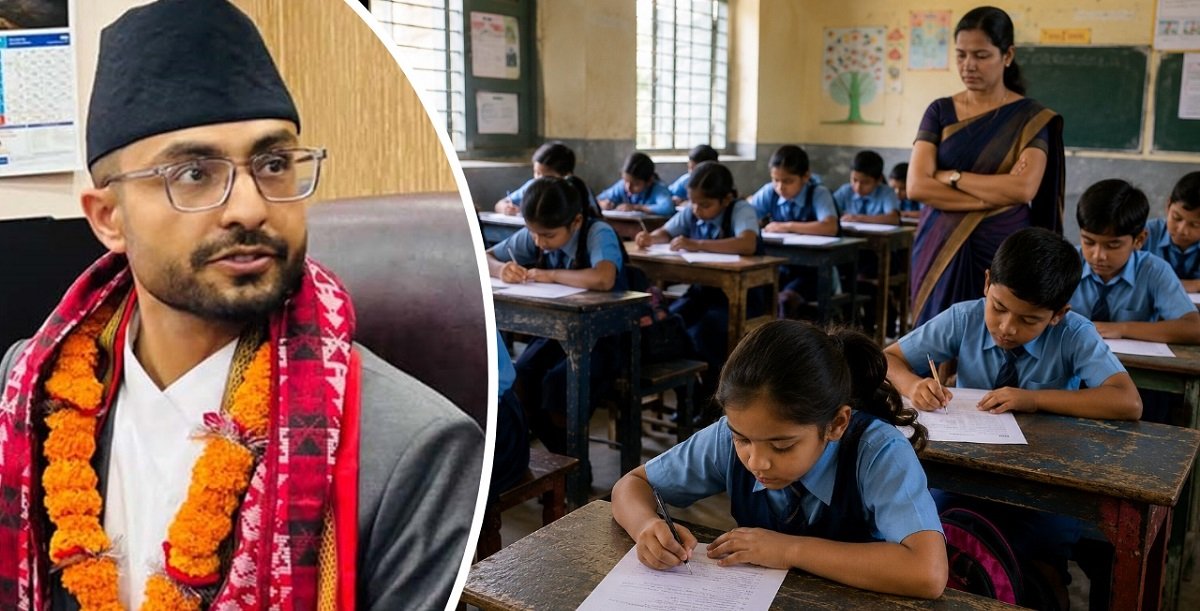
Why Prime Minister Balen Shah's Silence is Sparking Debate


Kathmandu. It has been 19 days since Balendra (Balen) Shah was appointed Prime Minister. During this period, the Prime Minister has only recited his oath of office and briefly addressed a Nepal Army event; beyond that, the public has not heard him speak in public or through the media.
Prime Minister Balen attended the House of Representatives meeting, yet he did not address the parliament. The reason for his silence in parliament also became a topic of discussion on social media.
Looking back since the promulgation of the constitution, Sher Bahadur Deuba, K.P. Sharma Oli, and Pushpa Kamal Dahal 'Prachanda' have served as Prime Minister multiple times. Among them, Sher Bahadur Deuba was relatively quiet, though not entirely silent. Prachanda often spoke based on 'self-importance,' discussing changes in the country, empowering citizens, and breaking the cycle of continuity.
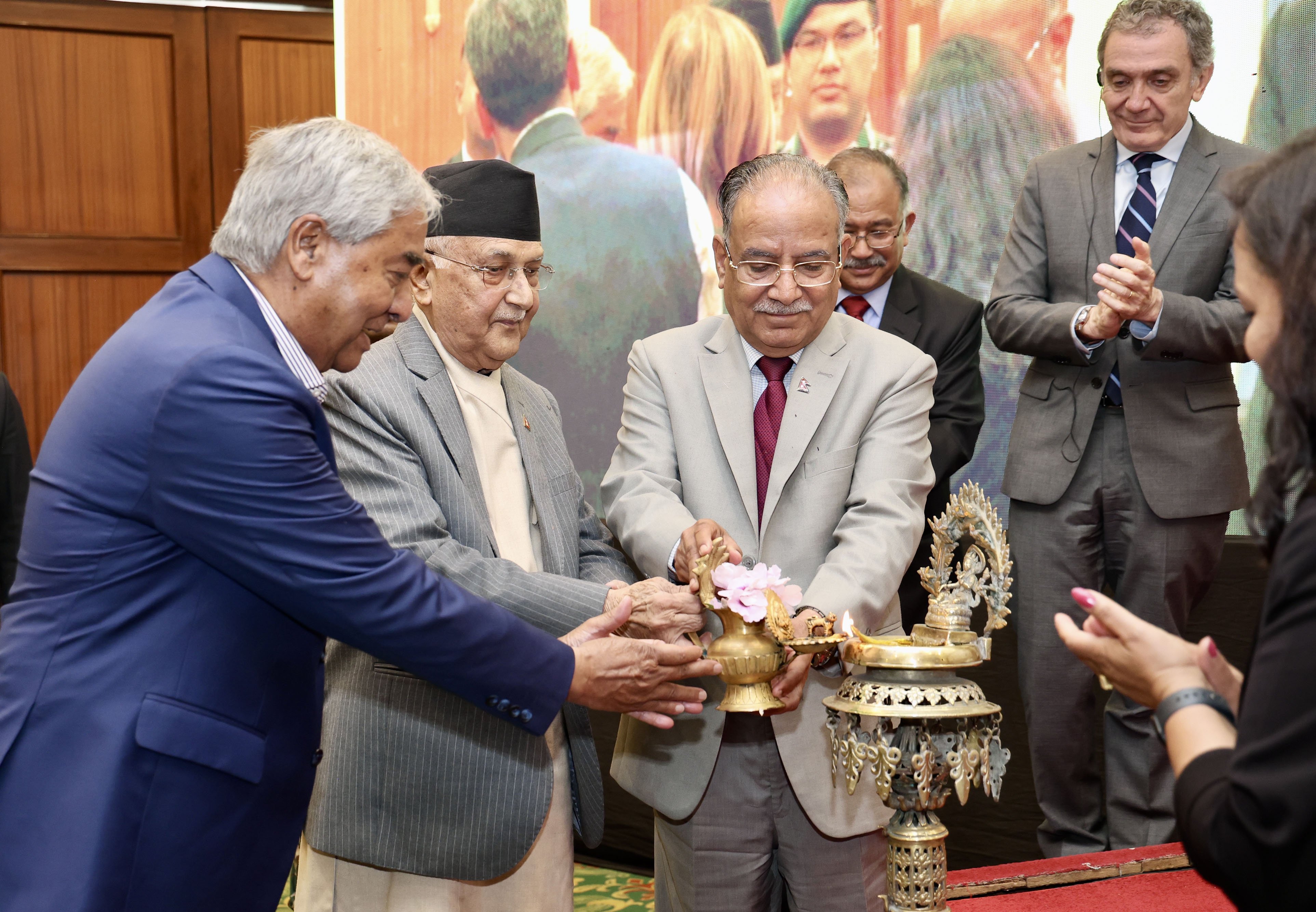
Oli, on the other hand, would not hesitate to deliver hours-long lectures as if there were no subject he did not know. From preaching about increasing immunity by drinking turmeric water during the COVID era to discussing Hindu deities like Brahma, Vishnu, Shiva, and Ram, and promising gas pipelines in every home and ships with the Nepali flag in the ocean, he spoke on everything.
For the Nepali people, accustomed to seeing and hearing such Prime Ministers over the last decade, Balen Shah has become 'mysterious.' The question of why Prime Minister Balen does not speak has triggered a storm of curiosity. In particular, some faces who like to call themselves 'popular interviewers' have occasionally raised questions about Balen's silence. Some on social media have also started showing interest in why Balen is not speaking.
By nature, Balen speaks less. He prefers to work rather than talk. During the announcement of his entry into parliamentary politics last Magh at a Rastriya Swatantra Party (RSP) assembly in Janakpurdham, Balen stated that he only got the chance to speak because he had already resigned from his post as Mayor. He argued that he had not been able to speak publicly before because he was busy with work.
_Fiho8rPE5u.jpg)
At that same assembly, he asked the gathered crowd for work. Addressing them in the Maithili language, he said, 'Give me work.'
The Nepali people trusted that style of asking for work. In the election, the public made not only Balen but also the Rastriya Swatantra Party, which projected him as the future Prime Minister, the largest party in the House of Representatives with nearly two-thirds of the seats. As a result, Balen is now leading the government.
- Why does Balen need to speak?
Balen had already made it clear at his first political assembly in Janakpur that he could not speak while holding office, that he was resigning to enter federal politics, and that he had come to ask for work.
This means the public already understood from Balen's own expressions in Magh that he does not speak, or speaks less, while in office. Perhaps the public did not like a Prime Minister who would not hesitate to give hours-long lectures at any event! Perhaps the people wanted a Prime Minister focused on work rather than one who speaks on any subject at any time! Such suspicions may be hidden behind the unprecedented votes the people gave to Balen and his party. The group that has been saying 'Balen did not speak' has not been able to, or does not want to, pay attention to such possibilities.
If things could be done just by speaking, why hasn't gas reached every home through pipelines yet? Why are Nepalis, who heard expressions about ships with flags in the ocean, now mocking the idea by riding motorboats on the Narayani and Saptakoshi rivers and calling them 'Nepali ships'? Those complaining about 'Balen not speaking' should also evaluate how much the Prime Ministers of the past actually fulfilled what they promised!

Balen's silence has also caused problems for journalism. If a Prime Minister speaks for hours, there are many attractive headlines for news. Many news stories are prepared based on speeches. It is inevitable that what the Prime Minister says becomes news, and if he gives fluent lectures on every subject, there is a flood of news.
Journalism does not lose its identity just because one does not write news about the Prime Minister speaking or does not ask him a few questions. It is not that all journalists should write news about the Prime Minister. However, it is natural for some to be interested in getting an interview with the Prime Minister or writing news based on what he says. However, if the media's interest remains on what the Prime Minister did or did not do, rather than whether he spoke or not, it can both warn and guide the government.
There are many issues of public concern. There is a need to solve many problems seen in government service delivery. People want to see the guarantee of change connected to their daily lives. For this, there is countless work for the government to do. Today, no one has a 'magic number' to topple or form a government by jumping from one side to the other in parliament. The RSP has formed the government with a single majority. In such a situation, the government needs to work in a way that shows improvement in the daily lives of the people along with political stability. Despite this, if we remain stuck on whether the Prime Minister spoke or not, then who will do the work and when?
- When and where should the Prime Minister speak?
Experts say it is not necessary for the Prime Minister to keep speaking on every subject everywhere. Dinesh Bhattarai, who served as an advisor (foreign affairs) to former Prime Ministers Sushil Koirala and Sher Bahadur Deuba, argues that since the Prime Minister is a position representing the country, it is not necessary to keep speaking at any time or place.
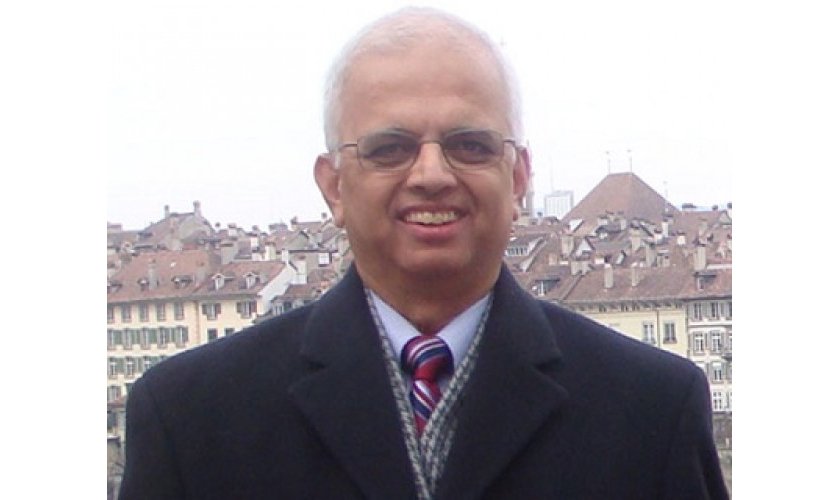
'It is not that the Prime Minister must speak on everything,' Bhattarai told Ratopati, 'but there are some things the Prime Minister must speak about.' According to Bhattarai, in a country with geopolitical interests like ours, it is necessary for the Prime Minister to express his views, especially to neighboring countries, donor nations, and friendly nations, and to take them into confidence.
In this context, Bhattarai mentioned that Prime Minister Balen held a collective meeting with ambassadors of various countries a few days ago. 'If necessary, the Prime Minister can call an ambassador of a country for a separate meeting, but depending on the seriousness of the subject or situation,' he said, 'Otherwise, the Prime Minister does not need to speak much on public platforms.'
Bhattarai emphasized that the Prime Minister should speak after understanding, thinking, and considering. He believes that because he has just taken office, the Prime Minister may not have spoken because he feels the opportunity to address publicly, give interviews, or express his views has not yet arrived.
This specific news has been automatically translated by AI. As a result, there may be some inaccuracies or language errors.



_hXuKAenRlA.jpg)