Nepal Initiates Process to Establish Specialized 'Infrastructure Court' to Expedite Development Projects


Kathmandu. The failure to complete development projects on time has become a serious problem in Nepal.
Issues ranging from tree felling and compensation disputes to contract processes often remain stuck in courts for years, leading to project costs doubling or tripling and causing ongoing hardship for the public. To untangle this legal knot, the government has now initiated the process of forming a specialized 'Infrastructure Court'.
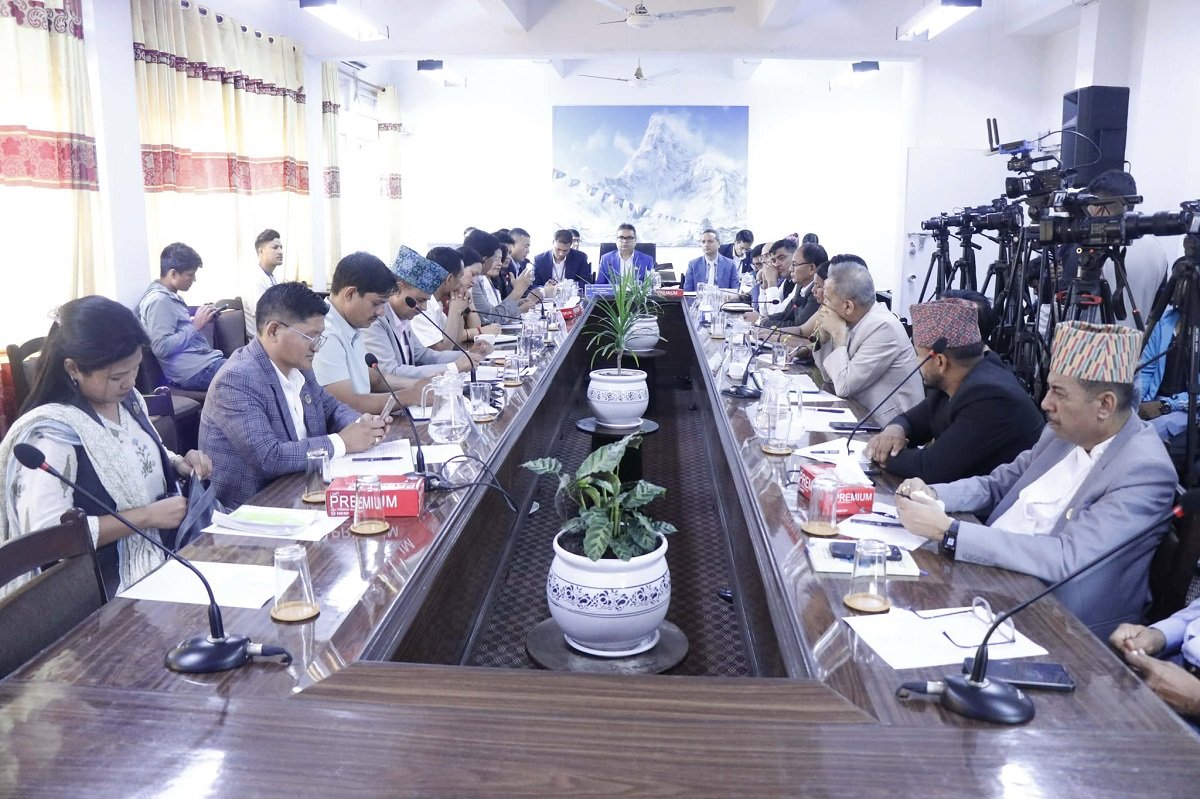
To reduce the public suffering caused by delayed development projects and to alleviate the additional economic burden on the country, the Ministry of Law, Justice and Parliamentary Affairs has decided to form a task force to study the establishment of an infrastructure court.
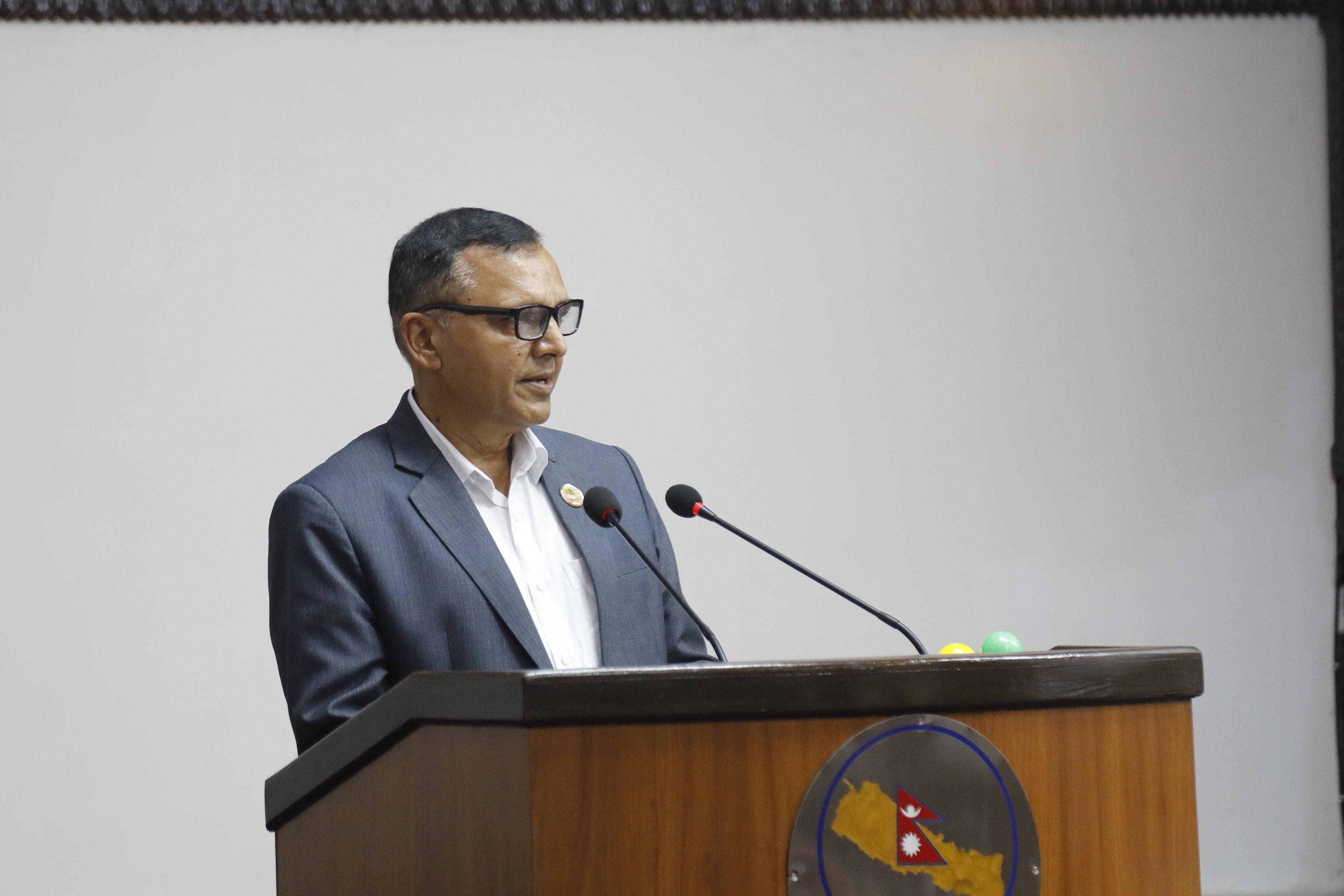
According to Minister of Law, Justice and Parliamentary Affairs Sobita Gautam, legal disputes and delays in court are among the primary reasons why government projects in Nepal are not completed on time. When projects are not completed on time, the public suffers, and the state faces an additional financial burden of billions due to cost escalations.
'We operate projects by taking loans from donor agencies like the World Bank and ADB,' Gautam said. 'On one hand, the project work does not progress, and on the other, the interest on the loan keeps increasing. This pushes the country toward a major economic crisis.'
Keeping this problem in mind, the ministry has formed a study task force with a 15-day deadline. The task force will conduct a detailed study on whether a separate 'Infrastructure Court' is necessary in Nepal and submit a report. It is stated that the government will take the next steps based on the task force's suggestions.
If the task force concludes that a separate court is not necessary, it is suggested that discussions will be held on the option of resolving infrastructure-related cases through a 'fast track' by forming special benches in existing courts.
Mentioning that there is a provision in the Constitution to form specialized courts, Minister Gautam expressed confidence that after this study, the trend of projects being halted and delayed due to litigation will end. Additionally, this step is expected to accelerate national pride projects and other development works.
Why is a court necessary?
Infrastructure expert and lawmaker Ashish Gajurel stated that a separate 'Infrastructure Court' is needed to resolve legal hurdles and long-standing court cases in Nepal's development sector in a swift and efficient manner.
He explained that currently, there is a compulsion to approach special or supreme courts to resolve infrastructure sector problems, and due to the caseload there, it takes years for verdicts to be reached. His argument is that if a separate court is formed, development work will gain momentum.
According to Gajurel, since the infrastructure court would consist of a team of subject-matter experts, it would be easier to understand the technical and legal aspects of cases and make decisions. 'Currently, many projects are delayed because infrastructure-related cases remain unresolved in court for years,' he said. 'Once there is a dedicated court, the decision-making process will be faster, and it will provide a way out for projects. Many cases involving construction entrepreneurs are still stuck in various courts. This court could prove to be a milestone in resolving their misunderstandings and problems through a single mechanism.'
Gajurel believes that forming a court is not the only big thing; how to make it effective is what matters. He emphasized that the necessary rules, laws, procedures, and the process of selecting human resources must be organized. 'If there is a separate body that works only for infrastructure, like a consumer court, the state will also benefit greatly,' he added.
Separate court necessary to resolve infrastructure disputes
Infrastructure expert Shiva Prasad Nepal says that an 'Infrastructure Court' is necessary for the government to resolve infrastructure-related disputes quickly and effectively. He stated that the concept of such a special court or a separate 'bench' is positive in the current context of Nepal.
Expert Nepal argued that the complexities of contract agreements, construction management, and disputes that arise during infrastructure construction should not be viewed solely through the lens of common civil or criminal law.
He understands that the judges and lawyers in Nepal's current judicial system are primarily focused on the Civil Code, civil law, and criminal law. He said, 'Our system is more focused on civil and criminal law. Judges and lawyers may not have sufficient expertise regarding infrastructure issues, their complexities, construction management, and international practices. Therefore, separate grooming and study are necessary in this subject.'
Currently, there are mechanisms like the Arbitration Act, the Review Committee of the Public Procurement Monitoring Office, and general courts to resolve disputes related to infrastructure. However, Nepal says that it would be positive to form a separate court or a bench of experts in situations where those mechanisms alone cannot address the technical and legal complexities of infrastructure in a timely manner.
Expert Nepal expressed confidence that the proposed infrastructure court would not only take cases to a 'fast track' but also deliver justice by understanding the subject-matter depth. 'Construction and contract management are relatively new subjects for us. Regardless of where in the world the practice of going to a separate bench to resolve disputes in this sector exists, this will be a positive effort for Nepal,' he said.
'Construction sector suffered due to lack of 'Infrastructure Court' - Construction Entrepreneur Singh
Immediate past president of the Federation of Contractors' Associations of Nepal, Rabi Singh, stated that a separate 'Infrastructure Court' should be formed to properly resolve disputes and cases arising during infrastructure construction. He says that the construction sector has had to suffer huge losses due to the lack of specialized knowledge regarding infrastructure in the current judicial system.
According to immediate past president Singh, decisions made by current courts are sometimes contradictory. 'There is a situation where one entrepreneur gets a stay order in a case of the same nature, and another does not,' Singh said. 'This all depends on the judges' understanding and perspective regarding infrastructure, which is not fair.'
Additionally, Singh argues that because current judges lack expertise in the technical and practical aspects of infrastructure, verdicts are delayed and sometimes flawed. He said that just like labor courts, consumer courts, and commercial benches, a separate court is necessary for infrastructure. He said, 'If there is an infrastructure court, there will be expert judges and legal practitioners from this field. As a result, cases will be decided quickly and correctly, helping projects to be completed on time.'
Singh informed that he has been raising the demand for an infrastructure court since 2076. He expressed concern that despite repeated demands to the Honorable Chief Justice and the government, it has not yet been implemented. He believes that the infrastructure court will specifically look at civil-type cases and that this will make the construction industry more organized.
'Decisions made by judges without expertise in infrastructure have affected projects most of the time,' Singh added. 'If the state wants to prioritize infrastructure, the mechanism to resolve legal disputes related to it must also be based on expertise.'
In the context of the government forming a committee to advance the process of forming an infrastructure court, Singh has taken this as a positive step.
This specific news has been automatically translated by AI. As a result, there may be some inaccuracies or language errors.