Charting a Path for the Development of Fine Arts in Nepal


After a long time, the country has a majority government. A majority government naturally brings stability. Even more promising is that the government is led by youth who understand the arts. Therefore, the country has expectations of this government, and the art sector has high hopes as well.
The fine arts sector cannot be left out of this. The development, preservation, and promotion of the fine arts sector in Nepal is an urgent necessity today. In a country rich in magnificent cultural diversity and historical originality, fine arts are not just an expression of beauty; they are a sector deeply connected to identity, tradition, and the economy.
However, this sector is feeling the lack of expected institutional structure, policy clarity, and sustainable management. In this context, multidimensional initiatives are needed for the overall upliftment of the fine arts sector.
For this, the formation of cultural structures is a crucial aspect. According to the federal structure, there should be clear development of cultural structures at the provincial and local levels. It is necessary to establish fine arts hubs or centers in all seven provinces and municipalities to prepare a foundation for artists for practice, research, and exhibitions.
It is necessary to coordinate traditional knowledge with modern technology for intergenerational transfer.
Additionally, local art and traditions can be institutionally preserved by establishing art galleries, souvenir centers, and museums in every region. It is necessary to create an environment of collaboration by encouraging non-governmental organizations, which will make the fine arts sector more dynamic.
The transfer of original indigenous craftsmanship through formal and informal education is indispensable. Fine arts education should be included in a systematic curriculum from the school level to the university level. Although some organizations are currently contributing to this field, there is a need to establish an art department in at least one university in each of the seven provinces. Through these departments, the indigenous craftsmanship present in those provinces should be made a subject of study and practice. Similarly, it would be appropriate to introduce a policy to make fine arts a compulsory or available subject in classes 11 and 12 in all 77 districts.
Likewise, emphasis should be placed on innovation alongside the production of skilled human resources through workshops, training, seminars, exhibitions, and interactions in various places. It is necessary to coordinate traditional knowledge with modern technology for intergenerational transfer.
Emphasis should be placed on the theorization of various aspects of fine arts developed in Nepal. Collecting data on art and artists through research, documentation, publication, and promotion is necessary. This will help in policy formulation and in creating long-term plans for the art sector. Furthermore, Nepali art can be recognized at the international level through branding, standardization, and specialization of fine arts.
Many policy reforms are needed for the development of fine arts, which have not been fully implemented yet. Clear standards for pricing artworks, strict implementation of copyright, and long-term policies for the construction of museums, monuments, and art villages are necessary.
The government also needs to play an active role in creating an environment that provides respectful economic value for artists' creations. For this, it is necessary to create a culture policy, or preferably a fine arts policy, that is timely and in sync with the changing era.
There are many problems related to the raw materials used to create artworks in this sector. Arrangements for customs and tax exemptions on materials used by artists, concessional loan facilities, easy transportation arrangements, and the development of an international-standard lab testing system should be implemented. This will help make Nepali art production high-quality and competitive.
A clear standard for coordination between the federal, provincial, and local levels is necessary. An integrated policy and action plan should be created through the Ministry of Culture. In addition to establishing an endowment fund, relief fund, and treatment fund for artists, arrangements for concessional or free treatment in various hospitals should be made. This will ensure the social security of artists.
Market management is an important foundation for the development of fine arts. By expanding internal and external markets, fairs, festivals, exhibitions, and auction systems connected to tourism should be strengthened.
To increase self-respect for the profession, special programs such as establishing awards in the names of late artists, organizing regular honors and competitions, and providing fellowships, scholarships, and creative grants should be implemented. This will help attract the new generation to this field.
Market management is an important foundation for the development of fine arts. By expanding internal and external markets, fairs, festivals, exhibitions, and auction systems connected to tourism should be strengthened. Access to the international market can be expanded through digital platforms.
The government should adopt a policy of linking the fine arts sector with tourism. Tourism can be promoted by branding nature, culture, and Nepali-ness through art. The practice of joint meetings and coordinated discussions should be institutionalized. There should be regular meetings and coordination between the Nepal Academy of Fine Arts, federal, provincial, and local governments, and the concerned ministries.
Additionally, annual gatherings of organizations related to fine arts should be organized to involve them in policy-making.
Overall, for the preservation, promotion, and development of Nepali fine arts, it is necessary to move forward with a clear goal of creating jobs and contributing to the economy while preserving originality. If a policy is adopted that emphasizes production along with the development of craft and handicrafts with original identity, sustainable employment in Nepal will increase. If a policy is adopted to develop each local level as a craft and handicraft village, employment will grow. By formulating policies in a systematic manner, about 1.5 million people can be connected to direct and indirect employment in Nepal within the next 10 years. Furthermore, the export of crafts and handicrafts can be increased even more. Therefore, the fine arts sector can become a sustainable foundation for Nepal's economy.
For this, sufficient budget, effective policies, and multilateral cooperation are indispensable. Through the preservation and promotion of contemporary painting, sculpture, multidimensional art, folk art, traditional crafts, and architecture, Nepal can be strongly presented in the international art world. Additionally, Nepal can be developed as an art hub for SAARC. If concrete steps are taken in this direction, Nepali fine arts will be able to stand proudly before the world.
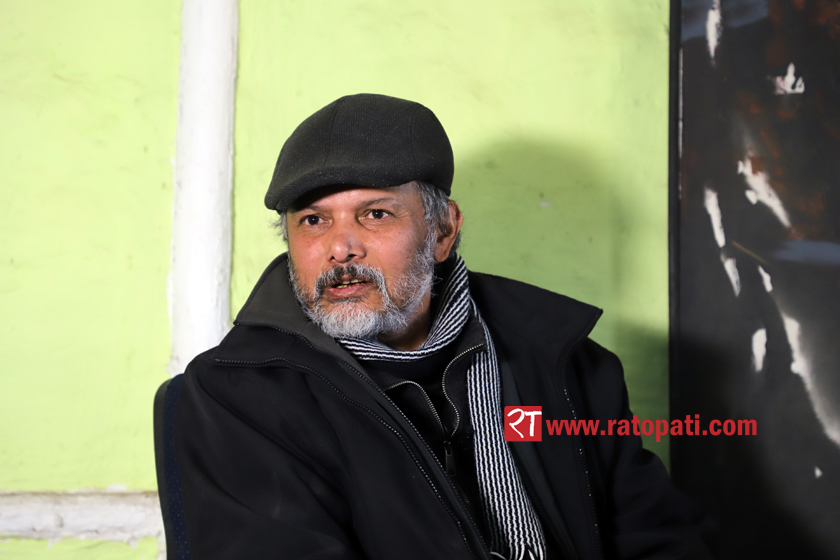
(The author, Surendra Gautam, has been active in the fine arts sector for over a decade.)
This specific news has been automatically translated by AI. As a result, there may be some inaccuracies or language errors.