Hungarian Prime Minister Viktor Orbán Loses Power After 16 Years

Budapest. Hungarian Prime Minister Viktor Orbán, a staunch critic of European Union policies, has lost power after 16 years. In Sunday's election, Hungarian voters cast historic ballots, giving an overwhelming mandate to Peter Magyar, a center-right leader who advocates for the European Union.
Due to the country's sluggish economy and rising inflation, the 62-year-old Orbán's nationalist 'Fidesz' party suffered a bitter defeat against Magyar's pro-European 'Tisza' party. Despite receiving support from top European conservative leaders, including US President Donald Trump, Orbán failed to retain his hold on power.
A prominent anti-communist youth leader during the Cold War, Orbán was the longest-serving leader within the European Union. While supporters viewed him as a patriotic hero, critics at home and abroad accused him of steering Hungary toward an authoritarian path.
Born in a village near Budapest in 1963, he studied law and political philosophy at Oxford University. He first became Prime Minister in 1998 at the age of 35, but lost power in 2002.
After spending eight years in the opposition, he returned to power with a massive majority in 2010, passing laws to amend Hungary's constitution and establish an illiberal democracy.
His centralization of executive power, restrictions on NGOs and press freedom, and interference with judicial independence led to frequent disputes with the European Union over democratic values. Consequently, the EU decided to freeze billions of euros in funding for Hungary.
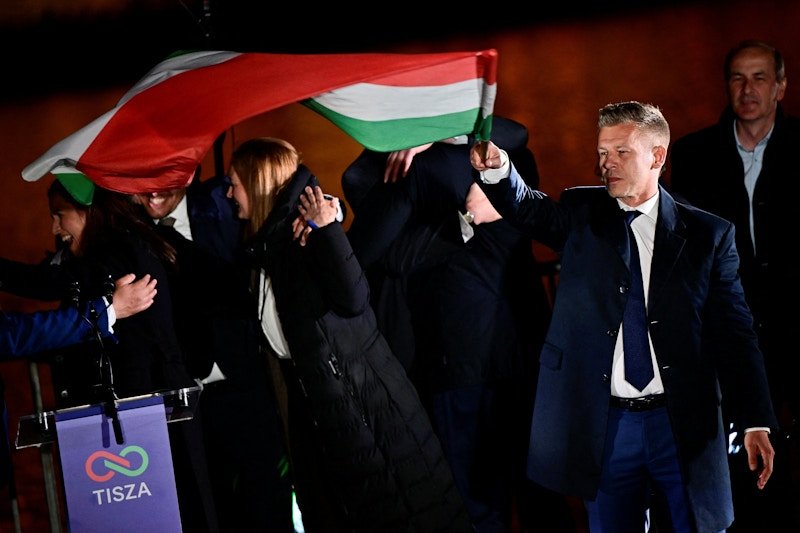
However, Sunday night's results have shattered Orbán's power. Preliminary results indicate that Peter Magyar's party is set to secure a special majority in parliament, paving the way to reverse all the controversial legal reforms implemented by Orbán.
Conceding defeat, Orbán addressed his supporters, stating that only time will tell what this election result means for the fate of the country and the nation. He pledged that regardless of the outcome, he and his party would continue to serve the country and the people of Hungary from the opposition.
During the 2015 European migrant crisis, Orbán presented himself as the defender of Hungary's national identity and Christian heritage, rejecting the EU's quota system for accepting Muslim refugees from the Middle East. Additionally, his government took steps to curtail LGBTQ rights.
His strict immigration policy and efforts to boost declining birth rates earned praise from conservative leaders like US President Donald Trump, Italian Prime Minister Giorgia Meloni, and France's Marine Le Pen. Orbán maintained close ties with Russia, a major energy supplier, and China, which is building electric vehicle and battery plants in Hungary.
During the election campaign, he claimed his party was the 'safe choice' to protect Hungary from the war in Ukraine, accusing the opposition of trying to drag the country into the conflict. He angered EU partners by blocking a 90 billion euro relief package for Ukraine and also clashed with Ukrainian President Volodymyr Zelenskyy.
However, Hungarian voters appeared more concerned with domestic issues such as healthcare and the economy. Hungary's economy has been stagnant for the last three years, and following the Russia-Ukraine war, Hungary faced the worst inflation in the European Union, causing food prices to skyrocket.
Despite introducing family-oriented policies like cheap loans and tax breaks, his shift toward the far-right caused him to lose the support of young voters. Pre-election surveys clearly showed that the younger generation was in favor of change.
Busy with rallies and interviews before the election, Orbán had hinted at fatigue from his long tenure, admitting he felt his power was waning—a sentiment that became reality with Sunday's election results.
This specific news has been automatically translated by AI. As a result, there may be some inaccuracies or language errors.