Rural Municipality Defies Federal Government's Two-Day Weekend Policy

The government has decided to grant a two-day weekly holiday for government offices to reduce fuel consumption due to the ongoing conflict in West Asia. Accordingly, offices across the country are closed on Saturdays and Sundays, while operating from 9 AM to 5 PM on other days.
However, one rural municipality has decided not to follow the federal government's decision and continues to operate its offices according to the old schedule.
Aathrai Tribeni Rural Municipality in Taplejung has rejected the federal government's decision to provide a two-day public holiday (Saturday and Sunday) and has kept its offices open on Sunday.
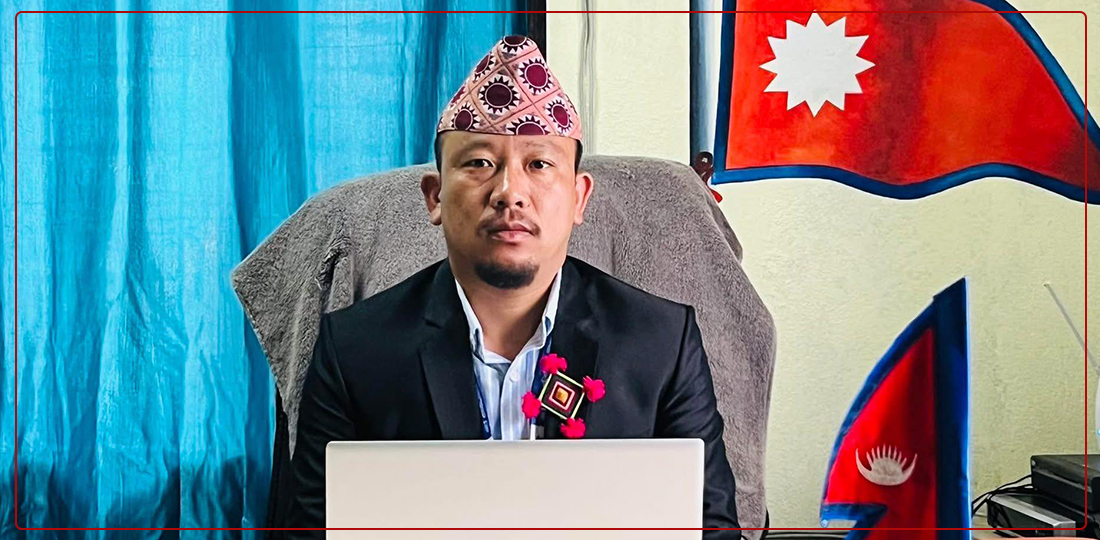
An interview with Dipendra Pomu, the Chairman of the Rural Municipality, regarding why the local government chose not to follow the federal government's decision:
- The federal government has introduced a policy of two public holidays per week, but your rural municipality decided to keep offices open on Sunday. Why did you take such a different decision?
It is not necessary to blindly follow everything the federal government says. Local levels have their own specificities and needs. We made this decision considering our geographical conditions and the convenience of our people. Laws or rules made while sitting in Kathmandu or urban areas cannot be applied in the same way everywhere.
- The federal government made this decision to save fuel and cut costs, doesn't this matter to you?
Fuel might be the main issue in the city, but the situation in our hills is different. Service seekers here walk for two to three hours to reach the office. Many employees also walk to work. Here, human labor and time are more important than vehicles and petrol. Kathmandu Valley and urban areas are not the whole of Nepal; the reality of rural areas must also be understood. Everything should not be viewed through the same lens.
- Why did you defy this decision now? Could you have waited for some time?
This is the main time for work in the fiscal year. In Nepal, the months of Chaitra, Baisakh, and Jestha are very important in terms of development, construction, and budget implementation. This year, a lot of work is pending due to the elections. It is not practical to stop work by giving extra holidays at such a time. We observed the federal government's decision for a few days, but it appeared to cause more hardship to the service seekers.
- What impact did you see regarding schools and students?
A bigger problem was seen in the education sector. Our students have to walk for one and a half to two hours to reach school. The federal government said to open offices at 9 AM, which would mean students would have to leave home at 7 AM. This is not possible for small children. Therefore, for the sake of the academic calendar and the convenience of students, we decided to proceed according to the old schedule (10-5).
- Employees might want to follow the central government's decision to get two days off. How will you manage them?
Most of the employees in our rural municipality live in the municipality's quarters. They do not have the transportation problems that exist in the city. Since it is the main season for work, the employees are also in agreement. We have planned to ensure that the public's work is not stopped, even if it means providing additional incentives for them.
- Does this decision apply only to the rural municipality office or to the wards and other areas as well?
The decision has already been implemented in the rural municipality, ward offices, health posts, and schools. I have just monitored the offices, and work is running smoothly everywhere. The public is receiving services easily.
- Are you challenging the federal government's policy?
This is not a challenge; it is the recognition of local autonomy and practical needs. The perspective of Kathmandu and the reality experienced by the mountains and hills are different. Our clear belief is that we should make the state's presence felt by providing convenience to the people, not by causing them hardship.
This specific news has been automatically translated by AI. As a result, there may be some inaccuracies or language errors.