The Escalating Human-Elephant Conflict: A Crisis of Habitat Fragmentation in Nepal


The Asian wild elephant is one of the world's largest terrestrial mammals. This species is found in South and South-East Asian countries—Nepal, India, Bhutan, Bangladesh, Sri Lanka, Myanmar, and Thailand. The International Union for Conservation of Nature (IUCN) has listed it as an endangered species, and its population is in decline.
The Asian elephant has a large and robust physique. A male elephant can weigh between four and five thousand kilograms, while the female is slightly smaller in size and weight. Compared to the African elephant, the Asian elephant has smaller ears, a slightly arched back, and a finger-like structure at the tip of its trunk. Males usually have long tusks, while most females have small or invisible tusks.
Its habitat primarily consists of Sal forests, mixed forests, grasslands, and riparian areas. An adult elephant can consume about 150 kilograms of grass and vegetation daily. Therefore, forest areas near water sources are crucial for elephants. The Asian elephant is a highly social animal. They live in groups called 'herds'.
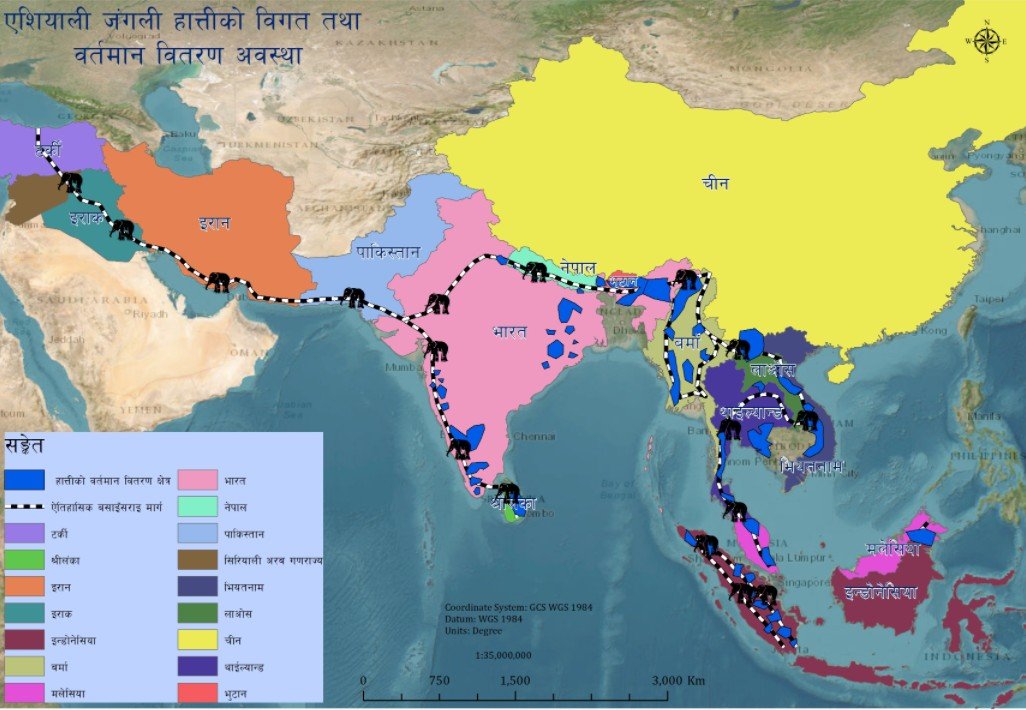
The group is usually led by an experienced female, while male elephants often leave the group upon reaching adulthood to live alone or in small groups. Elephants have a strong memory and communicate through sound, vibration, and scent. An analysis of the historical geographical features of the Asian wild elephant shows that it once covered a vast area from Western Asia to South and South-East Asia. In recent decades, this range has shrunk significantly.
This article provides a basis for understanding how the geographical distribution of elephants has changed over time.
Historically, the distribution area of the Asian wild elephant extended from the Syrian Arab Republic and Iraq to Iran, with routes extending toward South Asia. We can also see this in the graphics. As shown in the image, the elephant's habitat was once very extensive but has gradually become restricted to the east over time.
Currently, there is no permanent presence of elephants in those western countries, indicating their extinction in those regions.
Today, the distribution area of elephants in South Asia includes India, Nepal, Bhutan, Bangladesh, and Sri Lanka. India has the most extensive distribution, establishing it as a major habitat for Asian elephants. In the context of Nepal, the distribution is limited to the southern Terai region, highlighting the importance of transboundary biological connectivity. Similarly, elephants have a permanent presence on the island of Sri Lanka.
Additionally, historical routes extended to East and South-East Asia, including Myanmar, Thailand, Laos, Cambodia, Vietnam, and Malaysia. Although they are still present in these countries, their range is limited to smaller fragments. Signs of distribution have also appeared on some Indonesian islands.
Only a limited area remains in the southern part of China. The central question for everyone is why the elephant's distribution, which was once geographically vast, has shrunk so much.
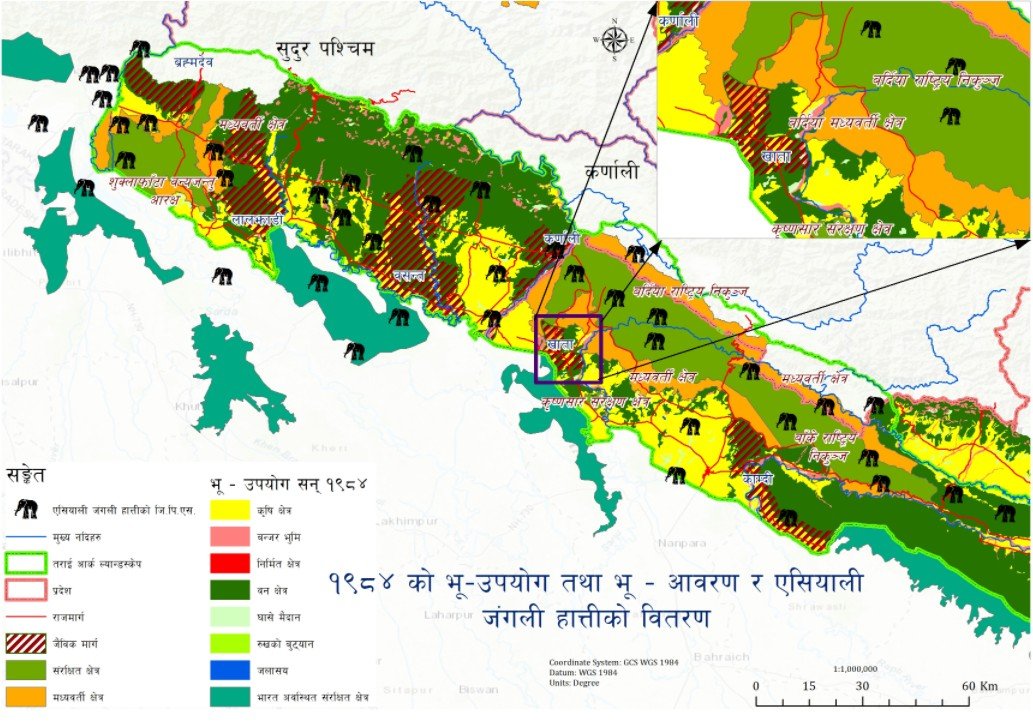
- Comparative study of 1984-2024
Based on this fact, in the context of Nepal, an attempt has been made to map the past and present land use and land cover change of the Asian wild elephant using Geographic Information Systems (GIS) and remote sensing, comparing the years 1984 and 2024.
There is a gap of nearly four decades between these two periods. An effort has been made to clearly compare changes in land use, forest area, other infrastructure development, and biological corridors.
Overall analysis shows significant changes in the relationship between elephant habitat, distribution patterns, and human activity. Analyzing 1984 land-use data, forest cover in the Terai region appears relatively dense. From the Shuklaphanta-Bardiya area in the west to the Chitwan-Parsa area in the center and the Koshi-Jhapa area in the east, the green forest cover appears relatively connected.
Even with the expansion of agricultural land, the biological corridors and connections between forest areas do not appear completely severed. Biological corridors are clearly identifiable and in a state of high utility, which suggests that they provided an easy environment for elephants to move from west to east.
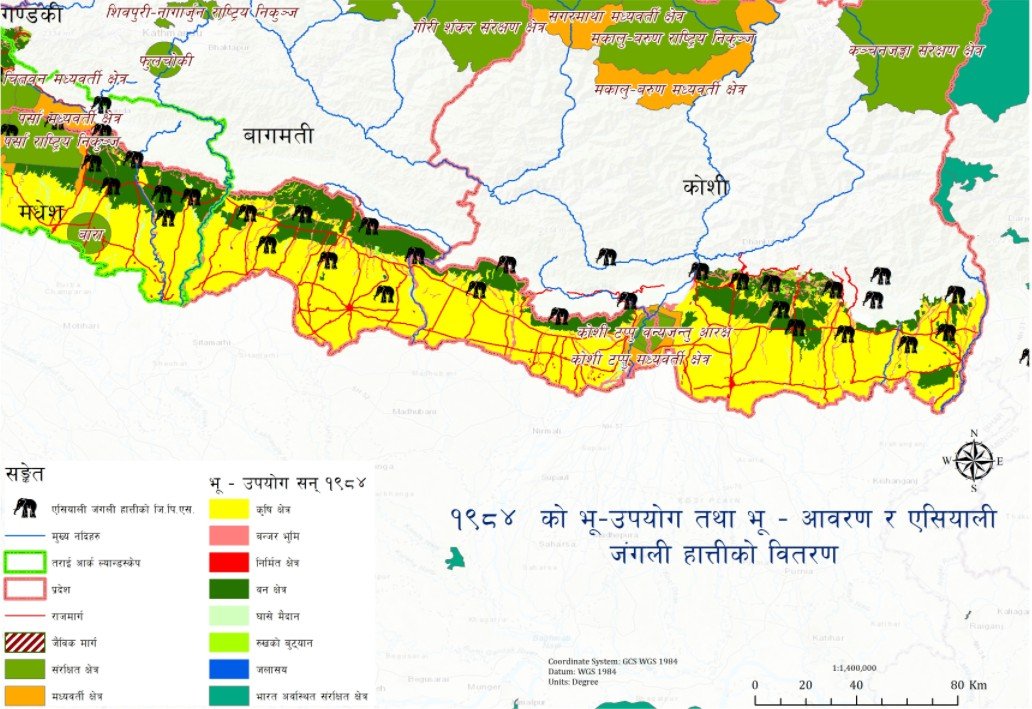
At that time, infrastructure development (highways, settlements, built-up areas) was limited, so forest fragmentation was low. However, the situation in 2024 appears significantly changed. Agricultural land has expanded extensively, dividing forest areas into small fragments in many places. The expansion of built-up areas and road networks has encroached into forest areas and severed biological corridors.
It can be easily analyzed that this has limited the elephant's natural habitat and increased the potential for human-elephant conflict. Analyzing both land use and cover, elephant presence is still concentrated in the Terai region. Similarly, the continuous forest area seen in 1984 has become fragmented and narrow in 2024. While biological corridors appeared relatively wide and functional in 1984, in 2024, those routes are obstructed or constricted in many places by agricultural expansion, highways, and infrastructure.
This may have created obstacles to the elephant's seasonal migration, breeding, and foraging processes. Regarding protected areas, national parks and conservation areas remain the primary bases in both periods. However, in 2024, there is a significant decline in forest areas outside protected zones. While the concept of buffer zones is positive for conservation, rapid land-use change in external areas has challenged conservation efforts.
In a transboundary context, the open border with India to the south is important for elephant movement. However, in 2024, as agricultural and settlement expansion has increased near the border, it can be assumed that there is additional pressure on transboundary biological connectivity. Overall comparative analysis shows that forest fragmentation, agricultural and infrastructure expansion, and the constriction of biological corridors are the major changes between 1984 and 2024.
Although elephant distribution is still limited to the Terai region, there are signs that habitat quality and continuity have weakened. This clarifies the structural reasons for the increase in human-elephant conflict.
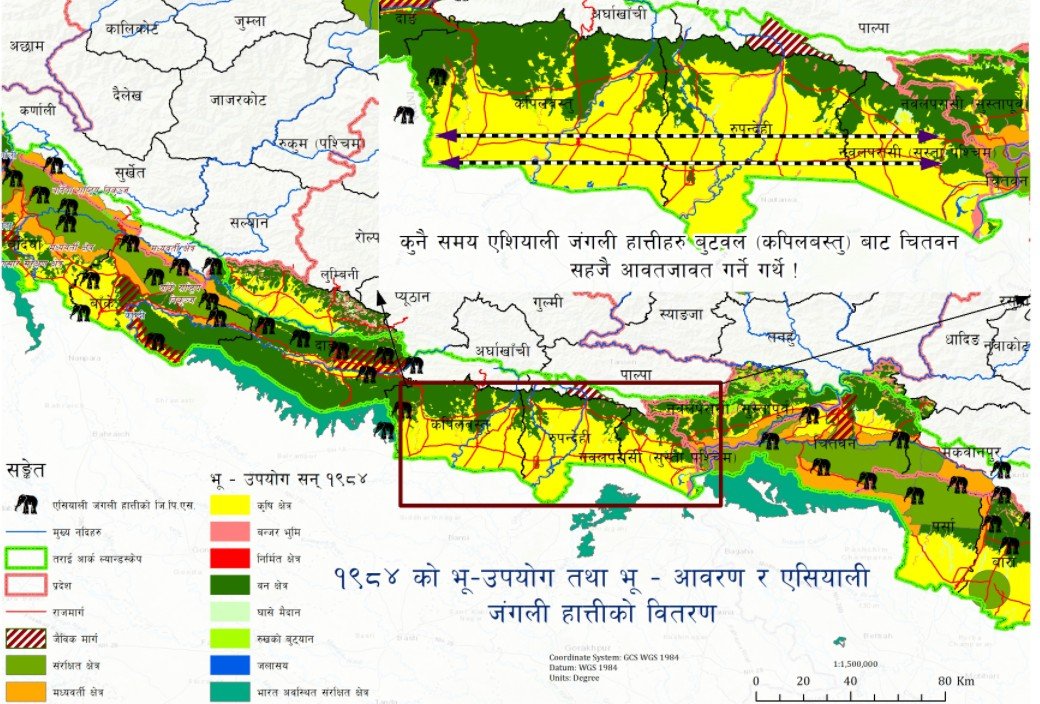
- Status of the Mid-Terai in 1984 and 2024
In 1984, natural systems in Nepal's mid-Terai region were relatively undisturbed. At that time, the forest area was very dense and spread out, creating an uninterrupted green zone from the Chure hills to the southern Terai. Similarly, agricultural land was limited to specific areas, and the presence of human settlements or built-up areas was almost negligible.
During this period, the distribution of Asian wild elephants was mainly concentrated within protected areas and the biological corridors connecting them. Movement for elephants from Bardiya to Chitwan and Parsa was relatively safe. Forest areas were interconnected. At that time, there were very few human obstacles in the natural migration routes of elephants, which is why the rate of human-elephant conflict was also low.
By 2024, the landscape has completely changed. The biggest change is seen in the expansion of built-up areas. Rapid urbanization along the East-West Highway and the flat plains of the lower Terai has significantly increased the density of built-up areas. This urbanization has not only destroyed arable land but has also shrunk the boundaries of forest areas.
Geographical data and GPS locations of elephants in 2024 show that they are more concentrated at the edge of forests and farmland rather than deep in the forest. This shows that elephants are forced to enter human settlements and agricultural areas after experiencing a lack of food and water in their traditional habitats or when their paths are blocked.
Many biological corridors that were clearly visible in 1984 are clearly fragmented by 2024 due to roads, buildings, and other physical infrastructure.
- Status of the Eastern Terai in 1984 and 2024
Analyzing geographical information-based data from 1984, the forest area in Nepal's mid and eastern Terai appears very dense and continuous. At that time, especially in the area from Banke to Parsa and around Koshi Tappu, forest density was high, and human settlements were very sparse and limited to a few points along the highway. But by 2024, the landscape has completely changed. Built-up areas have become very dense. This points to rapid urbanization and population pressure.
The expansion of farming has divided the forest into small pieces. This change has not only fragmented the traditional habitat of elephants but has forced them to shrink into small, safe islands. Additionally, the elephants' GPS data clarifies the changes in their range over time.
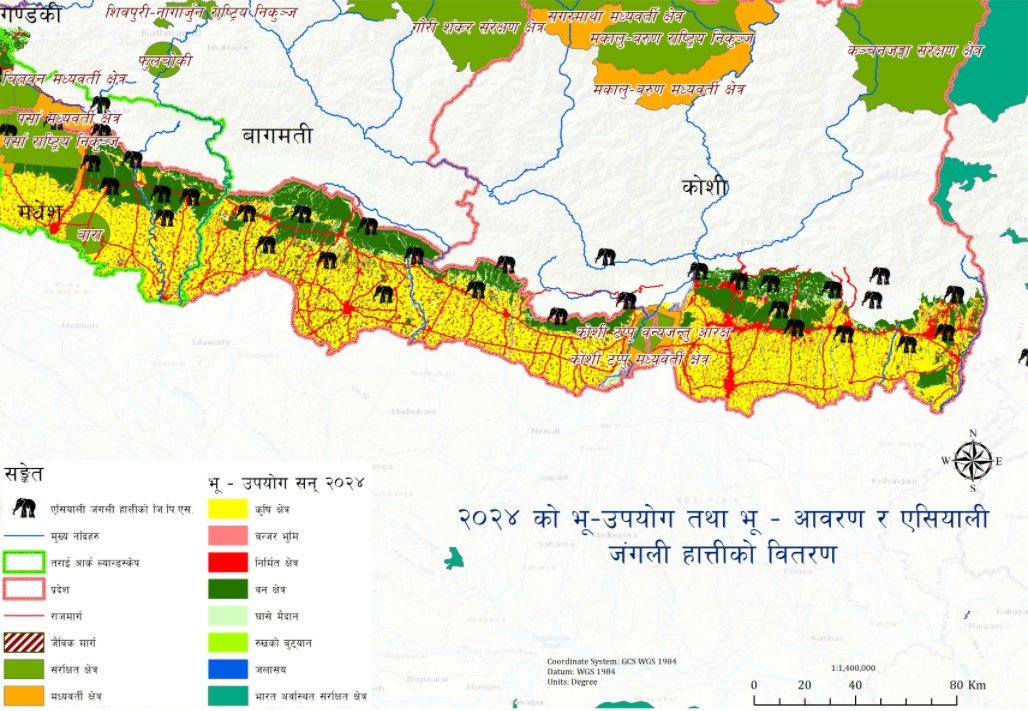
In this context, Dr. Narendra Man Babu Pradhan presented an important perspective, pointing out the need for biological corridor management in the context of Nepal. According to him, it is essential to identify, protect, and manage biological corridors in the eastern Terai region of Nepal, just as in the western region, to ensure the safe movement of wild elephants.
Furthermore, he emphasized that in addition to opening biological corridors, the scope of conservation must be broadened. In this context, he put forward the concept of 'Other Effective Area-Based Conservation Measures' (OECMs), highlighting the possibility of sustainable biodiversity conservation even in areas outside protected zones.
In 1984, elephants were mainly concentrated within safe forests and biological corridors. But by 2024, elephants are seen reaching much closer to agricultural areas and human settlements. Biological corridors, which acted as bridges connecting various national parks, are now in serious crisis. Due to the development of dense human structures and road networks between the 'Barandabhar' of the mid-Terai and other routes, the elephant migration cycle has been interrupted.
This has a direct impact on elephant breeding and their genetic health processes. But ironically, in the last few decades, the existence of the Asian wild elephant has been in serious crisis due to rapid deforestation, habitat fragmentation, uncontrolled expansion of agricultural land, infrastructure development such as roads, transmission lines, and settlement expansion, as well as poaching. Due to these reasons, the elephant's natural habitat is gradually becoming limited, and their traditional movement routes are being blocked. As a direct result, human-elephant conflict has emerged as a complex and sensitive problem today.
Especially in various places in the Terai region, incidents of elephants damaging crops, destroying huts, and sometimes causing human casualties have been recurring. This has increased the feeling of fear and insecurity in the local community. Looking at history, the Asian wild elephant, which was once widely spread from Western Asia to South and South-East Asia, is now struggling as an endangered species.
The terrestrial migration routes that elephants have traditionally used to survive and the ecosystems they connect are extremely important.
In this context, conservationist Dr. Ashok Ram has expressed serious concern about the current state of wild elephants in Nepal. According to him, there are only about 200 to 250 wild elephants left in Nepal. From the perspective of long-term conservation, this number is very sensitive. It is a fact that in the last decade alone, about 40 to 50 wild elephants have died due to various reasons such as human-elephant conflict, habitat loss and fragmentation, poaching, electrocution, accidents, and other human-made and natural risks.
He says that if this situation continues, there is a serious risk that Nepal's wild elephants will be classified as a critically endangered species within the next few decades. This not only raises questions about the existence of elephants but also has a negative impact on the entire ecosystem, so there is a need for effective conservation strategies, policy reforms, and coordination from the local to the international level in a timely manner.
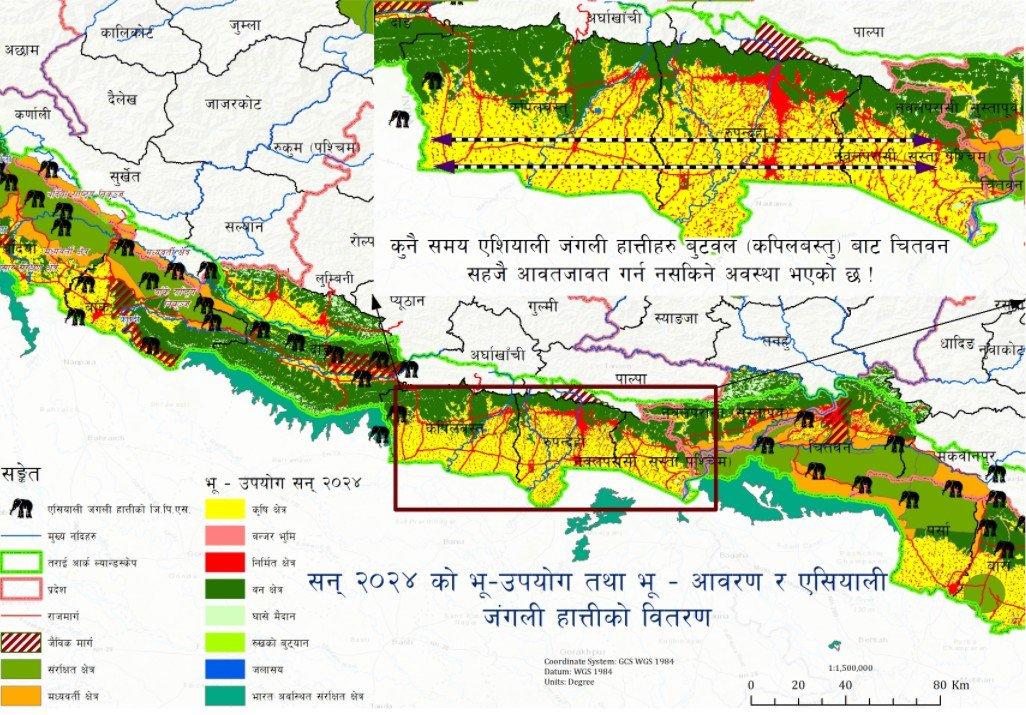
These routes serve as a fundamental link not only for elephant movement but also for overall biodiversity and ecological balance. Therefore, the protection and scientific analysis of these routes will become even more important in the coming days. In the context of Nepal, the historical terrestrial migration route of elephants, starting from the Kapilvastu-Butwal area and extending through Chitwan to Koshi Tappu and Jhapa, now appears to be on the verge of being blocked due to excessive settlement expansion, industrial development, roads, and other physical infrastructure construction.
The uncontrolled increase in built-up areas has seriously affected elephant movement. In such a situation, a serious question is beginning to arise as to who will take responsibility for the environmental and social problems that will arise from this in the future. If a concrete plan and long-term thinking are not built on this subject starting today, it is certain that the conflict between humans and wildlife will intensify in the coming days.
Similarly, conservationist Dr. Dinesh Neupane says, 'Only about 12 percent of the area in Nepal is suitable habitat for wild elephants, and the current situation indicates that such suitable habitat is gradually decreasing. From the perspective of landscape connectivity, Asian wild elephants show a high level of connectivity within and between the western and far-western regions. This shows those areas as relatively stable and connected systems. However, he admits that connectivity between central and eastern wild elephants is limited to a very low level.'
However, it has been pointed out that restoring connectivity between central and other regional wild elephants is possible and requires long-term strategic efforts. To maintain and further strengthen the landscape connectivity of this region sustainably, effective cooperation and coordination between the relevant bodies of Nepal and India are essential. If such cooperation is successful, it is expected to have a significantly positive impact on overall wildlife conservation, not just elephants.
Nepal is currently a country in the early stages of development, where efforts are being made to accelerate physical infrastructure construction and economic development. But if we are facing such a challenge in the current situation, the concern about what form it will take with more extensive development in the future naturally arises. Therefore, the time has come for serious self-evaluation as to where we failed to maintain a balance between development and conservation.
It is not too late yet. Where excessive construction work has taken place and national pride projects are in operation, there is a need for mandatory micro-studies, environmental assessments, and analysis of long-term impacts in such areas.
To solve this problem, the government, conservation organizations, researchers, local communities, and other stakeholders all need to make a joint effort. If everyone does not take a joint initiative, the crisis is certain to escalate. Our past experience has plenty of important examples that we can succeed if we try.
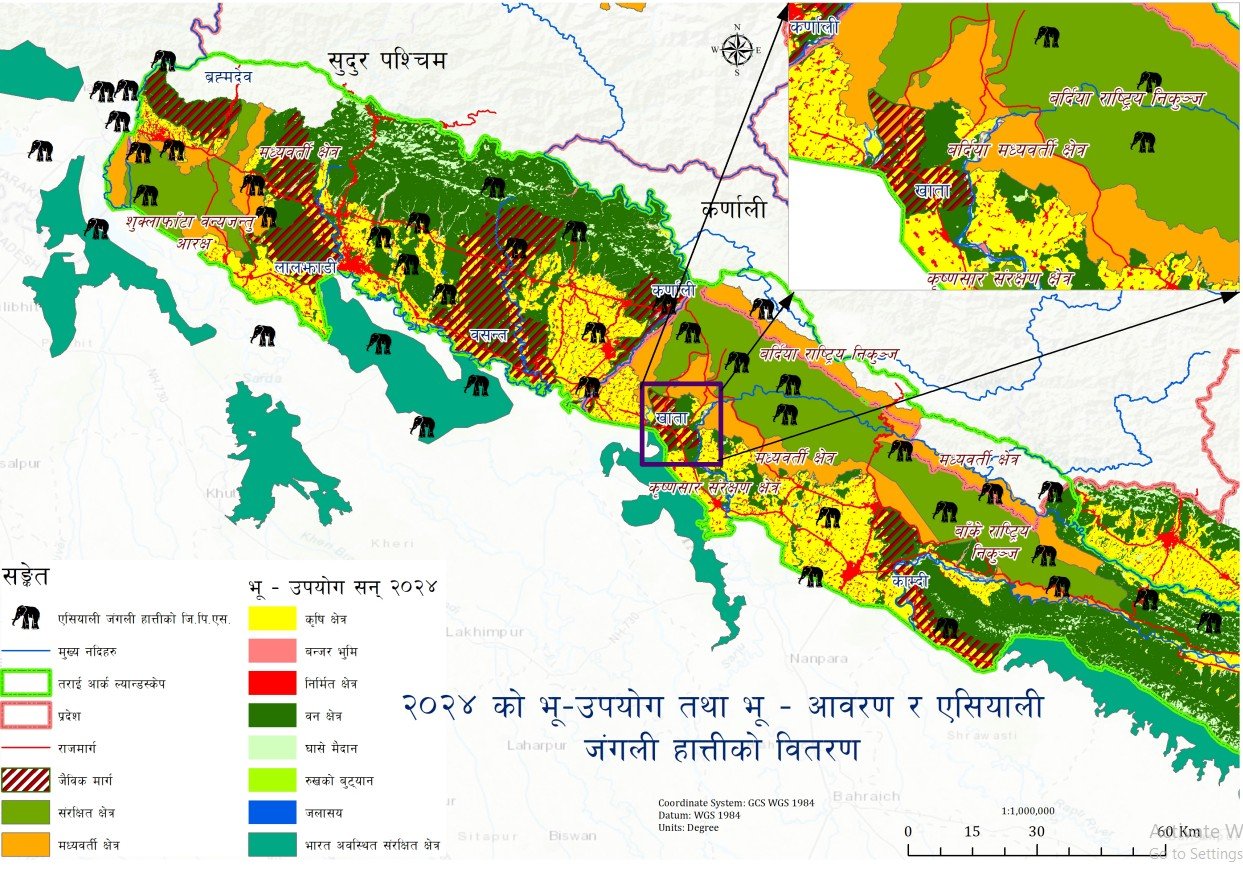
For this, we must start extensive studies and research and seriously study the possibility of restoring blocked biological corridors using planned measures such as land adjustment and land integration. As long as there is no coordination between recent land-use changes and land management measures, the conflict between humans and elephants is likely to continue. Especially by conducting a detailed study of land-use changes on the historical migration route from Butwal to Chitwan and making necessary adjustments, a long-term solution to this problem can be found.
However, despite this, if we delay taking concrete policies and practical steps without taking this matter seriously, we will have to see the Asian wild elephant wiped out in the near future. Therefore, what is needed is practical policy, scientific study, and long-term management. The Asian wild elephant is not just a species of biodiversity; it is also an invaluable part of our cultural, historical, and ecological heritage.
Conserving it is not just about saving one species, but also about maintaining overall ecological balance and handing over an invaluable treasure of nature to future generations.
(Bishnu Maharjan is a professor at Nepal Open University, and Saroj Ghimire is the Acting Chief of the Environment Division at NEA Engineering.)
This specific news has been automatically translated by AI. As a result, there may be some inaccuracies or language errors.