A Conversation with Legendary Director Tulsi Ghimire on His Comeback Film 'Pahad'
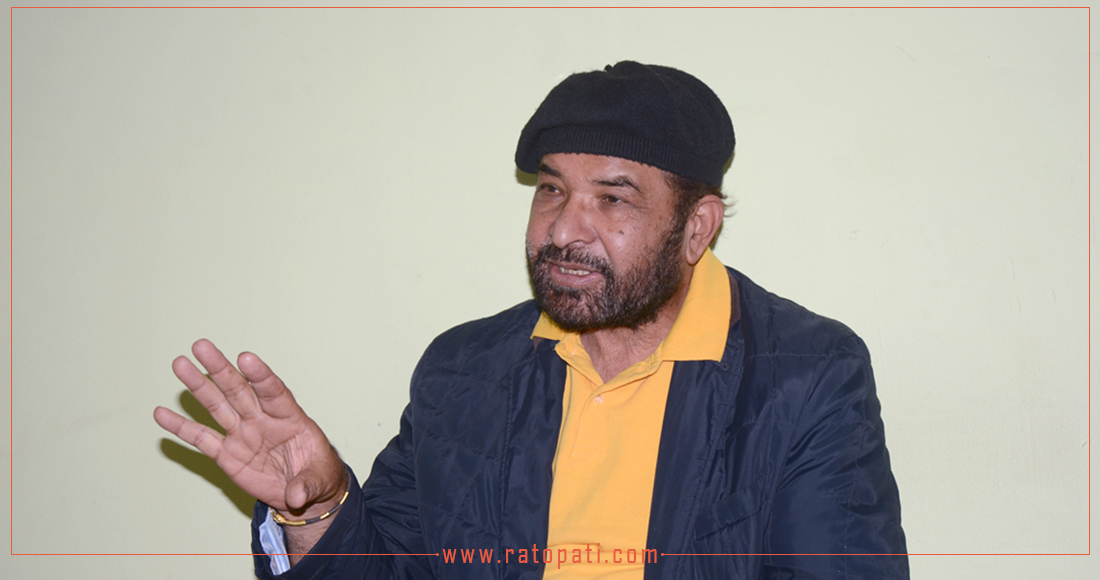
Kathmandu. It is no exaggeration to say that Tulsi Ghimire and the Nepali film industry are synonymous. Primarily known for leaving a deep impression as a director, Ghimire is equally adept at screenwriting, editing, and acting. His contribution to strengthening the commercial and artistic foundation of Nepali cinema is unparalleled.
Entering the silver screen in 2038 B.S. by directing the film 'Bansuri', Ghimire delivered a series of iconic films over four decades, including 'Kusume Rumal', 'Lahure', 'Chino', and 'Dakshina'. These films are considered milestones. In the 50s, he delivered further successful films like 'Deuta', 'Balidan', and 'Darpan Chhaya'. At that time, 'Darpan Chhaya' set a commercial record. After taking a break following the release of 'Darpan Chhaya 2' in 2073 B.S., he is returning to the audience after nearly a decade with the film 'Pahad'.
In this decade, many things have changed in the Nepali film industry. There is a significant difference in everything from technology to storytelling and presentation styles. Director Ghimire says he has prepared himself by embracing new technology and styles.
Always amplifying patriotism and youth voices through his cinematic creations, he has been successful in connecting Nepali films with rural communities and the sentiments of the common people. He states that 'Pahad' connects with the emotions of the masses. Through this film, Ghimire has also introduced his daughter, Panchami Ghimire, to acting. Here are the edited excerpts of the conversation with Director Ghimire, focusing on the film 'Pahad' and the overall Nepali film industry:
- You are returning with a film after a long time; why such a long gap?
The main reason for this gap was the need to learn a bit. The change from the technology of our era, through analog, to today's digital technology happened so fast that it took time to adapt. As technology changed, the style of storytelling also changed. I didn't even realize how time passed while learning that.
Another thing is that I thought of taking a break in between. The times were unfavorable. Now, everything has come together. I prefer to call this 're-tire' rather than 'retire'. Just like starting a journey by putting a new tire on an old car.
- You have named the new film 'Pahad'. What subject does it address?
Through the name 'Pahad', I have tried to symbolize the entire country. There is a line: 'Here lies my mother's dream, in this soil are the bones of my ancestors, what are you waiting for for centuries, standing on the soil of Madhesh, the Pahad.' Currently, the hills are becoming more desolate than the plains. Youth are leaving because there is no environment in the country. But the question is, who will create that environment? Will the elderly and children left behind do it? Building a country requires the experience of the elders and the strength of the youth. Nepal is one of the most beautiful countries in the world; if the atmosphere here is changed, no one needs to go abroad. This is what we have tried to convey in this film.
- Lately, there has been criticism that your films prioritize messages over entertainment. What have you prioritized in this film?
'Pahad' is a film made with entertainment at its core. It has a few suggestions and messages, but it is a full dose of entertainment.
- 'Kusume Rumal', 'Lahure', 'Chino', 'Dakshina', and 'Darpan Chhaya' have set a standard. Can the audience expect the same from 'Pahad'?
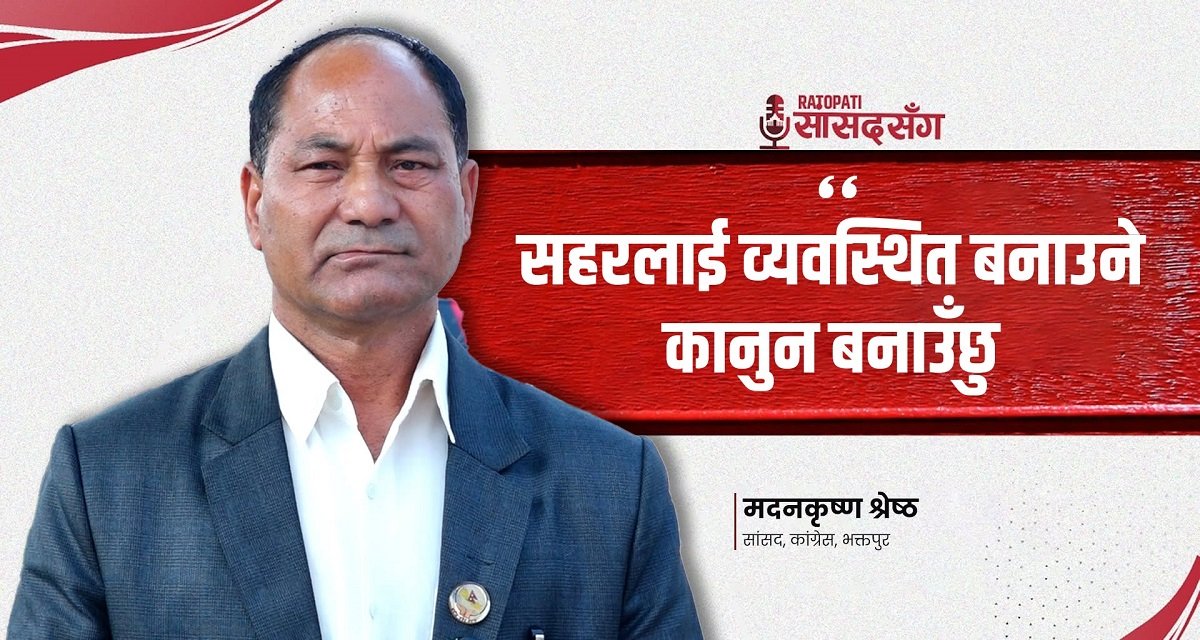
Certainly, they should. For that, this film has very strong characters. The acting of artists like Madan Krishna Shrestha, Sunil Thapa, Bipin Karki, Arun Chhetri, new actress Panchami Ghimire, Renu Nasir Yogi, and Rabindra Singh Baniya has made the story very strong. I am satisfied myself seeing the performance of the artists. I am confident that this film will be a milestone.
- How were artists like Bipin Karki and Madan Krishna Shrestha chosen for the film? Did the story demand it or was it market pressure?
Rather than market pressure, the demand of the story is the main thing. After watching the film, the audience will feel that this character was meant for Bipin. For a director, it is a matter of pride that Rajesh Hamal considers 'Deuta', Madan Krishna-Hari Bansha consider 'Balidan', Bhuwan KC considers 'Kusume Rumal', and Shiva Shrestha considers 'Chino' as their best film. Now I think Bipin will also say one day, 'Pahad is the best film of my career'.
When talking to Madan Dai, he said- 'Tulsi ji, there is willpower, but there is no strength in the hands.' I liked this sentence so much that I made his character exactly that. A man from a village who uses his wisdom and experience to call out to the youth, saying, 'Come, those who have strength in their hands.'
- How does 'Pahad' address the changing film industry and audience preferences?
The film addresses the sentiments of the younger generation. The thought has come to the youth: 'If we don't do it now, who will? If not today, when?' Many of our skilled youth are doing menial jobs abroad, and it hurts to see that. This film is a mixture of the influence of the 'Back to the Village' campaign from long ago and current needs. It works to connect modern society and the youth.
- What kind of challenges did you have to face in production compared to before?
There were many challenges. We learned to make films in the celluloid era. Now, in digital, even correcting small things takes hours due to the rendering process. It was difficult for me to understand this technology, so I took the help of the younger generation. Working with the youth makes me feel young too. Despite technical challenges, the result has been good.
- Music has been another strong point of your films. The audience has liked the music of 'Pahad' very much; how do you see this?
The audience's response has given me energy. Especially the bhajan 'Trishuldhari' and the folk-based songs have been liked a lot by people. When the audience says, 'Tulsi Dai, this is the flavor we wanted,' I feel we are on the right track.
- You also debuted your own daughter, Panchami, in the film. Weren't you afraid of being accused of 'nepotism'?
Many journalists and friends had been telling me to debut her for a long time. But I was waiting for a good subject. Panchami had taken rigorous training in Mumbai. When this film came up, I saw her fit for a strong character. I was afraid, would I be accused of putting an incompetent daughter in a film just because I am her father? But she did such a good job that I think I will not face that accusation.
- It must have been difficult to balance being a father and a director while directing your daughter?
At home, I am a very loving father, but on set, I had to be a bit strict. Because it is a matter of their future. Sunil Thapa and Madan ji also gave her a lot of affection and support. Sunil has seen her grow up in his lap, so it was easy to work. Overall, I am impressed by her acting and feel my decision was right.
- The style of promotion has also changed now, hasn't it?
Yes, I experienced that too. In terms of promotion, a lot has changed. Media is so active now that information reaches the audience in a short time. We had decided to look at the response of organic viewers first, which came out very well. I am still understanding and experiencing this new promotional style.
- On one hand, the film is about to be released, and on the other, the issue of your citizenship has been resolved. Isn't this a double joy?
The news that the citizenship file has moved forward made me very emotional. I haven't received official information from the government yet, but the response from the media and people brought tears to my eyes. It touched my heart that so many people love me so much. I realized that for an artist, the immense love of the audience is greater than citizenship. The release of the film is the time to reap the rewards of hard work. There is no doubt that this brings joy.
- Do you find box office collection more important or the audience's response?
I want 'Yashodhan' - both fame (Yash) and wealth (Dhan/collection). But after a good response, the box office goes up on its own. Lately, films that receive good responses from the audience have had good box office results.
- Why should the audience watch this film?
Films are watched just for entertainment. But it's not just entertainment; you will also be able to feel your own pain. For the pain of migration, the strange characters of Madan Krishna and Sunil Thapa, the different role of Bipin Karki, and a message-oriented story, the audience should watch 'Pahad'. I want to tell the audience that you will not be disappointed. I am confident that this time, at least I won't get scolded, I will get more applause.
", "context": "A conversation with film director Tulsi Ghimire", "tags": ["Nepali Cinema", "Tulsi Ghimire"]}This specific news has been automatically translated by AI. As a result, there may be some inaccuracies or language errors.

_I0a7yjtDaq.jpg)