Nepal's Deadly Roads: Urgent Call for National Road Safety Policy Implementation


Kathmandu. 'Every day, Nepalis leave their homes for work, but seven of them never return.' The reason is that Nepal's roads are no longer just a means of travel; they have become 'death traps.' Government statistics reveal a grim reality: an average of seven people lose their lives daily due to road accidents in Nepal. This amounts to over 2,500 deaths annually, a figure comparable to a major epidemic or natural disaster.
Road travel in Nepal is unsafe. The government drafted a National Road Safety Policy over a year ago to improve road safety and minimize accidents. The Ministry of Physical Infrastructure and Transport prepared the draft and published it on its website for feedback, yet no initiatives have been taken to implement it.
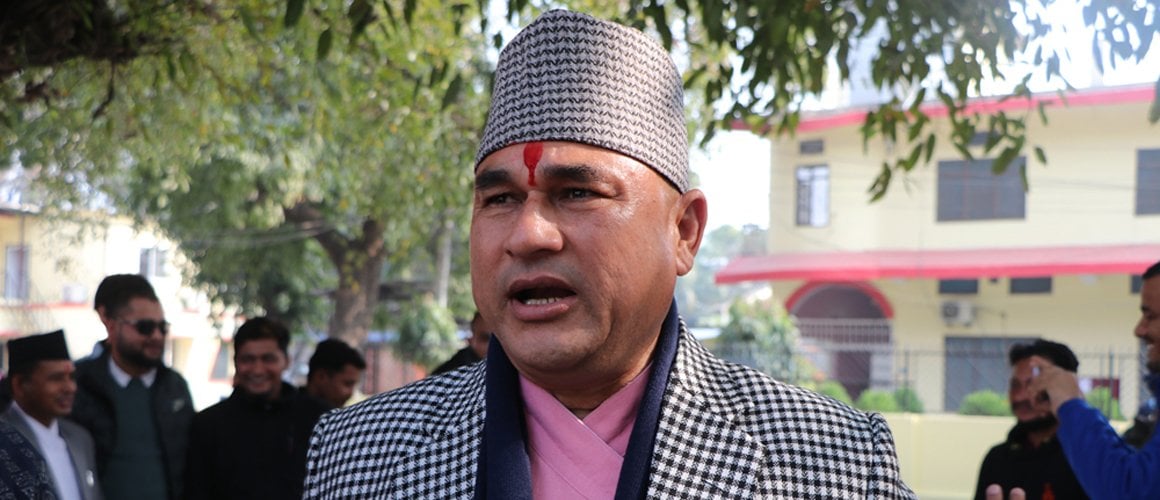
Questions have been raised in the Federal Parliament regarding the lack of discussion on the policy draft. During Tuesday's House of Representatives meeting, infrastructure expert and lawmaker Ashish Gajurel demanded that the draft be discussed in Parliament immediately.
Lawmaker Gajurel stated, 'Every day, every Nepali leaves home for work, but unfortunately, seven do not return in the evening. They die in road accidents. The government cannot remain silent in the face of this situation.'
Lawmaker and infrastructure expert Gajurel emphasized the need to revise the old road safety draft and introduce a new act to reduce the rising number of road accidents and human casualties.
In a conversation with Ratopati, Gajurel said there is no point in moving forward with the draft currently gathering dust at the ministry without improvements. 'The draft prepared last year has not moved forward for a year. Now, it should be presented to Parliament only after discussions in the presence of expert lawmakers,' he said.

Presenting the fact that more than seven people lose their lives on the roads daily, Gajurel accused previous representatives of failing to understand the gravity of road safety. He said, 'Previous lawmakers were not well-informed about the bill. They prioritized blowing whistles and teaching students, but did not cover the overall aspect of road safety. They forgot about road engineering, the mechanical condition of vehicles, and legal obligations.'
He argues that the 'National Road Safety Council' should be the main provision in the proposed act. He stated that the problem persists because there is no separate body to monitor road safety 24/7. He emphasized that the act should integrate road quality, vehicle standards, the use of technology, and immediate post-accident rescue.
Currently, the responsibility for road safety in Nepal is scattered among various agencies (Department of Roads, Department of Transport Management, Traffic Police). This leads to a tendency to blame one another when accidents occur. The new policy draft proposes strengthening the 'National Road Safety Council'.
Commenting on the state of Nepal's highways, Gajurel said, 'We call them highways, but they are not actually highways. On highways, vehicles should move freely, but our highways have shops on both sides, people sitting and cooking tea, and cattle walking around. How can such a structure provide safety?'
Currently, the responsibility for road safety in Nepal is scattered among various agencies (Department of Roads, Department of Transport Management, Traffic Police). This leads to a tendency to blame one another when accidents occur. The new policy draft proposes strengthening the 'National Road Safety Council'.
'The council should not just exist in name. The upcoming policy must improve road structure and usage according to international standards,' he said. 'We need a separate and powerful autonomous body to monitor, research, and take corrective measures for road safety 24/7. It should monitor everything from road quality to driver's licenses.'
Objective of the policy: To reduce road accidents to zero by 2050
The National Road Safety Policy draft has been prepared with the goal of reducing human casualties from road accidents to zero. The Ministry of Physical Infrastructure and Transport has prepared the draft.
The National Road Safety Policy aims to reduce the number of deaths and serious injuries from road transport accidents by 50 percent by 2030 compared to 2021. Furthermore, this policy has been introduced with the goal of reaching zero by 2050.
The objective of this policy is to make post-accident rescue and rehabilitation effective, conduct research and development on road safety, operate road safety programs in an integrated and coordinated manner, and implement an integrated system for regulation, monitoring, evaluation, and information management of road safety activities.
Similarly, the proposed policy aims to ensure coordination and collaboration between different levels of government and various stakeholders for road safety management, and to reduce road accidents by implementing the provisions of the road safety pillars.
The objective of this policy is to make post-accident rescue and rehabilitation effective, conduct research and development on road safety, operate road safety programs in an integrated and coordinated manner, and implement an integrated system for regulation, monitoring, evaluation, and information management of road safety activities.
Why is the policy necessary?
The fact that an average of 7 people lose their lives and hundreds are injured daily due to road accidents in Nepal highlights the necessity of a National Road Safety Policy. Currently, old and fragmented laws like the National Transport Policy 2058 and the Motor Vehicle and Transport Management Act 2049 are in effect. However, as these laws lack modern and sectoral aspects of road safety, challenges such as unsafe infrastructure, weak rescue systems, and a lack of resources are increasing. Therefore, a new policy is pointed out as necessary for integrated data, scientific management, and effective implementation of laws.
There is pressure on Nepal to make new policy arrangements to meet the standards specified by the UN Global Road Safety Action Plan (2021-30) and to achieve Sustainable Development Goals. This policy will help minimize human casualties from road accidents and reduce the negative impact on public health, tourism, and the national economy. Additionally, this policy will prove to be a milestone in ensuring the fundamental right of citizens to safe movement as provided by the Constitution and in making the transport system disability-friendly and inclusive.
A new policy is also mandatory to ensure policy, legal, and operational coordination between the federal, provincial, and local levels in line with the spirit of federalism. It aims to integrate the current scattered responsibilities and make the role of the 'National Road Safety Council' more powerful and effective. It is mentioned that this policy will pave the way for establishing Nepal as a safe destination by regulating road engineering, the mechanical condition of vehicles, and driver behavior.
Strategy to establish 'National Road Safety Council'
To make road safety management effective, the government has put forward a strategy to build a powerful institutional mechanism from the federal to the provincial and local levels. At its center will be the 'National Road Safety Council,' while Provincial and Local Road Safety Coordination Councils will be formed at the provincial and local levels, respectively. By clearly dividing responsibilities among these bodies, laws related to road safety will be integrated and amended. In this process, besides government agencies, educational institutions, non-governmental organizations, and civil society will also be actively involved.
The policy aims to prepare a special action plan and investment plan to implement the key pillars of road safety. Priority will be given to budget management, implementation, and regular review for this. Integrated management will be ensured by using the latest technology in the transport system. International standards will be followed while planning, designing, and constructing road infrastructure, and new structures will be made disability-friendly (accessible). The policy mentions that regulation will be done by allowing only certain vehicles on certain roads based on the technical condition of the road.
The proposed road safety policy aims to reduce premature deaths and serious injuries by strengthening post-accident rescue management. Under this strategy, an 'Integrated Command Center' will be established in coordination with stakeholders to make the rescue process effective. The policy commits to significantly improving the efficiency of ambulance services while enhancing the capacity of rescuers.
To improve vehicle quality, special safety standards will be set for emergency vehicles like ambulances and fire trucks. Roadworthiness testing of vehicles will be made mandatory, and the use of safety equipment will be encouraged. The code of conduct for road users will be implemented in an integrated manner, and the driver's license system will be comprehensively improved, with the provision of a 'Professional Driver's License' being a key feature.
It is mentioned that a technology-based modern system will be developed to monitor and regulate vehicle speed limits, and the guidelines and technical reports of bodies like the Department of Roads, Traffic Police, and Department of Transport Management will be revised to be in harmony with this policy. Thus, a concrete goal has been set to reduce road accidents and develop a safe transport system through level-wise coordination, use of technology, and infrastructure improvement.
Establishment of Integrated Command Center to make rescue effective
The proposed road safety policy aims to reduce premature deaths and serious injuries by strengthening post-accident rescue management. Under this strategy, an 'Integrated Command Center' will be established in coordination with stakeholders to make the rescue process effective. The policy commits to significantly improving the efficiency of ambulance services while enhancing the capacity of rescuers.
Health institutions will be mobilized more effectively for the primary and definitive treatment of the injured. Long-term rehabilitation of the injured will be implemented with priority. It is mentioned that a separate system will be developed to improve health infrastructure in high-risk road sections to ensure timely treatment for victims and to regularly monitor treatment arrangements.
A strategy has been adopted to provide for a Road Safety Fund to conduct road safety-related activities. According to this strategy, it is mentioned that a Road Safety Fund will be provided by the National Road Safety Council to carry out road safety-related work. Technical and financial assistance will be provided for the institutional strengthening of agencies involved in road safety.
There is a plan to upgrade and expand fire fighting, vehicle extrication (the act of removing injured people from vehicles involved in accidents), and towing services to the provincial level. Necessary legal structures will be prepared to adopt international practices. Road safety programs of the federal, provincial, and local levels will be operated in an integrated and coordinated manner. The strategy of widely publicizing and implementing safety structures through the National Road Safety Council is expected to make the overall road safety system more reliable and accountable.
Provision of Road Safety Fund to be made
A strategy has been adopted to provide for a Road Safety Fund to conduct road safety-related activities. According to this strategy, it is mentioned that a Road Safety Fund will be provided by the National Road Safety Council to carry out road safety-related work. Technical and financial assistance will be provided for the institutional strengthening of agencies involved in road safety.
It is mentioned that arrangements for loss and compensation for road accidents will be made in the national-level road safety plan. Additionally, initiatives will be taken through the Road Safety Fund and health insurance for the rehabilitation of the seriously injured and the treatment of the physically disabled, and road accident insurance will be revised as needed. Similarly, a strategy has been adopted to implement an integrated system for regulation, monitoring, evaluation, and information management of road safety work and to conduct study, research, and development related to road safety.
This specific news has been automatically translated by AI. As a result, there may be some inaccuracies or language errors.