Saudi Arabia Confirms Attacks on Key Oil Infrastructure

Kathmandu. Saudi Arabia has officially confirmed that its major oil and gas infrastructure has been attacked.
According to the state-run Saudi Press Agency (SPA), attacks targeting various energy facilities, including the East-West pipeline, have resulted in one death and seven injuries among Saudi citizens.
Citing an unnamed official from the Ministry of Energy, the SPA reported that the recent attacks have caused significant damage to the country's oil production and transportation systems.
Preliminary details indicate that daily production of over 1 million barrels has been affected. Of this, the damage to the East-West pipeline alone has reduced production by approximately 700,000 barrels per day, while attacks on other energy structures have led to a further reduction of 600,000 barrels.
Energy analysts estimate that this could affect the supply of up to 12.1 million barrels per day in the Gulf region, which is expected to have a serious impact on the balance of oil supply in the global market.
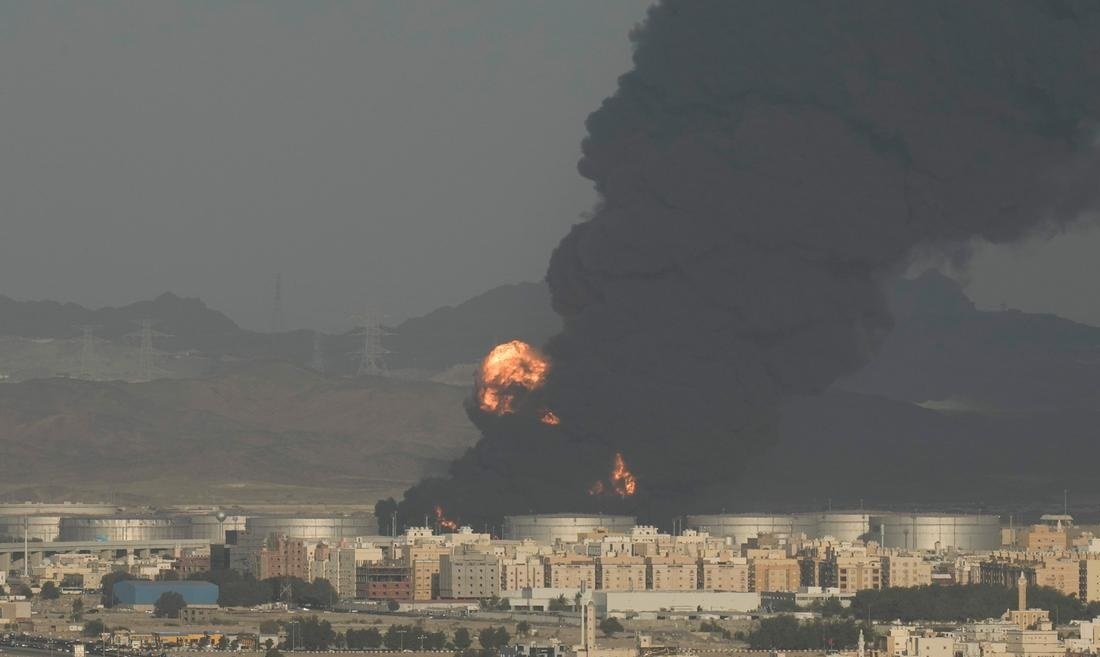
Meanwhile, satellite images have shown a massive fire at the Abqaiq processing center, a key facility of the state-owned oil company Saudi Aramco. Images released by the European Space Agency clearly show thick black smoke rising into the sky. The photos were taken on the morning of April 8, local time.
The Abqaiq processing center is considered the world's largest crude oil stabilization plant, playing a role in ensuring about 5 percent of the world's oil supply. Since the East-West pipeline originates from this center, any disruption here directly affects the global energy market.
The approximately 1,200-kilometer-long East-West pipeline is a major route that bypasses the Strait of Hormuz. Due to the ongoing tension and blockades in Hormuz, this pipeline had become even more critical. However, with the attack on this route, the alternative supply system is also at risk. Gulf countries have not yet released full details of the actual damage to their energy infrastructure. Nevertheless, recent developments suggest that attacks linked to Iran have posed a serious challenge to regional energy security.
This incident has created unprecedented pressure on the global oil supply chain. Experts point out that the existing disruptions in Hormuz, combined with attacks on other pipelines and the fire at the major processing center, are likely to increase instability in the energy market.
Meanwhile, the impact of the temporary ceasefire between the US and Iran, announced by US President Donald Trump, appears to have been weakened by these events. Despite the ceasefire, the attacks on energy infrastructure indicate that the conflict could still spiral out of control. Saudi Aramco has been contacted for further details, but no official response has been received so far.
This specific news has been automatically translated by AI. As a result, there may be some inaccuracies or language errors.