Concerns Mount Over Persistent Cross-Border Smuggling in Morang


Biratnagar. Following the appointment of Prime Minister Balendra Shah, members of the House of Representatives elected from Morang raised urgent concerns regarding the need to curb smuggling during discussions with Koshi province lawmakers. The MPs strongly demanded an end to cross-border smuggling, the closure of illegal crusher industries, and the prevention of poultry smuggling.
While Prime Minister Shah listened to the issues raised, he did not provide an immediate response. However, the Ministry of Home Affairs issued a directive to shut down all illegally operating crusher industries. In compliance, Morang's security team closed several units, but they resumed operations within days after industry operators pressured local municipalities, who in turn pressured the District Administration Office. Consequently, the District Administration Office shifted its approach from a blanket closure to monitoring and closing only those found to be operating illegally.
According to administration sources, out of 10 inspections conducted so far, two crusher industries were found to be operating illegally. There are 16 crusher industries currently operating in Morang.
The administration has also seized various illegally imported goods. On Wednesday alone, illicit beverages worth over 150,000 rupees were confiscated. In Sunbarshi, a warehouse containing such illegally imported beverages was discovered, leading to one arrest.
Despite the administration's apparent urgency following the Home Ministry's order, insiders suggest that the 'smuggling routes' remain active. 'It is understood that trucks carrying food items are still arriving. Cattle and buffalo smuggling continues, as does the smuggling of fish,' the source said, adding, 'There is information that the Sunsari border point is being used more frequently.'
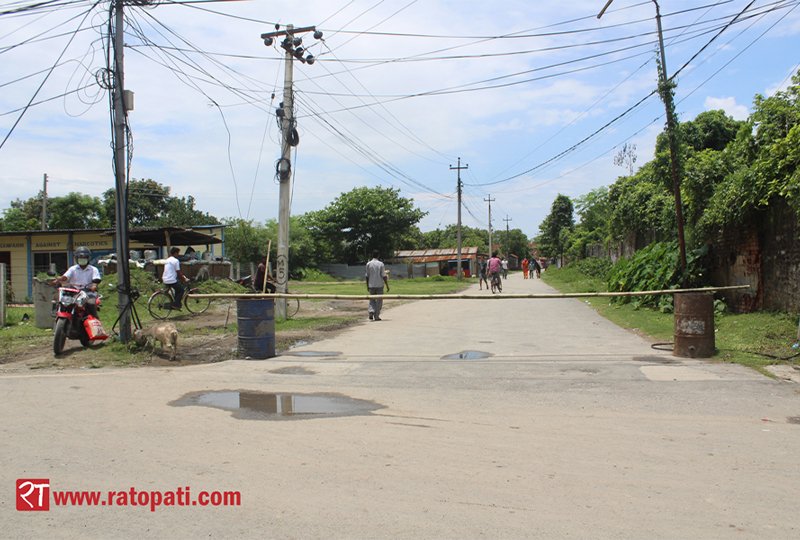
According to the source, stone and gravel are being smuggled illegally through the Jhapa border points. It is a long-standing practice to smuggle poultry, chicks, and feed from dummy poultry farms built near the border. 'The Sunsari border is considered easier than those in Morang and Jhapa,' the source says. 'After watching the new government for a week, smugglers have resumed their old business.'
Sources claim that smuggling is particularly prevalent through the border points of Morang, including Dhat, Daraiya, Post, Ukhubari, Materuwa, and Islampur, with goods like textiles entering without paying customs duties. 'The smuggling of women's items (kurtas, lehengas, sarees, etc.) continues even now. Previously, it was limited to Biratnagar, but now the smuggled goods reach Kathmandu,' the source claims.
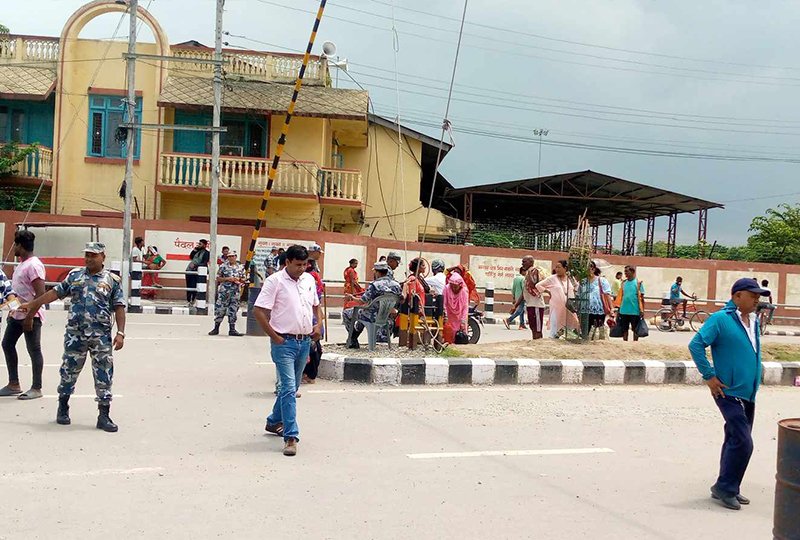
Locals report that smuggled goods are stored in warehouses near the Indian border and are clearly seen being brought into Nepal right in front of the police. Sources allege that significant bribes are exchanged among police officials to secure transfers to government offices targeting Jogbani, a vital border point in Koshi Province, and that this practice has not stopped.
Government Acknowledges Billions in Smuggling
According to the report of the High-Level Committee on Tax System Reform, coordinated by former Secretary Vidyadhar Mallik and including Laxman Aryal, Prof. Dr. Ram Prasad Gyawali, and Shyam Prasad Dahal, Nepal is losing at least 2.91 billion rupees in annual revenue (customs, VAT, and excise duty) due to illegal imports and trade.
Based on the report, in the fiscal year 2079/80 alone, various agencies seized goods worth 1.68 billion rupees during smuggling attempts and filed cases. The report notes that this figure represents only the seized amount, and the actual evasion could be significantly higher.
The committee submitted the report to the government on 2080 Falgun 20. Although the report recommended further study and the formation of a new committee to curb illegal trade, the government has shown little interest. For border security, 254 Border Outposts (BOPs) of the Armed Police Force and 37,000 personnel have been deployed.
There appears to have been no recent study conducted by the Nepali side regarding the volume and proportion of informal imports from India to Nepal. A 2004 study by Nisha Taneja, M. Sarvanathan, B.K. Karmacharya, and S. Rohit titled 'India's Informal Trade with Sri Lanka and Nepal' stated, 'Analyzing from Indian soil, informal exports from India to Nepal (informal imports of Nepal) are 128 percent higher than formal exports (formal imports of Nepal).'
According to Indian estimates, informal trade worth 180 million US dollars takes place annually from India to Nepal. Similarly, goods worth 228 million dollars are informally exported from Nepal to India.
Goods coming from India to Nepal are primarily products manufactured in India, such as textiles, processed and unprocessed food items, cement, vehicle spare parts, and electronics. Goods going from Nepal to India mostly consist of items originating from third countries (such as China). These include electronics (35 percent), textiles (35 percent), spices, footwear, and some local products like ready-made garments, ginger, ghee, and vegetable oil.
This specific news has been automatically translated by AI. As a result, there may be some inaccuracies or language errors.


-(2)_QJLjKxR87n.jpg)