Nepal's Tourism Sector Struggles to Reach Pre-Pandemic Levels, Says Tourism Board CEO


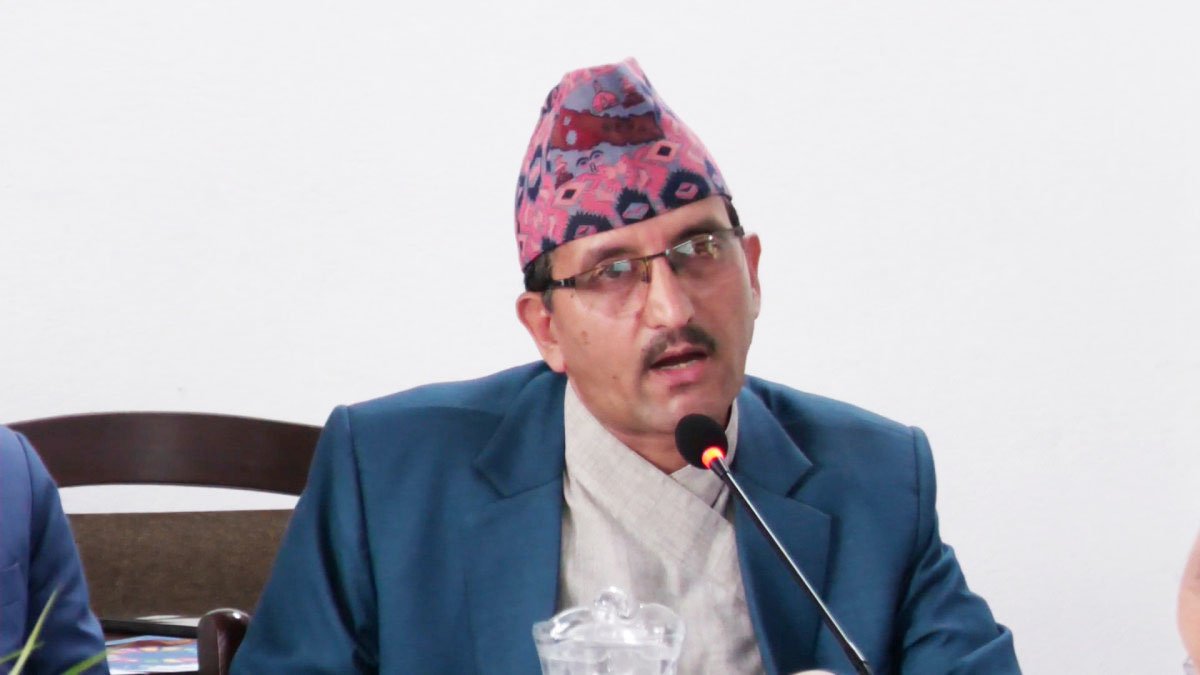
KATHMANDU. Deepak Raj Joshi, CEO of the Nepal Tourism Board, stated that while the global tourism sector has fully recovered from the COVID-19 pandemic, Nepal remains in a recovery phase.
According to him, global tourism in 2025 has grown by approximately 4 percent compared to pre-COVID levels, whereas Nepal still lags by 2 percent. He noted that it appears unlikely for Nepal to achieve full recovery even in 2026.
He mentioned that Nepal had expected a 15 percent growth in tourist arrivals in 2025, and the Tourism Board had planned promotional programs accordingly. However, he noted that the 'Gen-Z Movement' and the floods, landslides, road blockages, and flight cancellations during the Dashain-Tihar period impacted the tourism sector.
Despite weak tourist arrival numbers, he stated that there has been significant progress in investment within the sector. Specifically, there has been a large influx of investment in hotels and resorts since the pandemic. He noted that while there were only about 10-12 five-star hotels before COVID, there are now more than 15 in operation. Additionally, he informed that there has been an expansion in international chain hotels and the luxury segment.
However, he mentioned that the Gen-Z movement did not have a long-term negative impact on the tourism sector. He believes that because the message went out that it was a movement for good governance, tourism returned to its rhythm quickly. He said, 'We thought arrivals might drop by 30 percent. Although arrivals fell in September, our recovery was faster afterward.'
Tensions in West Asia Pose New Challenges for Nepal's Tourism Sector
He stated that while the beginning of 2026 looked positive for tourism, new challenges have emerged. He believes that the tensions in West Asia have created a major challenge for Nepal's tourism sector. According to him, tourist arrivals grew by 15.7 percent in January and 8 percent in February.
However, in March, the crisis in West Asia led to disruptions in air routes and a fuel crisis, resulting in a decline in arrivals. He noted that rising fuel costs lead to higher airfares, and if this situation persists, transportation, hotel, and restaurant services will become more expensive. He believes this will have a direct impact on tourists.
He said, 'We need to improve small things. If small things are done well, they lay the foundation for bigger things. Small weaknesses have caused us unnecessary trouble and sent a negative message. There is a perception that there is no good management in Nepal. For this, we must identify priorities and work accordingly. Good road transport is the main infrastructure linked to tourism. Similarly, immigration services, facilities in protected areas, and widespread delays in domestic flights must be improved. It is not good if we cause tourists to have to extend their travel time.'
Need to focus on branding and packaging of new tourist areas
Joshi stated that there is a need for Nepal to focus on identifying tourism products and new packaging. Stating that tourism promotion is currently limited to traditional destinations like Kathmandu, Pokhara, and Chitwan, he suggested that it needs to be diversified.
He mentioned that there are new possibilities such as bird watching in community forests and 'angling' (fishing tourism) in rivers. Noting that more than 100 'Golden Mahseer' are found in the Seti River, he said that promoting such unique and sustainable tourism products would create new opportunities.
He said, 'We still have a lot to do in Nepal's tourism sector. We lack the ability to repackage even the things we already have. We are still selling mostly traditional packages. We are limited to Kathmandu, Pokhara, and Chitwan. In the last 25-30 years, we have developed more than 20,000 community forests. There is plenty of room to bring 'carbon neutral' or 'green tourism' packages there. The number of birds has increased. We recently held an 'angling' event on the Seti River. This is a very popular activity in Europe. There are over a hundred Golden Mahseer in Nepal's Seti River. This is like Mount Everest for us. There are many such unique things that need to be discovered and promoted.'
He stated that tourists should not be inconvenienced. Mentioning the incident where a bulldozer was used on a hotel while tourists were staying in Pokhara, he said that tourists should be given advance notice in such matters.
He said, 'In the past, when there were labor movements, guests were kicked out and hotels were closed. Recently, bulldozers were used on some hotels in Pokhara. The concerned authorities should have gone a day earlier and informed the tourists. They should have been told, "Please stay safe, we are going to demolish this because it is against the standards."'
He also informed that the Tourism Board has established a 'Crisis Coordination Cell' for the convenience of tourists. He stated that arrangements have been made to operate shuttle buses from the airport to hotels during strikes, curfews, or road blockages, and to coordinate rescue and relief efforts in collaboration with local governments, administration, tourism police, and the private sector during natural disasters. He noted that due to a lack of budget and manpower, the board has not been able to do as much as it would like, and there are also some policy issues.
This specific news has been automatically translated by AI. As a result, there may be some inaccuracies or language errors.