Parliamentary Committee Questions National Planning Commission's Authority and Effectiveness

Kathmandu. The National Planning Commission is a body formed based on the National Planning Commission Formation Order. No separate law has been enacted to operate the commission yet.
However, the commission has been assigned many important tasks. It is involved in selecting and monitoring national pride projects. The commission also formulates plans on how to lead the country towards prosperity. The commission advises the government.
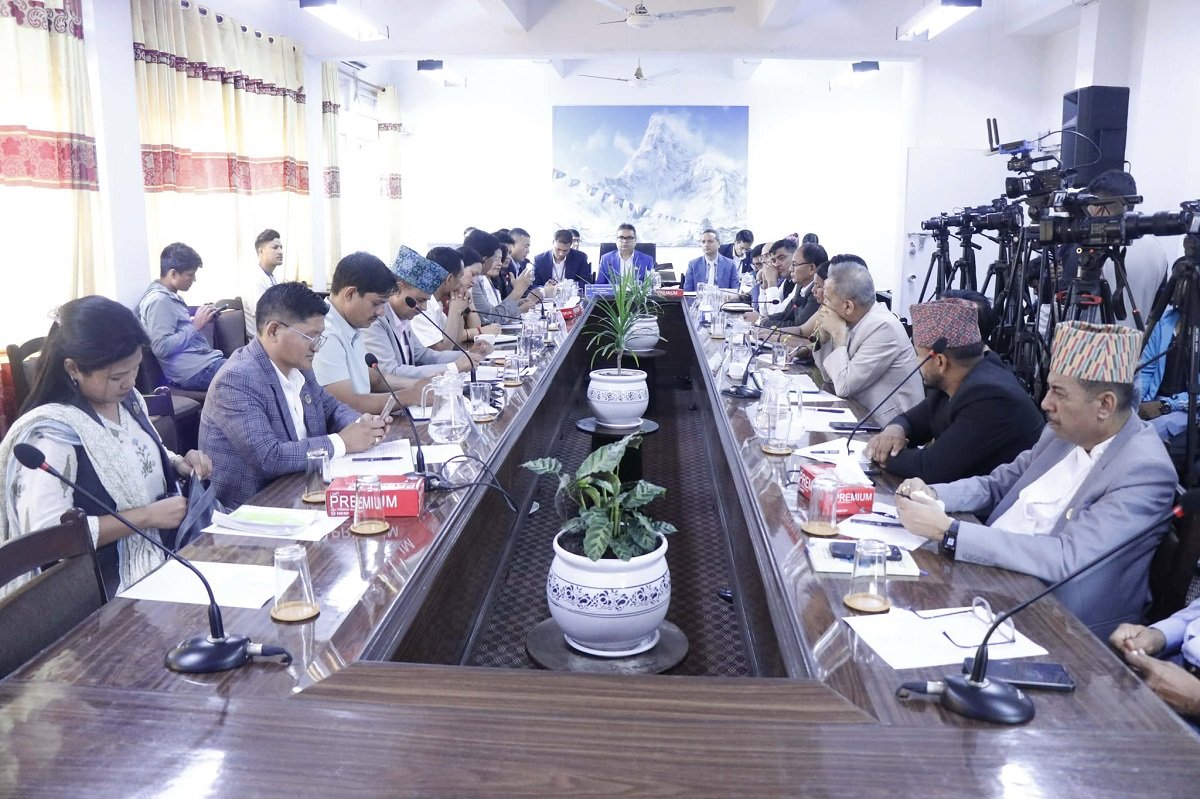
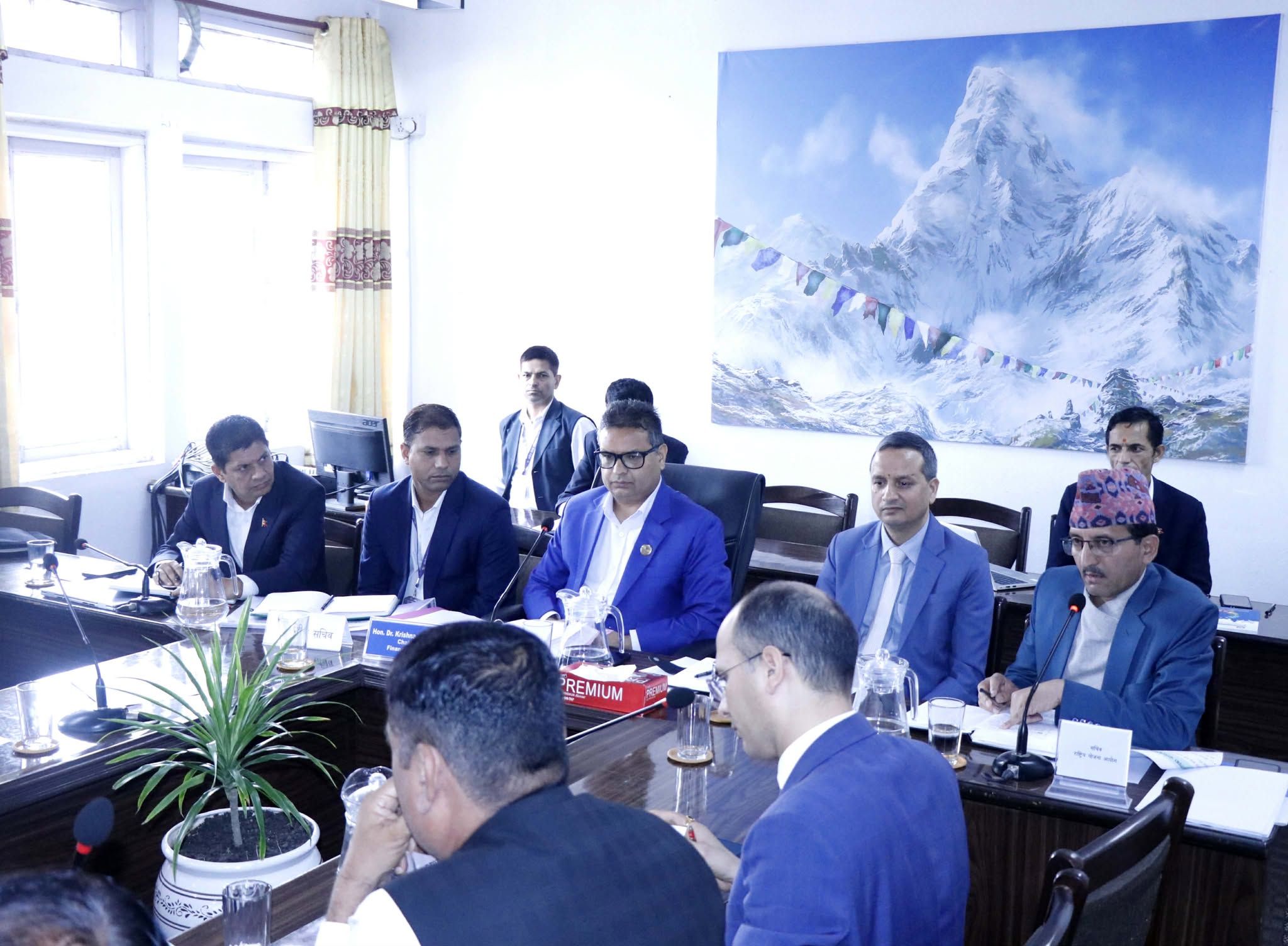
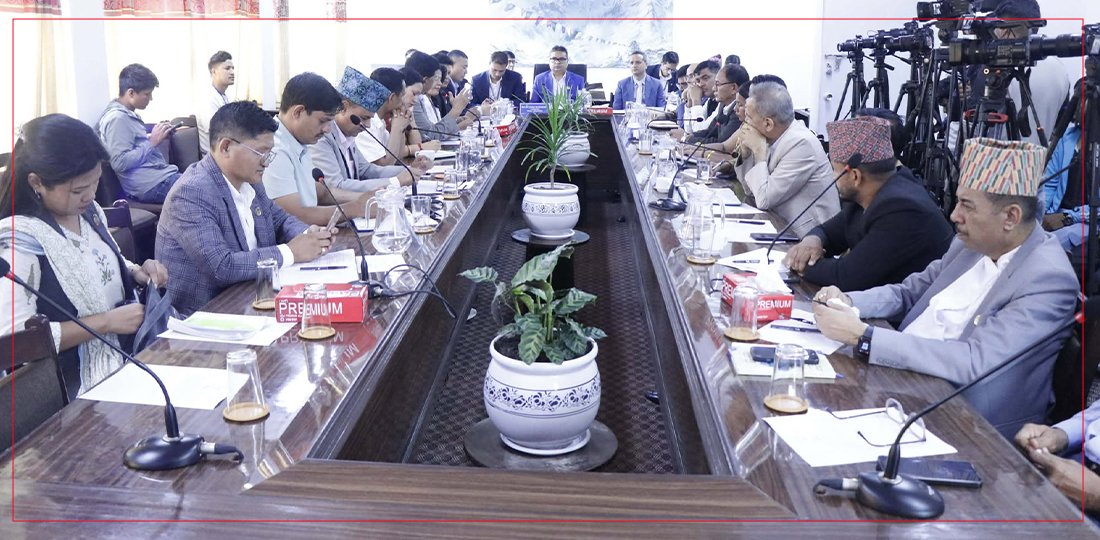
There is a provision that the Prime Minister shall be the chairman of the commission. However, citing that the body chaired by the Prime Minister lacks a separate law and authority, MPs in the parliamentary committee have raised questions and demanded the restructuring and empowerment of the commission. On Monday, questions were raised about the commission's status in the meeting of the Finance Committee under the House of Representatives. MPs stated that it is necessary to discuss the constitutional and legal vacuum of the commission and restructure it.
MPs said that the Planning Commission, chaired by the Prime Minister, appears to be limited to being a paper advisor.
Nepali Congress MP Khadga Bahadur Buda said that it is not good for the Planning Commission, which is supposed to make the country prosperous, to remain a paper advisor based on the formation order. He said, 'The commission, established as a body to formulate and implement plans, cannot be weakened in terms of law and authority. It needs to be restructured and empowered.'
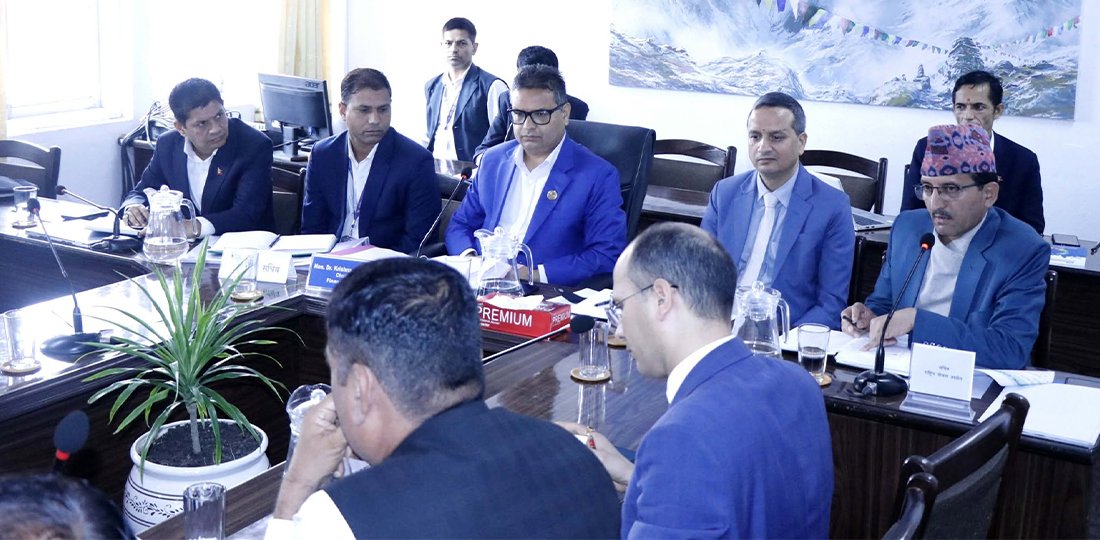
MPs emphasized that the commission should be given authority to make ministries accountable.
Similarly, Rastriya Swatantra Party MP Bikram Khanal questioned the commission's relevance.
He said, 'The Planning Commission prepares 13 themes and five-year plans. But if the ministries do not heed them, what is the use of such an institution? It has become just a traditional institution. The commission seems to be a mere spectator.' He mentioned that the commission should be established as a powerful and responsible body. He pointed out that there is no coordination between the five-year plans prepared by the government and the performance of the ministries, and questioned the relevance of the commission itself.
MP Khanal said that although the Planning Commission prepares a 5-year action plan based on 13 different themes, the ministries do not follow it.
'Ministries are supposed to follow the Planning Commission's guidelines, but in practice, there is no coordination anywhere,' Khanal said. 'If the ministries do not follow the instructions given by the Planning Commission, and the commission cannot give instructions, then what is the meaning of such an institution's existence?'
Khanal argued that it is ironic that even a powerful body like the Planning Commission, chaired by the Prime Minister himself, cannot make ministries accountable. He claimed that development work has stalled due to a lack of coordination between the Planning Commission and the 16-17 ministries.
'An institution chaired by the Prime Minister should be able to give legal instructions to the ministries and produce output,' he said.
CPN-UML MP Dr. Pushpa Raj Kandel, who was also a former Vice-Chairman of the Planning Commission, compared the current state of the commission to the mythological character Parashurama. 'Just as Parashurama's power was transferred to Rama, making him weak. The Planning Commission is now in a similar state,' Kandel commented.
According to him, in the past, there was a kind of check and balance between the Ministry of Finance, the Nepal Rastra Bank, and the Planning Commission, but now all power is concentrated in the Ministry of Finance.
Kandel's analysis was that the inability of an institution chaired by the Prime Minister to effectively instruct a ministry's secretary or minister for plan implementation is the main obstacle to development. Kandel expressed concern that the dignity and power of the Planning Commission have been gradually eroding. He commented that the commission's role is shrinking and all power is concentrated in the Ministry of Finance.
MP Kandel said that the Planning Commission should direct the Ministry of Finance, but instead, the commission has to operate under the pressure of the Ministry of Finance. According to him, although an agreement was reached to place the Central Bureau of Statistics under the commission, it was brought under the Prime Minister's Office when the law was being drafted.
He claimed that the commission's role has weakened as bodies like the Policy Research Institute operate without coordinating with the commission.
'If the Central Bureau of Statistics and the Policy Research Institute were brought under the Planning Commission, its dignity would increase, and plans would be based on research,' he said. Dr. Kandel stated that for the Planning Commission to be effective, the presence of the commission's Vice-Chairman in the Council of Ministers (Cabinet) should be mandatory.
Although the Prime Minister is the chairman of the commission, due to his busy schedule, he cannot dedicate sufficient time, so the Vice-Chairman should be given the role of Planning Minister or be allowed to attend the cabinet meetings, he said.
'The Vice-Chairman of the commission, which is the main advisory body to the Prime Minister, does not get to meet the Prime Minister even once a month and cannot present issues in the cabinet, thus it is limited to being a supporting institution,' he said.
Demand for Restructuring of the Commission
Rastriya Swatantra Party MP Sushil Khadka said that the current structure of the National Planning Commission cannot address the challenges of development. He said that there is a need to restructure the commission now.
He said that it is necessary for the government to restructure the commission and develop it as a powerful body.
'The Planning Commission is limited to paper, and its role in implementation is weak,' said MP Khadka. 'An authority with a separate legal status should be created for national pride projects, and resources for it should be ensured.'
MP Khadka emphasized that the commission should not be limited to being a paper-planning body but should be strengthened in implementation. He proposed the formation of a separate National Pride Project Authority to operate national pride projects and ensure its resources and legal arrangements.
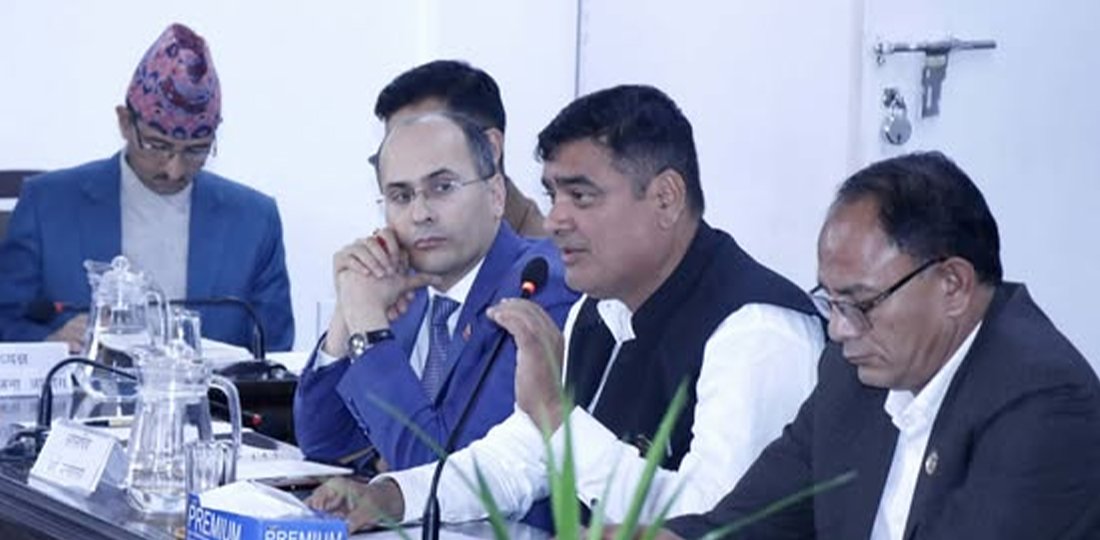
Khadka commented that there is a lack of coordination between the capital expenditure included in the budget and the economic growth target.
'An economic growth of 7 percent is mentioned, but the projection of investment and expenditure is not objective,' he said. 'The concept of a project bank should be taken to end-to-end implementation, not just limited to formality.'
Similarly, MP Sagar Bhusal also said that the Planning Commission needs to be restructured. He said that there is no alternative to restructuring the commission to make the implementation of plans effective.
'Defense of the Planning Commission: We don't have a law'
After continuous questioning from MPs, Secretary of the Planning Commission, Rabilal Panta, admitted that the commission could not perform effectively due to its legal weaknesses. Secretary Panta said, 'The commission is currently operating based on the formation order. We are only advisors. We monitor, we give suggestions, but we do not have the legal authority to take action or give instructions.'
He gave an example of how a small technical problem with a bridge on the Mid-Hill Highway is causing significant damage. 'If a 500-meter bridge can be built at Chauri Khola in Ramechhap, the distance can be reduced by 25 kilometers. We have given suggestions, but the Ministry of Physical Infrastructure is not interested in implementing them,' Panta said. He stated that this single example shows the lack of coordination in Nepal's development administration.
Vice-Chairman of the Commission, Dr. Gunakar Bhatta, informed that the commission has started working with a new vision. He said that the concept of Vision 2050 has been put forward for the next 25 years.
'We want to make evidence-based policies by engaging with citizens and experts,' Bhatta said.
According to him, Nepal aims to graduate from a Least Developed Country by 2026, but due to environmental risks, floods and landslides cause damage equivalent to 2 percent of the Gross Domestic Product annually.
Vice-Chairman Bhatta admitted that the weakness lies in the inability to utilize the excess liquidity of 12 kharabs in the banking system and sufficient foreign exchange reserves for development construction. He pledged that large projects would now be classified through a project pipeline.
MPs' Concern Over Projects Initiated Before Their Birth Not Being Completed
In the committee, MPs expressed concern that projects initiated before their birth have not yet been completed. They said that a single irrigation project has not been completed for 37 years. MP Sushil Khadka said that it is necessary to end the trend of not completing a project for 37 years.
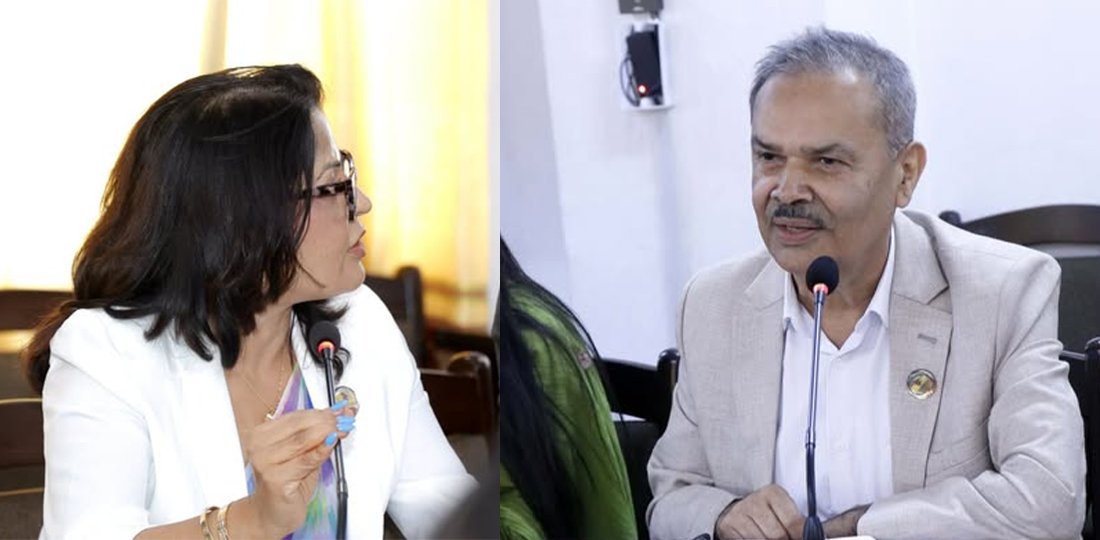
'I was born in 2045 BS, the Babai Irrigation Project started in 2045/46 BS. Today I am speaking here as an MP, but that project is still the same,' Khadka said with sharp sarcasm. 'If this is our development practice, then our youth have no option but to migrate abroad.'
He proposed the formation of a separate Pride Project Authority to operate national pride projects and ensure its resources and legal arrangements.
Khadka commented that there is a lack of coordination between the capital expenditure included in the budget and the economic growth target. 'An economic growth of 7 percent is mentioned, but the projection of investment and expenditure is not objective,' he said.
Projects are Pride, Implementation is Chaos
The extreme delays and cost overruns in national pride projects had made the MPs aggressive. MP Lima Adhikari Acharya shared that the Babai Irrigation Project, started in fiscal year 2045/46, had an initial cost of 2.87 billion rupees. She said, 'After 37 years, its cost has exceeded 18 billion, but the work is still not finished.'
MP Acharya questioned the classification and cost escalation of national pride projects. She analyzed that adding the number of strategically important projects based on political interests but not completing them has added billions of burdens to the state treasury. The cost of railway and metro development has skyrocketed from 70 billion to 955 billion (13 times more).
'What is the justification for including 27 projects in the pride list but completing only 4 in decades?' she questioned. Acharya demanded an explanation from the commission as to why legal action was not recommended against project chiefs, consultants, and contractors for the delays.
Rastriya Swatantra Party MP Bidushi Rana questioned the goals of the 16th plan and its implementation. She questioned the credibility of the implementation of the ambitious goal set by the Planning Commission to reach an economy size of 103 kharabs and achieve high economic growth by fiscal year 2085/86.
MP Rana stated that the success of a plan is determined not by its goals but by effective implementation, and sought clarification from the Planning Commission and the government on various issues. Regarding national pride projects, she objected to the fact that only 3 out of 231 projects were physically monitored. She stated that such limited monitoring does not clarify the actual status and implementation aspects of the projects.
Noting that capital expenditure has been limited to only 60 to 70 percent in previous years, she inquired about the new arrangements made to increase the spending capacity this time. She said, 'If the goal is to achieve economic growth of more than 7 percent and import substitution, why is the industrial sector being neglected like this?'
MP Rana emphasized the need for effective coordination between the Planning Commission and the Nepal Rastra Bank and for the government to bring concrete plans to boost private sector confidence. Amrit Lamsal, spokesperson for the Ministry of Finance, claimed that the government has made some legal reforms to increase capital expenditure.
'Authority for fund reallocation has been given to the secretaries. This will reduce procedural delays,' he said.
Lamsal informed that efforts are underway to bring approximately 85 billion rupees lying idle in various 186 boards and committees into the national treasury and invest it in development projects.
This specific news has been automatically translated by AI. As a result, there may be some inaccuracies or language errors.