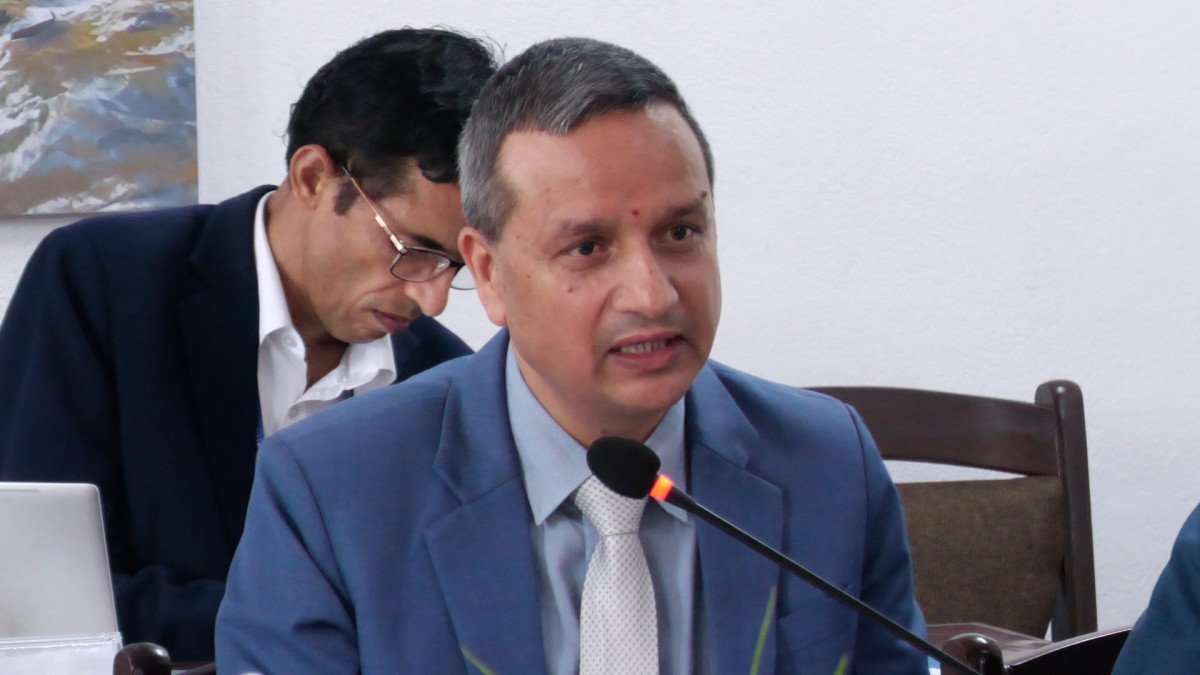
Kathmandu. Vice Chairman of the National Planning Commission, Dr. Gunakar Bhatta, has stated that Nepal must work by giving high priority to energy and food security. Speaking at a meeting of the Finance Committee under the House of Representatives on Monday, Bhatta mentioned that Nepal needs to pay special attention to these two sectors as the current global situation is extremely uncertain and difficult to predict. He stated that there is a risk of food price increases due to instability in the international market and the projected increase in drought globally this year. Bhatta pointed out the need for timely preparation and further strengthening of disaster management and supply systems for the next four-five months. Informing that the Planning Commission is coordinating with various bodies in this regard, he said that the active participation of all parties is necessary for minimizing potential risks. In the meeting, he said, 'The current situation is very unpredictable. Therefore, we must be prepared for tomorrow. We must work with interest in how to save the country from energy and food crises.' He clarified that the Planning Commission is coordinating with the relevant bodies due to the highly volatile international situation and the risk of high food prices due to global drought.
- Key Pillars and Challenges of Development
Vice Chairman Bhatta also claimed that Nepal currently has significant opportunities for development. The country's youth population, excess liquidity in the banking system, low interest rates, sufficient foreign exchange reserves, and public aspiration for development are Nepal's key development pillars. He stated that although a few years ago there was a shortage of foreign exchange reserves, liquidity in the banking system, and high interest rates, the situation has now changed. According to him, there is currently excess liquidity of approximately 12 kharba rupees in the banking system. He stated that development projects should be advanced by utilizing this and taking advantage of low interest rates. He mentioned that public aspiration for development should be viewed positively as citizens desire employment, production, and productivity growth. However, he admitted that Nepal's development project implementation capacity is currently weak and the commission alone cannot achieve development goals. He added, 'There is great potential for development in Nepal right now. We must focus on how to benefit from our youth population. Compared to three-four years ago, the situation of foreign exchange reserves and liquidity is now stronger.' He emphasized the need to engage in development work by utilizing the excess liquidity of around 12 kharba in the banking system and low interest rates.
- Demand for Three More Years for Graduation and Future Plans
Vice Chairman Bhatta also provided information that Nepal is seeking an additional three years from the United Nations for graduation from Least Developed Country (LDC) status. He stated that the basis for giving Nepal more time is presented due to increasing environmental risks. According to him, Nepal's Environmental Vulnerability Index (EVI), which was around 24 a few years ago, has now reached 29, while the threshold is 32. Mentioning that economic losses equivalent to about 2 percent of Nepal's Gross Domestic Product (GDP) occur in some years due to natural disasters such as floods and landslides, he said that more time has been requested from the international community. He stated that the United Nations has taken Nepal's argument positively and they are optimistic that the request will be addressed. He also provided information that the process of restructuring is underway to strengthen the institutional capacity of the National Planning Commission. The commission is preparing to conduct a mid-term review of the 16th plan from the beginning of the next fiscal year. This review will determine the course of action for the remaining period and provide guidance for future plans. Dr. Bhatta informed that the 'Vision 2050' concept will be advanced through the action plan for the next fiscal year, stating that this concept will provide long-term guidance for formulating future periodic plans.