
Bagmati Province to Amend Forest Act to Boost Domestic Timber Use and Curb Imports


Bagmati Province is exceptionally rich in forest resources. While the national forest coverage stands at 46 percent, 53 percent of the land in Bagmati Province is covered by forests. Despite possessing such vast natural resources, the contribution of the forestry sector to the province's Gross Domestic Product (GDP) and the consumption of timber at the citizen level remain extremely low.
On one hand, timber worth billions is rotting in our forests, while on the other, the import and use of foreign timber and environmentally unfavorable materials like aluminum and uPVC are on the rise.
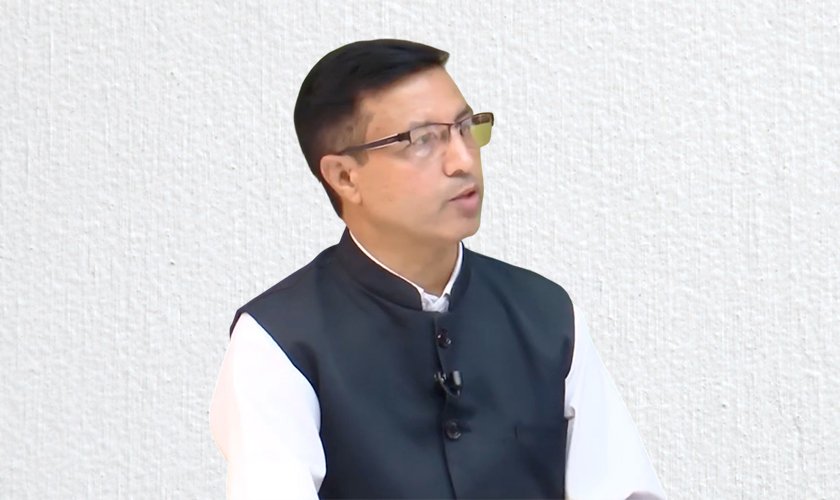
To break this contradictory cycle and make domestic timber accessible, Minister for Forests and Environment Bharat Bahadur KC announced that the Bagmati Province government is preparing for comprehensive amendments to the Forest Act.
According to him, the ministry is working on initiatives to transport Sal timber stored in the Terai to the hills, auctioning standing trees that are rotting in the hills, and restarting over 1,800 stalled community forest work plans.
Ratopati spoke with Minister KC, focusing on the policy reforms proposed by the ministry, plans to substitute foreign imports, and efforts to directly link forests with citizen prosperity. Presented below is an edited excerpt of the conversation with Minister KC:
- Bagmati Province has 53 percent forest cover, yet why is its share in revenue and citizen consumption so low?
Our data reflects the actual state of the province. The main problem lies in some technical hurdles within our policies and procedures. For instance, Sal timber in the Terai has been rotting in groups for years because it could not be auctioned, and there were legal obstacles preventing that timber from being brought to the hills for sale.
On the other hand, the pricing process for domestic timber made it more expensive than imported timber or alternatives (aluminum, steel). Therefore, we are preparing to amend the Bagmati Province Forest Act to keep it relevant to the times, ensuring the optimal utilization of our resources.
- What new provisions are being made in the Forest Act amendment to facilitate timber consumption?
We have proposed many reforms. First, we are opening an easy path to transport timber from the Terai to the hills and vice versa through the District Supply Committee and the Forest Products Committee. Second, we have made provisions to encourage 'seasoning' technology and set maximum retail prices for timber. This will allow consumers to get quality domestic timber at affordable prices. This will help reduce the growing imports of materials like aluminum and uPVC and prevent capital flight from the country.
- There are complaints that timber, including pine, is rotting in the forests of the hilly regions because it is not being auctioned?
Yes, we have looked at this problem closely. Previously, the auction process was very slow and cumbersome. Therefore, in this amended act, we have included a process for 'standing tree auction.' With modern technology, it is now easy to determine how many cubic feet of timber and firewood can be extracted from a standing tree.
By doing this, consumers will be able to measure and take the size they need (e.g., 10-foot timber for house construction) themselves. This prevents timber from going to waste and significantly increases revenue.
- Work is stalled because the work plans of many community forests in Bagmati Province have not been renewed. How are you resolving this?
There are about 4,500 community forests in Bagmati Province. Among them, the work plans of nearly 1,800 were stalled. Initially, the concept of 'Scientific Forest Management' was introduced. After it became controversial, many works were stopped. Now, we have modified it and introduced a policy of 'Sustainable Forest Management.'
Since taking office, my first decision has been to initiate the process of rewriting and renewing the stalled work plans. The ministry and division forest offices are providing technical support for this.
- Domestic timber seems to lag in competition due to high royalty rates. How is coordination with the federal government proceeding?
The federal government determines the royalty for species like Sal. It is true that when the current royalty and other costs are added, domestic timber becomes expensive. To resolve this, we are organizing a national gathering of forest ministers and secretaries from all seven provinces this coming Baisakh. We will make collective recommendations and lobby the federal government to adjust prices in a way that does not conflict with the Federal Forest Act but meets the specific needs of the provinces.
- Are there any other plans to link forests with prosperity beyond just timber and firewood?
Certainly, we want to use forests in a multi-dimensional way. We have a blueprint to link forests with eco-tourism, commercialize medicinal herb farming, and develop 'fruit forests' in vacant forest areas. This will create local employment and push the contribution of the forestry sector to the province's GDP much higher than it is now.
- When will citizens of Bagmati Province be able to get timber easily?
We are about to introduce a citizen-friendly Forest Act. Once this act is passed, consumers facing timber shortages will easily get cheap and quality timber. Community forests will become economically self-reliant. We are committed to ensuring that our resources are used for our own prosperity.
This specific news has been automatically translated by AI. As a result, there may be some inaccuracies or language errors.

_Eqo5W0NMVM.jpg)