The Rise of Iran: A New Global Power Center in the Strait of Hormuz


According to conventional geopolitical wisdom in recent years, the global order was shifting toward three centers: the United States, China, and Russia.
Such views held that power primarily stems from economic size and military capability, but that premise no longer holds. A fourth center of global power has begun to emerge: Iran.
Iran does not compete economically or militarily with the three superpowers. Instead, its power is derived from controlling the Strait of Hormuz, a critical 'choke point' for the global economy.
For a long time, the Strait of Hormuz served as an international waterway. This year, joint military operations by the U.S. and Israel provoked Iran. Consequently, Iran established military restrictions in Hormuz, allowing only authorized vessels to pass.
Hormuz is no ordinary passage. More than 20 percent of the world's total oil and natural gas supply passes through it, with no effective alternative in the near future. I believe that if Iran maintains control over Hormuz in the coming months or years, it will reshape the global order in a way that is not in the interest of the United States.
Many analysts believe Iran's control over Hormuz will be temporary. They expect the U.S. and its partners to regain control through naval power, but this hope is flawed. The belief that one must close a strait to control it is incorrect; as we have seen, control can be maintained without closure.

Currently, Hormuz is open to tankers, but traffic has dropped by 90 percent since the war began. This is not because Iran is sinking every ship, but because insurance companies have removed or reduced war risk coverage.
If cargo ships are attacked daily, the risks become unmanageable. Modern economies require oil delivered on time, in necessary quantities, and within predictable risk parameters.
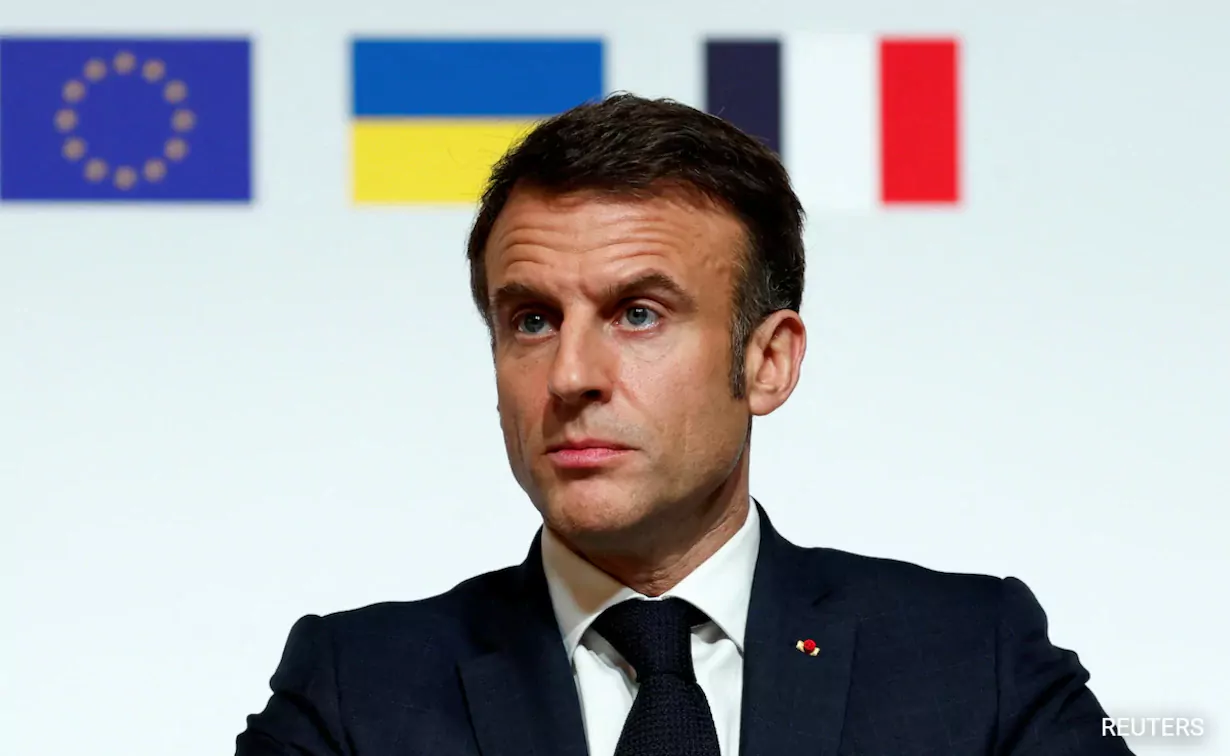
Last Thursday, French President Emmanuel Macron stated that the idea of using force to open the Strait of Hormuz is 'impractical.' He added that progress on facilitating Hormuz can only be made 'by working with Iran.'
When reliability declines, the insurance market tightens, increasing shipping costs. Governments then view energy access not just as a market transaction, but as a complex strategic challenge.
The U.S. faces this dilemma. Protecting every oil tanker passing through Hormuz is difficult, requiring a full-time military presence to defend against mines, drones, and missiles. Iran, conversely, only needs to attack one tanker to make transit unreliable.
Last Thursday, French President Emmanuel Macron stated that the idea of using force to open the Strait of Hormuz is 'impractical.' He acknowledged that ensuring oil flow is impossible without Iran's consent.
For decades, a status quo existed in the Persian Gulf where producers exported, markets set prices, and the U.S. secured the waterways. That stability has now vanished.
Gulf nations rely heavily on energy exports for revenue. When insurance rates rise and shipping becomes uncertain, they suffer immediate financial consequences, leading to cargo rerouting and contract renegotiations.
If uncertainty persists, the current regional order will shift toward a new arrangement where Gulf nations must align with the power that can impact their export reliability—which, today, is Iran.
China needs Gulf energy to maintain its economic growth. Russia benefits more from high and volatile energy prices.
The global consequences of such a shift will be felt most in Asia. Countries like Japan, South Korea, and India rely heavily on Gulf energy imports. Despite diversifying their energy sectors, China's reliance on the Gulf remains significant. This dependence on infrastructure, refineries, and shipping routes cannot be changed overnight.
As the current disruption in energy supply persists, its impact will widen. Rising insurance and shipping costs drive up energy prices, destabilizing trade balances and weakening currencies. Inflation rises, and energy dependence begins to dictate policy, narrowing diplomatic options.
We still remember the 'stagflation' of the 1970s oil crisis. Those days are on the path to becoming a new reality, and Iran stands to benefit.

China needs Gulf energy to maintain its economic growth. Russia benefits more from high and volatile energy prices. Iran gains strategic advantage by holding the Hormuz choke point. All three benefit when the economic stability of the U.S. and its partners is compromised.
They do not need a formal alliance; the structure of the system pushes them in that direction. A new world order is emerging, not through formal treaties, but through converging interests that deepen over time.
Other potential scenarios for this emerging order remain in the dark. If Iran controls 20 percent of the world's oil, Russia 11 percent, and China consumes a large portion of that, they could form a cartel controlling 30 percent of global oil, potentially restricting Western access. The impact would be a significant decline in U.S. and European power, shifting global influence toward China, Russia, and Iran.
The U.S. is now at a difficult crossroads: it must either commit long-term military force to control Hormuz or accept a new global management system where its control is no longer guaranteed.
If the U.S. accepts the new reality, the international system will be reorganized, with Iran as the fourth center of global power. If the U.S. chooses to maintain military control, it must be prepared for a long war, with all the associated risks.
The Iran war is not merely a military conflict. Things will not return to the status quo once it ends. Iran will demand a high price from the U.S. for a new arrangement, but that price will be lower than the alternative future. This is a transformative war; if these changes persist for a few more years, the global order will be irrevocably altered.
(The author is a professor of political science at the University of Chicago. He teaches military strategy and international security.)
This specific news has been automatically translated by AI. As a result, there may be some inaccuracies or language errors.