Nepal Government Announces Zero Tolerance Policy Against Helicopter Rescue Fraud


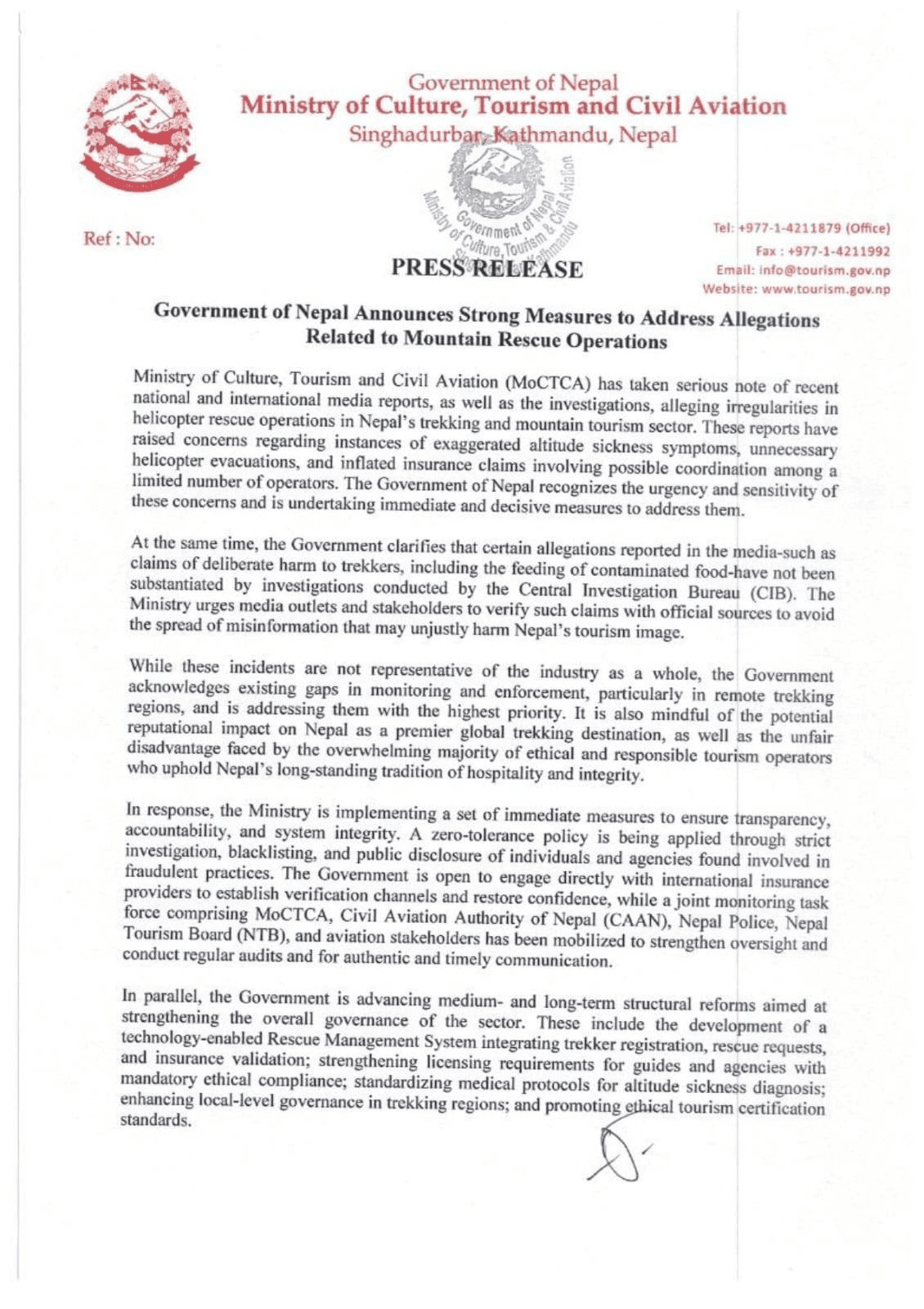
Kathmandu. The government has announced strict measures to curb irregularities and insurance fraud in helicopter rescues within Nepal's mountaineering and trekking sector. The Ministry of Culture, Tourism and Civil Aviation issued a statement on Monday, clarifying that it will adopt a 'zero tolerance' policy to address these challenges in the tourism industry.
The ministry expressed serious concern following recent reports in national and international media regarding the staging of fake patients for unnecessary helicopter rescues to claim large sums from insurance companies. The ministry is preparing to investigate, blacklist, and publicly name individuals and agencies involved in such activities.
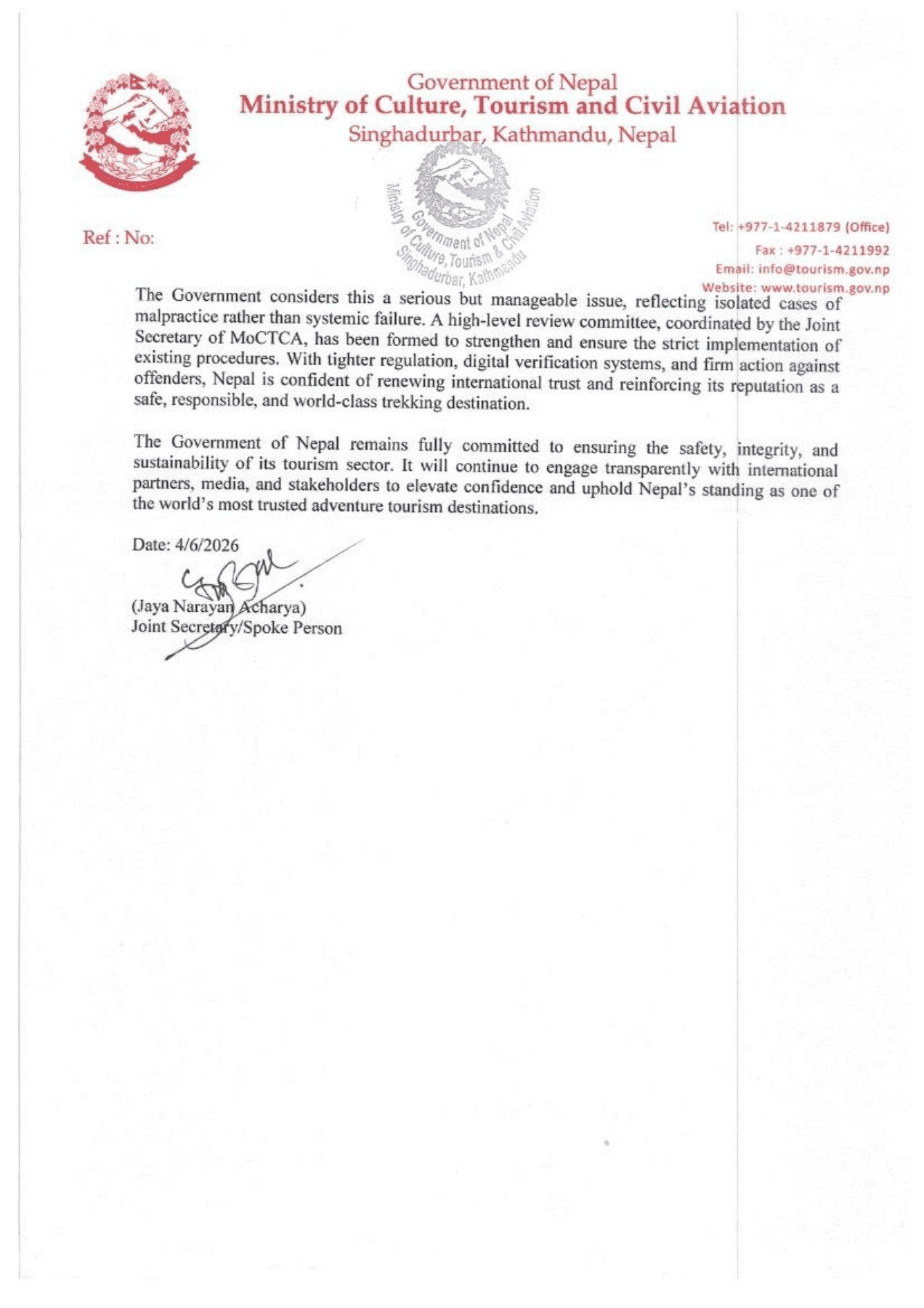
In a statement signed by Ministry Spokesperson and Joint Secretary Jayanarayan Acharya, it was clarified that claims appearing in some media outlets—such as 'trekkers being deliberately fed contaminated food to make them sick'—have not been substantiated by the Central Investigation Bureau (CIB) investigation. The ministry urged the public to verify information only from official sources, noting that such unverified reports negatively impact Nepal's tourism image.
The government views this issue as the misconduct of a few limited individuals or organizations rather than a systemic failure. To address this immediately, a 'Joint Monitoring Task Force' comprising the Ministry of Tourism, the Civil Aviation Authority of Nepal, Nepal Police, and the Nepal Tourism Board has been mobilized. This task force will conduct regular audits and effective communication. The statement also mentions that the government is prepared to establish verification channels by coordinating directly with international insurance providers.
For long-term improvement, the government has proposed developing a technology-based 'Rescue Management System.' This system will integrate trekker registration, rescue requests, and insurance verification. Furthermore, the plan aims to tighten licensing for guides and agencies, establish medical standards for diagnosing altitude sickness, and strengthen governance at the local level.
This specific news has been automatically translated by AI. As a result, there may be some inaccuracies or language errors.
_U03YF8YfM3.jpg)