The Myth of Foreign Interference: A Convenient Scapegoat in Nepali Politics


One of the most recurring phrases in contemporary Nepali politics is the 'conspiracy of foreign powers.' It is easily invoked whenever a government falls, protests intensify, debates on constitutional amendments arise, or questions are raised about leadership. But the question remains: are all the ups and downs of Nepali politics truly the result of foreign schemes, or is this term merely a convenient cover to mask internal failures?
It is impossible to find an answer to this question without understanding Nepal's geopolitical situation. Situated between two massive powers, India and China, Nepal is a highly sensitive country not only geographically but also strategically.
Located in a place easily reached by the ripples of projects from major powers—such as South Asian security structures, the Indo-Pacific Strategy, and the 'Belt and Road Initiative'—Nepal is naturally at the center of international interest. In this sense, it is natural for there to be foreign interest in Nepal.
However, interest and conspiracy are not the same thing. Failing to understand this is the root problem of Nepali political discourse. In international relations, every state acts according to its national interest. It is a normal process of international political and diplomatic behavior for development partners or major powers to show interest in Nepal. Labeling it a conspiracy is more political sloganeering and stunt-making than political analysis.
The real problem begins where Nepali political leadership fails in its decision-making capacity. When policy formulation is unclear, national priorities are not set, and institutional capacity remains weak, it becomes easy for external influence to enter. In such a situation, blaming foreign powers is merely a continuation of a tendency to avoid showing one's own weaknesses and engaging in self-reflection.
In Nepal, it has become common to discuss 'interference by a certain country' or to link the name of some embassy whenever a government falls, a Prime Minister changes, a party splits, or power equations shift.
Looking at history, the narrative of 'foreign conspiracy' has often been used to protect power, weaken the opposition, or divert public anger. In reality, the roots of these events are often found in internal power struggles, the shortsightedness of leadership, and institutional weaknesses. The narrative of foreign conspiracy in Nepali politics did not develop suddenly; its roots appear to have spread since the early stages of Nepal's unification.
Along with the geopolitical reality of having to maintain a balance between the British East India Company in the south and imperial Chinese influence in the north, this narrative grew stronger alongside debates over events that occurred in various periods. From palace politics, the Rana regime, the movement for democracy, and the Panchayat system, the historical background shows that the narrative of foreign conspiracy has become increasingly pervasive and influential in Nepali political circles.
After the fall of the Panchayat system, an immediate question arose: was the movement that succeeded in establishing multiparty democracy entirely internal, or was it made possible with the help of external forces? Pointing to India's political environment at the time, border activities, and diplomatic activism, some interpreted the change of 046 as a 'foreign design.'
But in reality, three decades of repression, political prohibition, and widespread public dissatisfaction were the primary fuel for the movement.
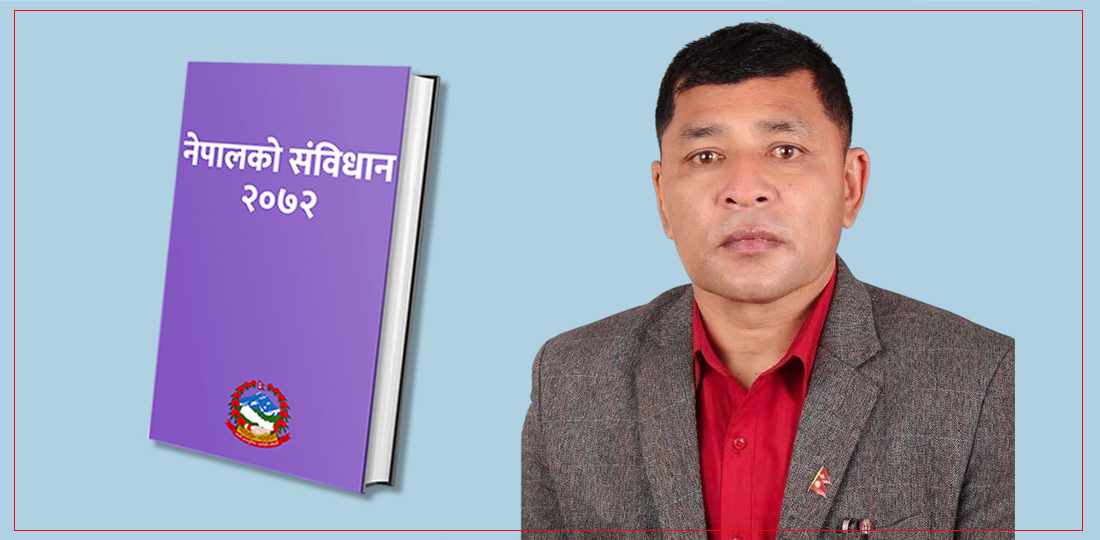
After the change brought about by the 062/063 People's Movement, the accusation of 'foreign conspiracy and maneuvering' continued even as the constitution-making process began. That trend has continued through the promulgation of the 072 constitution, the MCC agreement, and other developments, up to the interpretation of the recent Gen-Z movement.
During the ten-year Maoist armed conflict, which began less than six years after gaining freedom because the path of democracy was not understood, the term 'foreign conspiracy' was used most frequently. Sometimes it was an accusation of protection by India, and other times a story of a 'strategy to destabilize the state' by Western powers.
However, the root of the conflict was buried in deep socio-economic inequality, the centralization of state power and resources, and political neglect. The debate over the foreign role did not solve the conflict but rather served to cover up the state's policy failures.
After the change brought about by the 062/063 People's Movement, the accusation of 'foreign conspiracy and maneuvering' continued even as the constitution-making process began. That trend has continued through the promulgation of the 072 constitution, the MCC agreement, and other developments, up to the interpretation of the recent Gen-Z movement.
The dissatisfaction of the Gen-Z generation, which started on social media, came to the streets, questioned the government, and displaced the established political leadership. But the tendency to look for the source of the youth's discontent outside rather than understanding it was repeated this time as well. Attempts were made to link the questions raised on social media to 'digital manipulation,' 'NGO networks,' or 'external agendas.' The debate over who instigated the movement dominated over why it arose.
Geopolitical reality is relevant here too. It is not unnatural for social media and international trends to influence the thinking of young people. But rather than labeling that influence a conspiracy, the question of why the political system could not reassure this generation is serious. Considering the consciousness of the youth as a game of external forces is merely a refusal to accept one's own political failure.
Finally, a simple question: is foreign power more influential in Nepal, or is our state power weaker? If one answers this honestly, the reality becomes clear. Therefore, with strong policy, clear diplomacy, and institutional politics, foreign interest is not a major challenge but can become an opportunity. But when the state itself gets stuck in indecision, the word 'conspiracy' becomes the easiest answer.
Today's need is not to curse foreign powers, but to strengthen our state capacity. That is possible through policy clarity, institutional strength, and transparent and responsible leadership. As long as Nepali politicians and parties do not admit their weaknesses, the term 'foreign conspiracy' will continue to be used in Nepali politics under one pretext or another.
Accepting geopolitical reality is by no means accepting the influence of foreign powers, but rather developing the capacity to keep it in balance. The problem begins when political parties themselves try to use foreign power to win internal rivalries, and then, after failing, blame it on a 'conspiracy.'
Therefore, it is necessary to understand the term 'foreign conspiracy' in Nepali politics not as the final interpretation of truth, but as a political linguistic strategy. It excites the public emotionally, but it does not solve the problem. On the contrary, it weakens national self-confidence and frees the leadership from political accountability.
Today's need is not to curse foreign powers, but to strengthen our state capacity. That is possible through policy clarity, institutional strength, and transparent and responsible leadership. As long as Nepali politicians and parties do not admit their weaknesses, the term 'foreign conspiracy' will continue to be used in Nepali politics under one pretext or another.
This specific news has been automatically translated by AI. As a result, there may be some inaccuracies or language errors.