Kathmandu Metropolitan City to Launch Nighttime Public Bus Service


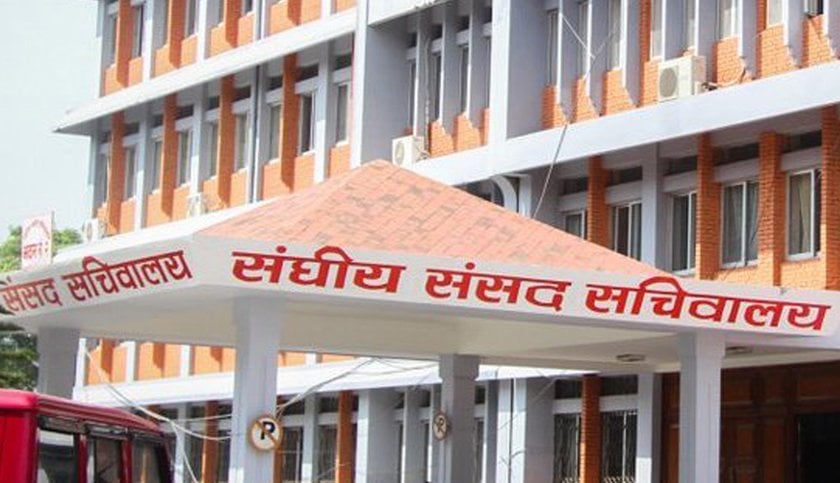
Kathmandu. To revitalize life in the Kathmandu Valley and facilitate commuters traveling at night, the Kathmandu Metropolitan City is preparing to resume nighttime public transportation.
Although various agencies have attempted this service in the past without achieving sustainability, the Metropolitan City is set to launch it systematically starting from Baisakh 1, 2083.
Timed with the New Year, this service is expected to boost Kathmandu's 'night economy' and nighttime security. According to the plan, four electric buses will operate on two main routes, connecting major hospitals, business hubs, and residential areas.
What are the routes?
The first route will span 16 kilometers, starting from Lagankhel in Lalitpur and passing through Patan Hospital, Alka Hospital, Norvic Hospital, Maternity Hospital, Trauma Center, Bir Hospital, Kanti Children's Hospital, Teaching Hospital, and Gangalal Heart Center, ending at Budhanilkantha. This north-south corridor is expected to provide significant relief to patients, caregivers, and healthcare workers on night duty.
The second route, a 20-kilometer east-west section, will run from Thankot through Satungal, Kalanki, Kalimati, Tripureshwor, Thapathali, Maitighar Mandala, Baneshwor, Minbhawan, and Tinkune to the International Airport. These four state-of-the-art electric buses will operate continuously from 8:00 PM to 11:00 PM.
According to Acting Mayor of Kathmandu Metropolitan City, Sunita Dangol, this service is essential to end the compulsion of paying high fares for private taxis when public transport is unavailable after 8:00 PM. She stated that the primary objective is to reduce security challenges and financial burdens faced by women, girls, and students at night.
Dangol committed to continuing collaboration with partners to develop public transport into a safe and reliable system. To ensure security, CCTV cameras will be installed in every bus, and municipal police will be deployed.
Previous attempts failed
Previous efforts to operate nighttime transport in Kathmandu were unsuccessful. On Bhadra 15, 2079, then Minister for Culture, Tourism and Civil Aviation, Jeevan Ram Shrestha, had proposed a 'Night Heritage Tour' in the valley's heritage sites. That plan, aimed at promoting local businesses and tourism, stalled due to a lack of security and coordination. Similarly, on Ashar 26, 2076, Sajha Yatayat launched a night bus service on three routes centered at New Road Gate, but it was discontinued shortly after due to a lack of passengers, high operating costs, and lack of government subsidies.
Sajha Yatayat's preparations
According to Sajha Yatayat CEO Bhupendra Aryal, a new era of nighttime public transport will begin in the Kathmandu Valley from Baisakh 1. He said, 'We are preparing to launch on Baisakh 1. Our goal is to serve passengers from 8:00 PM until at least 11:00 PM. Our buses run during the day, but this will be a significant step in solving nighttime transportation problems.'
Aryal noted that while previous attempts faced issues with operating models and government support, this time they have a sustainable plan. 'We are prepared to bear losses for the first five to six months or throughout this fiscal year,' he said.
He claimed that because Sajha Yatayat involves government participation and has the full commitment of local governments, this service will not be shut down. Aryal explained that they are coordinating with municipalities like Kathmandu, Budhanilkantha, and Chandragiri to secure charging spots and parking land.
He mentioned that operating buses at night incurs an additional cost of 6,000 to 7,000 rupees, primarily due to overtime allowances for drivers and conductors. 'Even with fewer passengers, this cost is mandatory, and we are piloting it using Sajha's own funds,' he said.
Aryal emphasized that the buses are equipped with GPS and CCTV cameras, allowing for live tracking and monitoring to prevent harassment or violence against women and girls.
Making the city vibrant
Transportation expert Sagar Onta emphasized that nighttime transport should be viewed as an economic necessity rather than a luxury. He noted that while demand will be high in areas like Thamel, Baneshwor, and the airport, the government must bear some financial burden initially to make the city vibrant and support the working class. He analyzed that using electric buses is more practical as it helps environmental conservation and reduces costs compared to diesel.
This specific news has been automatically translated by AI. As a result, there may be some inaccuracies or language errors.